Search for a travel document organizer and you get four genuinely different products wearing the same label: a pocket-size passport wallet, a zip-around family holder that only lives in a bag, a pouch you wear under your shirt, and a leather billfold that replaces your everyday wallet for the duration of the trip. They are not competing versions of one thing. Each puts your passport in a different place, and the right place depends on how many passports you are responsible for and how often you have to produce them. So this page sorts the shapes first, then ranks inside them.
The four shapes, and what each one is actually for
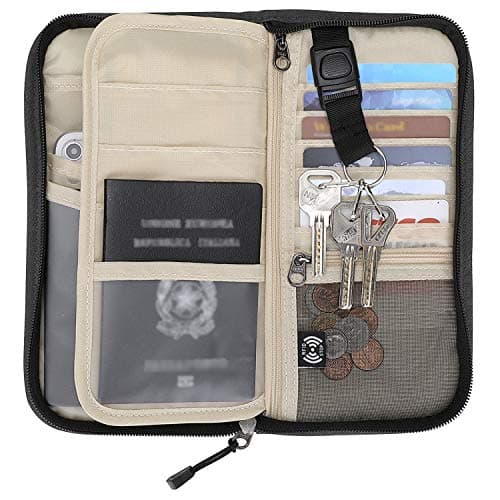
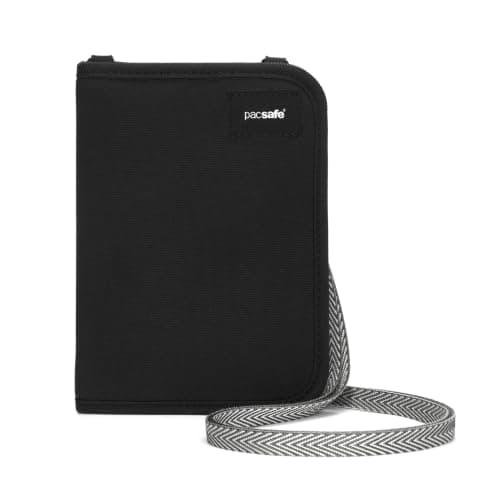
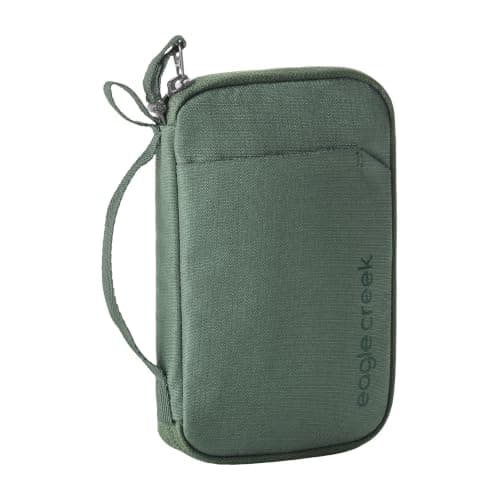
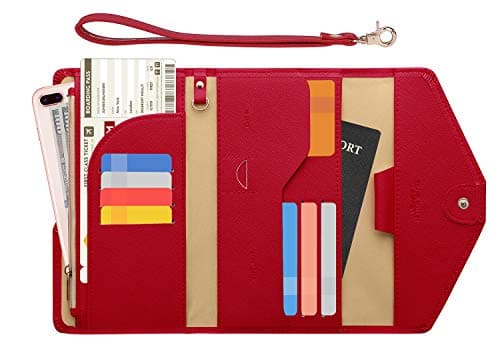
- The passport wallet. A folio around 7 or 8 inches tall with a named slot for each document — passport, boarding pass, cards, SIM, pen, coins — that closes with a snap or a zip and often comes with a wrist strap. The default for one traveler, and the shape most people picture when they search for this. The ZOPPEN Ver.5, the Pacsafe and the Eagle Creek Stash are all this shape.
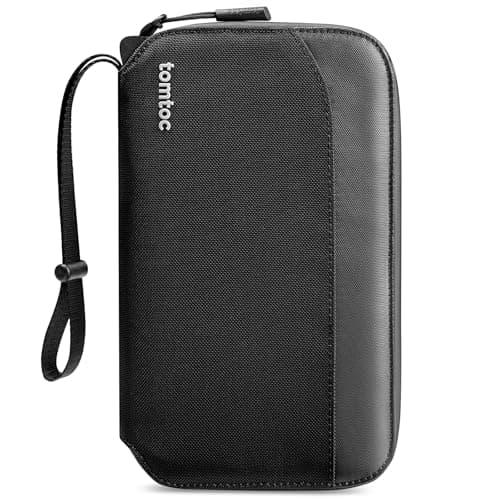
- The family holder.The same idea scaled up: four to six passport pouches, a zip that runs the whole way around, and a footprint of nine inches or so that rules out any pocket. Built for the adult who carries everyone's papers through a border. The ZOPPEN family holder and the tomtoc are this shape.
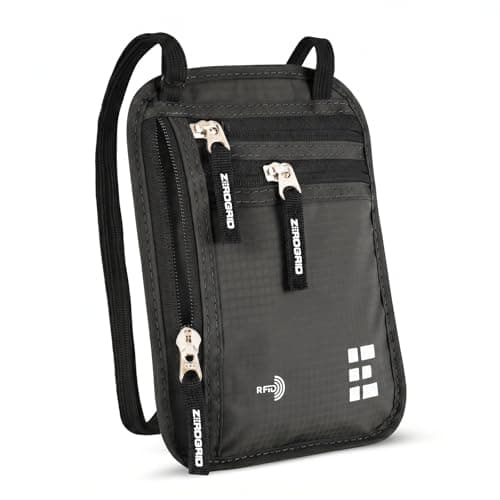
- The neck wallet. A flat pouch on an adjustable strap, worn against the chest under a shirt. It solves the pickpocket problem by removing the pocket, at the cost of making every document slow to reach. The Zero Grid is this shape.
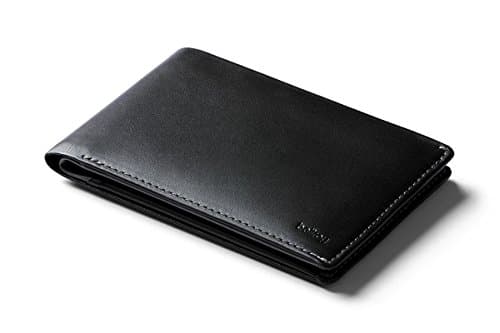
- The travel billfold. A wallet-size leather fold sized to take a passport alongside your cards and cash, so you carry one wallet instead of two. Pocket friendly and expensive. The Bellroy is this shape.
What a document organizer actually protects against
It is worth being precise, because the listings are not. A travel document organizer solves one problem above all others, and it is not theft: it is knowing exactly where your passport is, every time, without patting three pockets. Every airport queue, every hotel desk and every border booth asks for the same two or three items, and an organizer gives each of them one fixed home. That is the mechanism. It also keeps a boarding pass from folding, keeps a spare SIM from vanishing into a bag seam, and keeps a family's passports from being counted out one at a time on a counter.
What it does not do is make a passport safe. A wallet in a bag is as safe as the bag; a wallet in a pocket is as safe as the pocket. Two picks here genuinely change that math — the Pacsafe's wire-reinforced strap and the Zero Grid worn under clothing — and the rest do not, whatever the listing implies. If a passport does go missing, the U.S. government's guidance is that you must report it to the State Department right away, after which it is invalidated and cannot be used even if found; abroad, the replacement comes from the nearest U.S. embassy or consulate. No organizer changes any of that. What an organizer can do is make the loss less likely by making the passport harder to set down and easier to check for.
The RFID question, answered honestly
Every pick on this page advertises RFID blocking, which tells you it has become a checkbox rather than a differentiator. We treat it as a free extra and rank nobody up or down for it. Only one maker here publishes a standard for the material — Pacsafe cites US FIPS 201 — and two others quote a frequency (13.56 MHz) with no test behind it. None of them publish an independent result, and we have not run one. Buy the organizer for its slots, its closure and where it lets you carry the passport; if the lining also blocks a scanner, good.
How we ranked them
Five criteria, weighted in this order. Findability — how quickly a specific document comes out at a counter, which is what the whole product is for. Capacity — the passport and card count the listing publishes, read against the traveler it is sold to. Security — closure type, strap design and whether the organizer can be worn rather than carried, as described by the maker. Carry — footprint and weight, because a document organizer that only fits in a bag is one more thing to put down. Value — price against what you actually get, not against the brand on the label.
Every score is a judgment from documented specs and listing detail rather than a measurement we took — we do not run a testing lab, and our methodology page says so in those words. Every dimension, weight, slot count and warranty term on this page traces to the product's own Amazon listing, and each is named in Sources at the bottom. Where a listing is vague — Eagle Creek's publishes no slot count at all — the page says so rather than inventing one. Prices are pulled live from Amazon and date-stamped, so nothing here anchors you to a number that expired two seasons ago.
Who should skip a dedicated document organizer
- Anyone flying domestically with a driver's license. Since May 7, 2025, the TSA accepts only REAL ID-compliant licenses and IDs at the checkpoint, and a compliant license plus a phone boarding pass needs no organizer at all. Buy one when a passport enters the picture.
- Anyone hoping it makes a checked bag safe. Passports never go in a checked bag, organizer or not. Documents ride in the personal item — the point our carry-on packing list makes in its own small-items section.
- Anyone tempted to use a spare packing cube instead. A cube is an unlined fabric box with one big compartment, so a passport in it is a passport at the bottom of a bag. It is the wrong container for the same reason it is wrong for cables and jewelry — the division of labor what to pack in each cube sets out.
- Anyone who already has a jacket with a zipped inside pocket. For one passport and one card, that pocket is a document organizer. The products here earn their place once the document list is longer than two items or the passport count is higher than one.
The buyer's guide: what to check before you click
Count the passports first — it decides the shape
The one number that narrows this field in a minute is how many passports one person will carry. One or two means a passport wallet or a billfold, and the choice becomes about pocket versus bag. Three or more means a family holder, and at that point the question is whether four slots is enough — the tomtoc — or whether you need the ZOPPEN family holder's five pouches. Every listing on this page publishes its passport count except the Zero Grid and the Eagle Creek, which is why both rank lower on capacity than their build deserves: we score what is published.
Pocket or bag: where does it live in transit?
A document organizer that fits a jacket pocket — the Bellroy at 3.8 by 6 inches, the Eagle Creek at 6.5 by 4.25 — stays on your body between checkpoints and is never the thing you left on the seat. A family holder at 8.7 or 9.45 inches tall is a bag item, and a bag item is only as secure as the bag. Neither is wrong; they are answers to different trips. The ZOPPEN Ver.5 at 7.8 inches sits on the line, and its wristlet strap is the maker's acknowledgment that it will spend some of the day in a hand rather than a pocket.
Closure is the specification people skip
There are three closures across this page and they are not equivalent. A zip that runs all the way around — the ZOPPEN family holder, the tomtoc, the Pacsafe — cannot spill when the organizer is dropped or turned over in a bag. A snap, like the ZOPPEN Ver.5, is fast and fine for a wallet that lives in a pocket. A billfold with no closure at all, like the Bellroy, relies on the pocket it is in. It is the same logic that decides zip versus magnet on a jewelry case, and it matters more here because the contents cannot be replaced at the destination.
A strap is worth more than a lining
If security is why you are here, look at the strap before the RFID claim. A wrist strap keeps the organizer attached to you during the one stretch — check-in to gate — when it is out of the bag most; only the Pacsafe's is built to resist being cut, and only the Pacsafe's tightens if the wallet is snatched. A neck strap under a shirt removes the opportunity entirely, which is the Zero Grid's whole argument. An RFID lining, by contrast, addresses a risk none of these listings quantify. Rank the strap, treat the lining as free.
The slot for the boarding pass matters more than you think
The boarding pass is the document you produce most and the one that has to survive being handled, so where it lives is not a detail. The tomtoc puts it in an outside back pocket so the main zip never opens at the gate; the ZOPPEN wallets and the Pacsafe give it a dedicated internal pocket; the Bellroy folds it in with the passport. If you still fly on paper, favor the outside pocket. If your pass is on your phone, this section does not apply to you and the passport pocket is the one to judge.
Pack it in the personal item, and pack it last
Wherever you land on the shape question, the placement rule is the same and it is free. The organizer goes in the bag that stays under the seat, in the pocket nearest the opening, and it goes in last so it comes out first. It never goes in a cube, never goes in the overhead bin, and never goes in checked baggage. That is the same principle behind how to pack a carry-on with packing cubes, applied to the one item in the bag that has no substitute.
The short version
For most people on most trips the ZOPPEN Ver.5 is the buy: a named slot for everything, a wrist strap, and a price that makes it a low-stakes first organizer. Carrying the family through a border? The ZOPPEN family holder's five pouches, or the tomtoc if you already own an AirTag and want one riding inside. Want the organizer to be your only wallet for the trip, and want it in leather? The Bellroy, with its false-wall section and the honest note about Irish and older German passports. Crowded markets and metro platforms? The Pacsafe's reinforced strap. A pickpocket problem rather than a bag problem? The Zero Grid, worn, and slow by design. And if what you actually want is the thinnest, lightest sleeve for one person's papers from a brand you already trust with your cubes, the Eagle Creek Stash — provided you accept that its listing tells you less than any other here. The rest of the travel organization hub covers the containers for everything else in the bag.