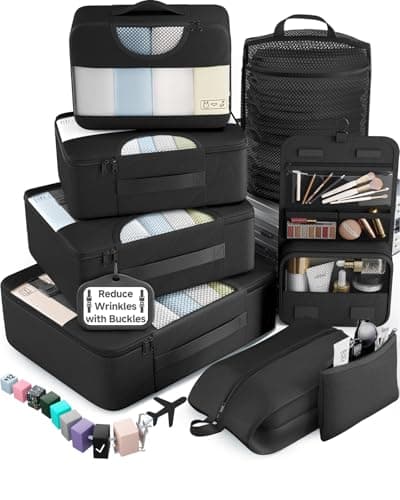
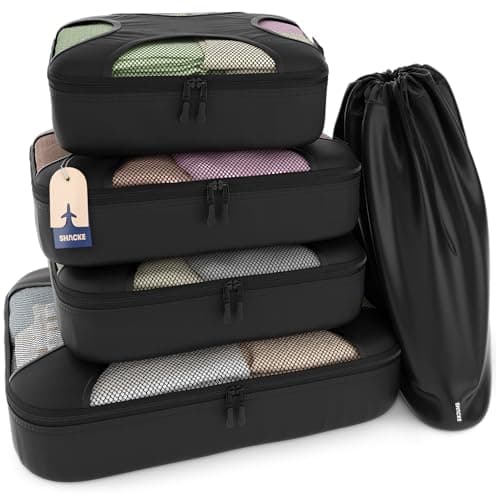
Packing cubes solve the outbound trip beautifully and then quietly create a second problem. Everything goes in folded and sorted; by the third morning half of it has been worn, and there is nowhere for the worn half to go except back on top of the clean clothes. The two products on this page exist for that day. One is a cube set that ships with a dedicated laundry bag; the other is a single cube split into a clean compartment and a dirty one. They are not the same purchase, they suit different travelers, and one of them is probably wrong for you — so settle which mechanism you need before you look at a price.
Two mechanisms, one problem
Search for packing cubes with a laundry bag and you will be shown both of these without anyone explaining the difference. Here it is:
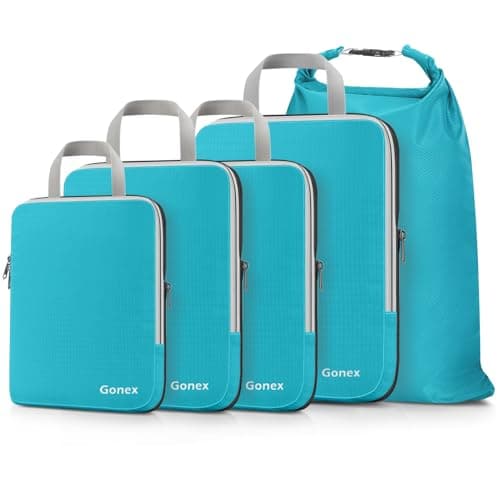
- A set with a bundled laundry bag.Four or five cubes plus one large, usually unstructured bag that lives empty in the case on the way out and fills up as the trip goes on. Shacke, Gonex, OlarHike and Veken all sell this shape. It scales — one bag takes a whole family's worth of laundry — and it costs you almost nothing on the outbound leg, because an empty fabric sack folds down to nothing.
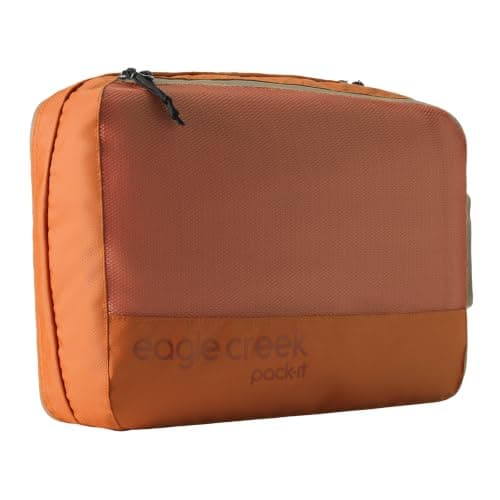
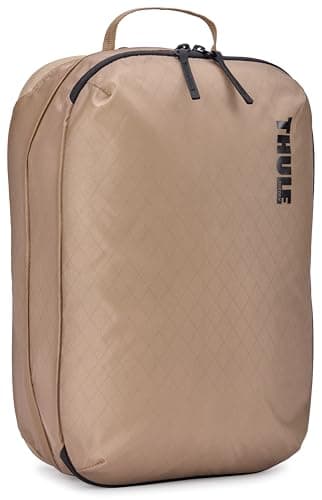
- A clean/dirty cube. One cube, two zipped compartments, a divider down the middle. Eagle Creek and Thule both build this. You pack it clean on both sides and move each worn outfit across the divider as you go, so you never carry a container that is doing nothing. It is the neater answer for one person traveling light, and the expensive answer for four people traveling for two weeks.
The quick version: if the dirty clothes are one person's and the trip is short, buy a divided cube. If the dirty clothes belong to a household, or the trip runs long enough that you will actually do a wash, buy a set with a big bag. A standalone travel laundry bag is the third option, and the right one if your cubes are already fine and the bag is the only thing missing.
What a laundry bag actually does — and what it does not
It separates. That is the whole job, and it is worth doing: a worn shirt in among folded clean ones passes on damp, body oils and smell to everything it touches, and a suitcase is a warm sealed box for eight hours. Keeping worn clothes in their own container is the difference between arriving with one load to wash and arriving with everything to wash.
It does not deodorize, it does not dry anything out, and — with one exception on this page — it does not seal. Most bundled laundry bags are a single layer of the same polyester or nylon the cubes are made from, and no listing here claims otherwise. The Thule cube's TPU divider is the only barrier on this page a manufacturer describes as limiting odor and moisture transfer, and even that is Thule's own claim rather than a figure we have measured; we do not run a lab, and our methodology says so in exactly those words. Put a genuinely wet swimsuit into any of these and you will have a damp bag, not a dry one.
The practical consequence: air worn clothes before they go in, never zip a wet item into a compartment for a long flight, and give swimwear its own waterproof pouch. If odor is the thing you actually care about, a dedicated laundry bag with a coated liner will beat every bundled sack here.
How we ranked them
Five criteria, in this order of weight. Separation — how completely worn clothes end up isolated, which is the entire reason this page exists, and where a wipeable divider beats an open sack. Capacity — the listed dimensions of both the cubes and the laundry container, against a real week of clothes. Build — fabric, zippers and stitching as described in the listing. Packability — empty weight, and how much volume the solution costs you before it holds anything. Value — price against what you genuinely get, rather than the piece count on the box.
Every score is a judgment from documented specs and listing detail, not a measurement we took. Every dimension, weight and capacity figure on this page traces to the product's own Amazon listing, and each one is named in Sources at the bottom. Prices come live from Amazon and carry a date stamp, so nothing here anchors you to a number that expired last month.
Who should skip this whole category
- Weekenders. Two nights produces two outfits of laundry. A grocery bag handles it, and the small weekend sets are a better use of the money.
- Anyone doing laundry mid-trip. If you are washing on day four, you need a bag that survives being carried to a laundromat and back, which is a different product with handles and a shoulder strap.
- One-bag travelers counting grams. A divided cube is the only pick here that does not add a container, and even that carries a second zipper and a divider panel. Ultralight cubes plus a plastic bag weigh less than anything on this page.
The same clean-and-dirty mechanism solves a smaller, far more frequent version of the problem, and the containers that suit it are ranked on best packing cubes for a gym bag.
The buyer's guide: what to check before you click
Size the laundry bag against the trip, not against the set
This is the specification that decides whether you use the bag or abandon it on day four, and it is the one nobody checks. A week of one person's clothes is roughly what the largest cube in a set holds, so a laundry bag meaningfully smaller than that cube will be full before the trip is. The bundled bags here run from a listed 20 by 11 inches on the Gonex set to 20.5 by 15.75 on the Shacke — the same length and half again the width, which is a much bigger difference than the numbers suggest. If two of you are sharing one bag, take the larger figure every time.
Check what the divider is made of
On a divided cube, the whole product is the panel down the middle. A stitched fabric wall separates and nothing more; the coated panel on the Thule is wipeable and described as limiting odor and moisture transfer, which is a genuinely different thing to own after a gym kit has spent a day in there. Ask two questions of any listing: can the divider be cleaned, and does it move? A floating divider that lets the dirty side grow through the week is worth more than a fixed one, because the clean side empties at exactly the rate the dirty side fills.
Empty containers are not free
A bundled laundry bag folds flat and weighs almost nothing on the outbound flight, which is its main advantage over a divided cube. What it costs you is on the way home, when it is full, unstructured and refuses to stack against the square cubes it came with — a suitcase packs tightest when everything inside it is a rectangle. The divided-cube approach keeps the same footprint in both directions, which is why it wins for anyone packing a case that only just closes. Our suitcase packing guide has the layering order for the return leg.
Confirm the bag is washable, not just the clothes
The best small feature in this category is a laundry bag you can put in the machine with its contents. OlarHike and Veken both describe theirs that way; most bundled sacks say nothing about it, and a bag that has carried a week of worn clothes and cannot be washed is a bag you throw away. If the listing does not claim machine-washable, assume it is not and plan on hand-washing it — the same way you would treat the cubes themselves, which how to wash packing cubes covers in full.
Count what you are actually paying for
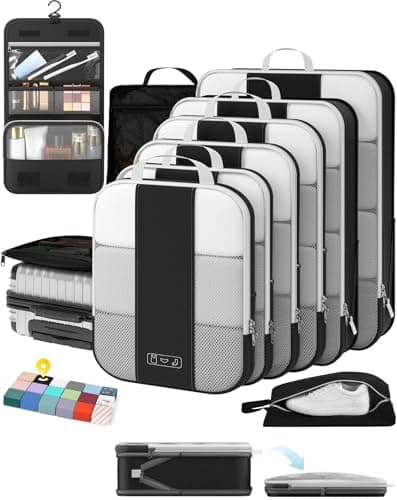
Ten-piece kits win the piece count and lose the value question, because most of the count is a toiletry bag, a shoe bag and a pouch you may already own. Work out the one container you are missing and price that against the kit. If it is only the laundry bag, buy that alone. If you are starting with nothing, the kit is the cheaper structure — that is the honest case for the OlarHike set, and the reason it sits fifth here rather than first. The same math applies to the rest of your system in what to pack in each cube.
The short version
For most travelers the Shacke five-piece is the buy: real cubes, and the biggest bundled bag on this page. Already own cubes and want the tidiest fix? The Eagle Creek Clean/Dirty cube. Case already tight? The Gonex compression set does the same job and packs the return leg smaller. Want the divider engineered properly, and packing only for yourself? The Thule. Starting from nothing at all? The OlarHike ten-piece. Spending as little as possible? The Veken. And if what you actually need is a serious dirty-clothes bag rather than another cube set, the travel laundry bag roundup is the page to read instead.
If you want the whole bag covered, not just the laundry
A bundled laundry bag is one extra. The broader version of the same instinct is the all-in-one “travel organizer set” — ten or twelve pieces sold as a complete packing system. We ranked those separately in the best travel organizer sets, and the headline finding is worth knowing before you order one: every kit on the market is a cube set with one or two extras, and none of them contain a real container for liquids, cables or documents.
Using the bag the set came with
Owning the bag is half of it. How to pack dirty clothes covers the rest: put the first worn item in it on the first night rather than the last morning, keep genuinely wet things in a separate waterproof bag because damp spreads where smell does not, and compress the whole lot on the return leg where creasing has stopped mattering.