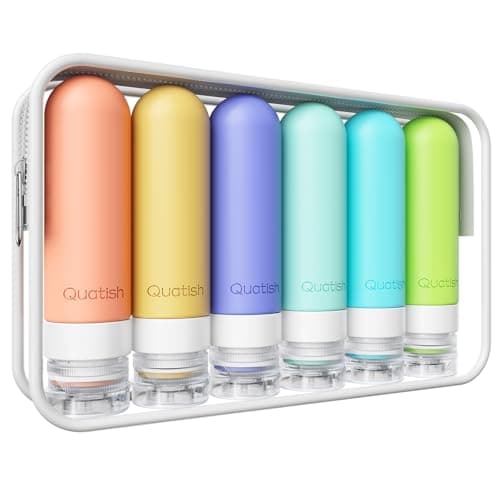
The rule in one sentence, in TSA's own words: you may bring a quart-sized bag of liquids, aerosols, gels, creams and pastes in your carry-on, limited to travel-sized containers that are 3.4 ounces (100 millilitres) or less per item. Decant into 3 oz bottles, squeeze the air out before you cap them, put the lot in one quart bag, and keep that bag somewhere you can pull it out without unpacking. If you only read one pick: the Quatish 6-pack of 3 oz bottles is the complete kit.
What the rule actually says
TSA's liquids page states that you are allowed a quart-sized bag of liquids, aerosols, gels, creams and pastes in your carry-on bag and through the checkpoint, limited to containers of 3.4 ounces (100 millilitres) or less per item, and that placing these items in the small bag and separating them from your carry-on baggage facilitates the screening process. Containers larger than 3.4 oz or 100 ml go in checked baggage. It also notes that any liquid, aerosol, gel, cream or paste that alarms during screening will require additional screening.
Four things people get wrong about that, in order of how often:
- It is container size, not contents. A 12 oz bottle with an inch of shampoo in it is a 12 oz container and does not qualify. This is the single most common mistake and the one that costs people their favourite conditioner at a bin.
- One bag per passenger, and it has to close. The limit is the bag, not a count of bottles. If the zip will not close you are over, regardless of how many items are in there.
- “Liquid” is broader than it sounds.TSA's wording covers aerosols, gels, creams and pastes - so toothpaste, deodorant stick aside, mascara, sunscreen, peanut butter and soft cheese are all in scope.
- There is no such thing as a TSA-approved bottle. Officers screen on size and on whether the item alarms. A brand claiming approval is marketing; a 3 oz marking on the bottle is what matters. The same point applies to cubes, which is why we wrote are packing cubes TSA approved.
The exemptions that are real
TSA's liquids page lists exemptions for medications and infant and child nourishments, and a separate allowance for duty-free liquids purchased internationally and arriving on a connecting flight to the United States, where the liquids are packed in a transparent, secure, tamper-evident bag. Those are the exemptions. They are not a quiet workaround: the way to use them is to take the items out of your bag at the checkpoint, say what they are, and let them be screened separately - which takes a minute and works, where burying them in a cube does not.
Medication is the one worth planning. Keep it in the carry-on, not the checked bag, keep it in a container you can identify, and keep it reachable. Our travel pill organizer roundup covers the containers; it is not medical advice and neither is this page.
What to look for in a travel bottle
- A marked size at or under 3.4 oz / 100 ml. Printed on the bottle, not quoted on a listing. 3 oz is the sweet spot - clearly under, and still useful.
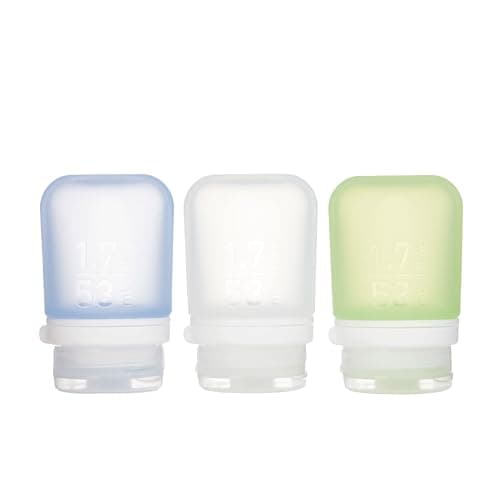
- A cap that locks or seals on a rim.The two mechanisms that work are a mechanical lock (humangear's LoopLock) and a lined screw cap sealing against the bottle rim. “Leakproof” on its own is a word, not a mechanism.
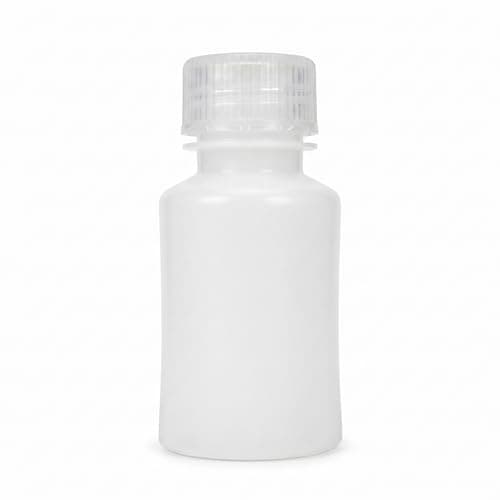
- Squeezable walls for thick liquids. Conditioner and sunscreen do not pour. Silicone gets the last third out; rigid HDPE does not.
- Somewhere to write. Three identical white bottles of clear gel is a problem you create for yourself on day two.
- Small over large. The binding constraint is the quart bag, not the per-bottle limit. Six 1.7 oz bottles use less of your bag than six 3 oz ones.
- Material you can trust against skin and food. Food-safe and BPA-free where the listing says so - and for anything edible, only where it says so.
A quart bag that works
| Item | Container | Note |
|---|
| Shampoo | 3 oz squeezable silicone | The bottle that gets used most; squeeze the air out |
| Conditioner | 3 oz squeezable silicone | Thick - a cross-slit orifice earns its keep here |
| Body wash or soap | 1.7 oz locking bottle, or a solid bar | A solid bar is not a liquid and uses none of the bag |
| Moisturiser | Small jar or capsule | Creams count; a 0.56 oz capsule costs almost no bag space |
| Sunscreen | 3 oz squeezable | Buy more at the destination rather than carrying a full tube |
| Toothpaste | Travel tube | A paste, so it counts - the hotel will not have one you like |
| Medication | Its own container, outside the quart bag | Exempt; declare it and let it be screened separately |
| Perfume or aftershave | Small atomiser | An aerosol or liquid; the glass is the fragile part, not the rule |
Why bottles leak, and the thirty-second fix
Cabin pressure falls as the aircraft climbs, so the air trapped in a half-full bottle at the gate expands in the hold or the overhead bin and pushes the contents at the seal. That is most of what people experience as “it leaked.” The fix is to remove the air before you close the cap: squeeze a silicone bottle until the liquid reaches the neck, then screw the cap down. For rigid bottles you cannot do this, so fill them closer to full and keep them upright. Tape over the cap costs nothing and removes the rest of the risk.
Where the quart bag goes in the case
Somewhere you can reach in one movement with one hand: the lid pocket, the front pocket, or directly under the top zip. TSA's own wording is that separating the bag from your carry-on baggage facilitates screening, which only happens quickly if the bag is not under a stack of packing cubes. This is the one item in your bag whose placement is decided by a stranger's workflow rather than yours. Our how to pack a carry-on guide puts it in the loading order, and how to pack a toiletry bag covers the non-liquid half of your washbag.
How we scored the four picks
Rule compliance - whether the marked container size is clearly inside the 3.4 oz / 100 ml limit. Leak resistance- judged on the sealing mechanism the listing describes, not on a claim; a mechanical lock and a lined screw cap score above an unqualified “leakproof.” Dispensing - how a thick liquid actually comes out. Labelling - whether you can tell them apart on day four. Value - live price per bottle. Our methodology states plainly that these are judgments from documented specs and listings rather than measurements we took. We have not pressure-tested a bottle.