Nearly every cube sold has a mesh top, a mesh window, or a solid panel — and the choice changes how you find things, how your clothes smell after a long flight, and how long the cube lasts. Here is the trade, honestly.
We earn a commission when you buy through our Amazon links, at no extra cost to you. It never affects our rankings, and we say so when the cheaper product is the better buy. How this works.
Almost every packing cube on sale falls into one of three constructions: a full mesh top, a mesh window set into a fabric body, or solid panels all round. People usually pick by instinct and then discover the trade-off a week into a trip. It is worth two minutes to get right, because the panel decides how you use the cube far more than the brand does.
What a mesh panel actually does
Four things, and only the first is the one people buy it for.
You can see in without opening it. This is the real argument, and it is a strong one. Finding the right cube in a dim room without unzipping three others is the single biggest time saving a cube system offers.
It breathes. Clothes that went in slightly damp can dry rather than sour. Over a two-week trip this is the difference between a bag that smells of nothing and a bag that smells of itself.
It weighs less. Mesh is lighter than woven fabric, so a mesh-topped cube is marginally lighter than the same cube with a solid top. Marginally.
It vents when you press it. A mesh panel lets trapped air out as you close the cube, so it packs down slightly flatter without any compression mechanism.
What a solid panel actually does
It keeps dust and grit out. This matters on a checked bag, a hostel floor or a backpack that has been on the ground, and mesh simply cannot do it.
It holds a shape. A solid-panelled cube behaves like a box: it stacks, it does not sag when half-full, and it makes a suitcase tile neatly. A mesh top is a large hole in the structure and the cube slumps accordingly.
It lasts. Mesh is the part of a cube that tears. A buckle, a zip pull or the corner of a charger is enough, and a torn mesh panel cannot be patched the way fabric can. This is the most common way a cheap cube dies.
It can be coated. Water resistance, weatherproofing and any kind of containment all require a continuous surface. Mesh is a hole, so a mesh cube can never be any of those things.
It is private. A solid cube does not show a hotel cleaner, an airport screener or a roommate what is in it. Some people care about this a great deal.
Mesh top, mesh window, or neither
The middle option is underrated and worth naming properly. A mesh window is a small mesh panel set into an otherwise solid body. You keep most of the visibility, you keep most of the structure, and you lose most of the tear risk, because the mesh is not the whole top surface and is not what takes the abrasion. If you are torn between the two formats, this is usually the right answer and it is why the Eagle Creek Reveal leads the picks below.
The rule that settles it
Choose by what is going in the cube, not by preference:
Clothes you will be looking for: mesh. Visibility is the whole point of a cube system and mesh is what delivers it.
Anything damp, or a long trip in humidity: mesh, so it can breathe.
Anything genuinely wet: neither. That is a lined bag, not a cube.
Shoes, dirty laundry, anything that sheds: solid, so the shedding stays in one place.
A checked bag, a backpack that goes on the ground, or a bus roof: solid, for the dust.
Anything you would rather nobody saw: solid.
Most people end up with both, which is the honest conclusion: a mesh set for clothes and one or two solid cubes for the things that should not be visible or should not shed. That is a fabric question as much as a panel question, and the material guide covers what nylon, polyester and ripstop each bring to it.
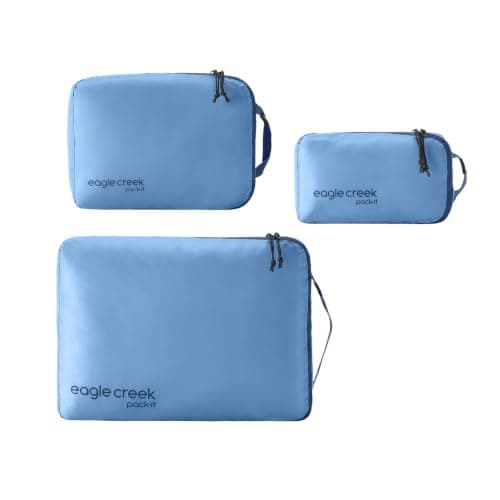
Three cubes in XS, S and M with mesh windows in a water-resistant ripstop shell, and the most useful version of the mesh idea we rank. The distinction that matters is window versus top: a full mesh top is a large opening with almost no structure, while a window is a panel of mesh set into a fabric body. You keep the see-in benefit and lose much less of the cube's shape, which is why this is the mesh cube we would put in a bag that gets handled roughly.
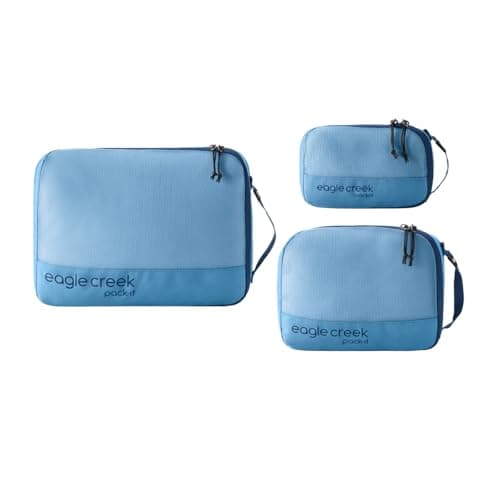
The same three sizes from the same maker with solid panels instead of mesh, a top handle and a stackable build, which makes it the cleanest head-to-head available in the whole category: one brand, one line, one variable. Solid panels mean dust and grit stay out, the cube keeps its shape when it is not full, and it stacks into a suitcase like a box rather than sagging like a bag. What you give up is seeing inside without opening it.
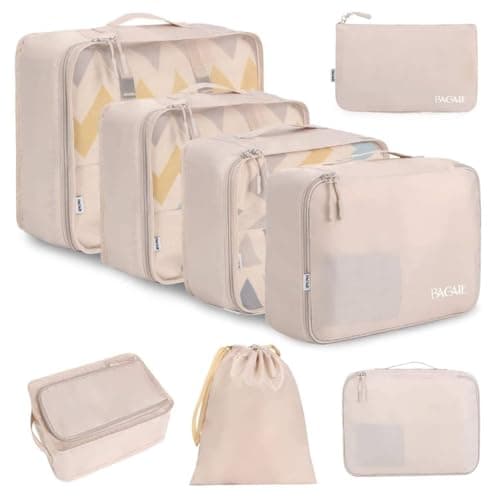
Eight polyester cubes in a mix of sizes, all with a mesh top, and the cheapest honest way to find out whether you prefer mesh at all. A full mesh top is the most visible version of the format: you see the entire contents without unzipping anything, which is exactly what makes a cube system fast in a shared room or a hotel with one light. The trade is that a mesh-topped cube is the least structured cube on this page.
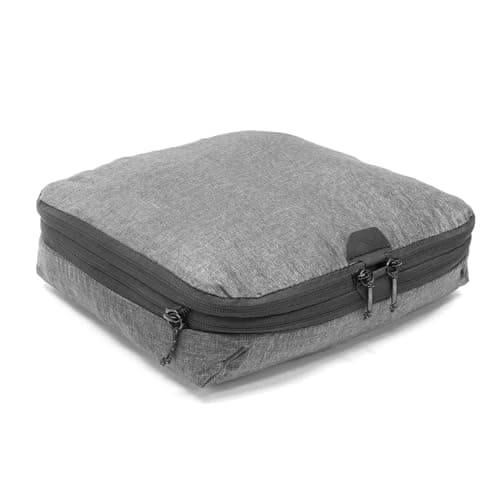
A single medium cube with a weatherproof shell, two compartments and built-in compression, and the clearest illustration of what solid panels make possible. A weatherproof cube has to be solid, because mesh is a hole. That is the whole reason the wet-and-dry split works here and cannot work on a mesh cube: the second compartment contains what is damp rather than letting it breathe out into the rest of the bag.
#ad · Live prices from the Amazon Product API, as of Sep 23, 2026. Where we have no verified live price we show none — a gap beats a rotted number.
In detail
The picks, in full
01
Best mesh cube
Eagle Creek Pack-It Reveal Cube Set
3-cube set (XS/S/M)Mesh windowsWater-resistantRipstop
7.6/10
Value: $19.67 /cube
Three cubes in XS, S and M with mesh windows in a water-resistant ripstop shell, and the most useful version of the mesh idea we rank. The distinction that matters is window versus top: a full mesh top is a large opening with almost no structure, while a window is a panel of mesh set into a fabric body. You keep the see-in benefit and lose much less of the cube's shape, which is why this is the mesh cube we would put in a bag that gets handled roughly.
Visibility
8
Airflow
7
Durability
9
Structure
8
Value
6
Pros
+Mesh windows rather than a full mesh top: visibility with the structure kept
+Water-resistant ripstop around the window, which plain mesh cubes lack
+XS, S and M are the three sizes people actually reach for
Cons
−Three cubes at a premium price is a high cost per cube
−Any mesh is still the weak point if something sharp is packed against it
Don't buy this if…
…you want the whole top to open up. This is a window, not a lid, and if you like unzipping a cube flat the full-mesh sets do that better.
3-cube set (XS/S/M)Solid panelsTop handleStackable
6.2/10
Value: $19.67 /cube
The same three sizes from the same maker with solid panels instead of mesh, a top handle and a stackable build, which makes it the cleanest head-to-head available in the whole category: one brand, one line, one variable. Solid panels mean dust and grit stay out, the cube keeps its shape when it is not full, and it stacks into a suitcase like a box rather than sagging like a bag. What you give up is seeing inside without opening it.
Visibility
2
Airflow
3
Durability
10
Structure
10
Value
6
Pros
+Solid panels keep dust and grit out, which mesh cannot do
+Top handle and a stackable body, so the cube behaves like a box
+Directly comparable to the Reveal above, which is why both are here
Cons
−Nothing is visible without unzipping, so labeling matters much more
−Solid fabric traps damp, so nothing goes in even slightly wet
Don't buy this if…
…you rely on spotting the right cube at a glance. That is the one thing a solid panel cannot do, and no amount of build quality compensates for it.
Eight polyester cubes in a mix of sizes, all with a mesh top, and the cheapest honest way to find out whether you prefer mesh at all. A full mesh top is the most visible version of the format: you see the entire contents without unzipping anything, which is exactly what makes a cube system fast in a shared room or a hotel with one light. The trade is that a mesh-topped cube is the least structured cube on this page.
Visibility
10
Airflow
10
Durability
5
Structure
5
Value
10
Pros
+Full mesh top, the most visible version of the format
+Eight cubes, so you can test the format across an entire bag
+Cheap enough that a torn cube is an annoyance, not a loss
Cons
−Plain polyester and a large mesh area: the least durable option here
−A mesh top sags when the cube is under-filled
Don't buy this if…
…your bag carries anything with hooks, buckles or edges. Mesh catches, and a torn mesh top cannot be repaired the way a fabric panel can.
Single cube (M)WeatherproofDual-compartmentBuilt-in compression
5.6/10
Value: $39.95 /cube
A single medium cube with a weatherproof shell, two compartments and built-in compression, and the clearest illustration of what solid panels make possible. A weatherproof cube has to be solid, because mesh is a hole. That is the whole reason the wet-and-dry split works here and cannot work on a mesh cube: the second compartment contains what is damp rather than letting it breathe out into the rest of the bag.
Visibility
2
Airflow
2
Durability
10
Structure
9
Value
5
Pros
+Weatherproof shell, which is only achievable with solid panels
+Two compartments, so damp and dry stay apart inside one cube
+Built-in compression, which mesh-topped cubes generally cannot offer
Cons
−One cube at a premium price
−Fully opaque, so it needs labeling or a system to stay usable
Don't buy this if…
…you are buying your first cubes. Start with a cheap mesh set, work out whether visibility or containment matters more to you, and then buy the specialist.
Listings use the two interchangeably and they are not the same product. Look at the photograph rather than the copy: if the mesh covers the whole upper face, it is a top and the cube will sag and tear sooner. If it is a panel with fabric around it, it is a window and you get most of the benefit with much less of the risk.
Look at where the zipper runs
On a full-mesh cube the zip usually runs around three sides so the top lifts off like a lid. On a solid cube it often runs around two or three sides but the body stays rigid. The lid design is faster to load and worse at staying shut when overfilled, which is a real consideration if you tend to overpack — and one that also shapes the wider buying checklist.
Decide before you buy compression
Compression cubes are mostly solid or half-mesh, because a compression zipper has to pull against a continuous surface to do anything. If compression is the feature you actually want, the panel question is partly decided for you — the sets on our compression roundup are nearly all half-mesh at most, and the fully mesh-topped cube with real compression barely exists.
The short version
Mesh for clothes you need to find, solid for anything that sheds, gets dusty, needs to stay private or has to stay contained. If you want one answer for a whole bag, a mesh window is the compromise that costs you least — visibility kept, structure kept, tear risk mostly gone. And whichever you choose, it changes nothing about how many cubes you need, which is settled in how many packing cubes do I need.
How we picked
We haven't tested these on a plane — and we say so
Every site in this category says it tested twenty cubes. We haven't tested any. We compiled the published manufacturer specs, computed the numbers that decide the buy — capacity, compression, cost per cube — and scored each set against a published rubric. The scores are judgments from documented research, not measurements we took. Where a figure came from a manufacturer's spec sheet we name it in Sources. Prices are pulled live from Amazon.
Questions
Frequently asked
Are mesh or solid packing cubes better?+
Neither is better in the abstract; they solve different problems. Mesh lets you see the contents without unzipping and lets damp clothes breathe, which is what makes a cube system fast to live out of. Solid panels keep dust and grit out, hold their shape, survive abrasion much longer, and can be coated for water resistance. Most experienced packers own both and assign them by contents.
Do mesh packing cubes tear easily?+
More easily than fabric, yes, and it is the most common way a cheap cube dies. Mesh catches on buckles, zip pulls and the corners of hard objects, and once it has gone it cannot be patched the way a woven panel can. A mesh window set into a fabric body is substantially more durable than a full mesh top, because the mesh is not the surface taking the abrasion.
Do packing cubes without mesh smell after a long trip?+
They can, if anything goes in even slightly damp. A solid cube has no airflow, so moisture stays where you put it. On a short trip with dry clothes it makes no difference. On a two-week trip in humidity it is the whole reason to prefer mesh for clothing, and to keep genuinely wet items out of cubes altogether.
Can a mesh packing cube be water-resistant?+
No. Water resistance needs a continuous coated surface, and mesh is a hole by design. A cube advertised as water-resistant with a mesh panel is water-resistant everywhere except the mesh, which in practice means it sheds a splash on the fabric and not through the window. Anything that has to contain moisture needs solid panels, and anything genuinely wet needs a lined bag rather than a cube.
Which is better for a checked bag?+
Solid, mostly. Checked bags get handled, dropped and stacked on floors, and a solid cube keeps grit out and holds its shape under whatever is piled on it. The exception is if you are packing clothes you will need to find fast at the other end, in which case a mesh window gives you visibility without much of the exposure. Our checked luggage roundup ranks the sets that suit it.
Does mesh make a packing cube lighter?+
Slightly, and less than people expect. Mesh weighs less than woven fabric, but the cube is mostly fabric either way and the zipper is a fixed cost, so the saving across a set is measured in grams rather than anything you would notice. If weight is genuinely your constraint, the decision is set size rather than panel type — the arithmetic is in do packing cubes add weight.
We do not run a testing lab, and we do not pretend to. Every dimension, capacity and compression figure traces to the manufacturer's own spec or listing; prices come live from Amazon. Where we couldn't verify something, we say so on the page rather than quietly leaving it out. Read our full method.