Skip to content
Fold & Ferry

Decisions & how-to · Guides

How to pack a duffel bag

A duffel has no shape, no compartments and one enormous opening, which makes it the most space-efficient bag you own and the worst to find anything in. Both problems have the same solution.

By Stephen V.Updated How we research
#ad

We earn a commission when you buy through our Amazon links, at no extra cost to you. It never affects our rankings, and we say so when the cheaper product is the better buy. How this works.

A duffel is the most space-efficient bag most people own. It has no wheels, no telescopic handle and no rigid shell, which means essentially all of its external volume is usable — a hard case gives up several liters to structure it cannot get back. That is why duffels hold more than they look like they should.

It is also why they are miserable to live out of. One opening, no compartments, no shape, and a floor that becomes whatever the heaviest thing in the bag decides it should be. Everything below follows from that trade.

The three problems, and the one fix

  • It has no structure. Whatever you put in defines the shape, so an unplanned duffel sags into a bowl and everything rolls to the middle.
  • It has one opening. There is no outside pocket for the thing you need in transit, so access has to be designed in.
  • It excavates rather than opens. Reach for something at the bottom and the top comes out first, onto a hotel bed, in the wrong order.

All three are the same fix: give the bag an internal skeleton made of firmly packed cubes and load it in horizontal layers rather than filling it end to end. That is the whole method, and the steps below are it in order.

Why a flat floor is the step that matters

If you do one thing from this page, do this. Two or three firmly packed cubes laid side by side across the base turn a shapeless bag into something with a level bottom, and every other layer sits square on top of it. Skip it and the heaviest item finds the middle, the bag develops a sag, and the clothes above it slide into the dip — which is the sequence that ends with a duffel that will not stand up and cannot be found in.

A cube only does this if it is properly full. A half-empty cube is a soft lump and makes the problem worse, which is why the honest advice is fewer, fuller cubes rather than more cubes. That is also the cheapest way to control the weight, as we work through in do packing cubes add weight.

Layers, not compartments

A suitcase opens like a book, so you can see everything at once and its natural organization is side by side. A duffel opens at the top, so its natural organization is a stack: what went in last comes out first. Pack against that and you fight the bag every day of the trip; pack with it and a duffel is genuinely quick to use.

In practice that means deciding the order before you start. Journey things and the first night go in last and live under the zip. The middle of the trip goes in the middle. Things you will not touch until you are home — a spare pair of shoes, the laundry bag — go in first, at the bottom. It is the same last-in-first-out discipline as packing a suitcase, but it matters far more here because a duffel gives you no way to cheat it.

Weight distribution, because you carry this one

A wheeled case can be as badly balanced as it likes; a duffel is carried from a strap at its midpoint, so weight at either end makes it swing and cuts into your shoulder. Heavy and rigid items go low and along the length of the bag, close to the center line, not stacked at one end. It costs nothing and it is the difference between a bag you can carry across a terminal and one you put down every fifty meters.

What goes in the corners

Duffels have rounded ends and cubes are rectangular, so there is always dead space at the corners. Socks, underwear, a packable jacket, an empty laundry bag — anything soft and shapeless — belongs there. Filling the corners does two jobs at once: it uses volume you have already paid for, and it stops the cube stack shifting in transit. A well-packed duffel stays a rectangle because it is full, not because it is rigid.

The steps below put all of this in order, and the picks after them are the cubes that make it work. If you want the duffel-specific cube ranking rather than the method, that is our duffel bag roundup.

The short answer

Quick picks

#ProductBest forScorePrice
01
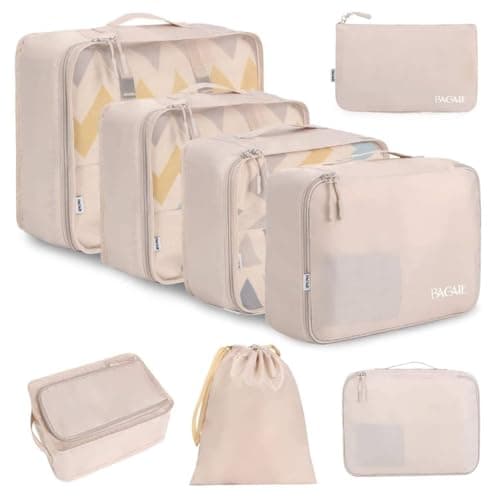
Bagail Bagail 8-Set Packing Cubes
Bagail 8-Set Packing Cubes

Eight mesh-topped cubes in a mix of sizes, and a duffel is the bag that most rewards having a lot of them. The floor layer alone wants two or three, the clothing layers want three or four more, and the mixed sizing is what lets you tile the base properly rather than leaving gaps. The mesh top is the second reason: a duffel is packed in layers and you need to identify a cube from above without lifting it out.

Best overall for a duffel
8.4
$16.98Amazon
02
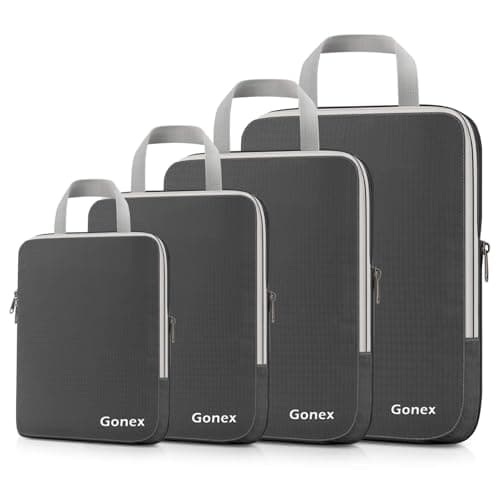
Gonex Gonex Compression Packing Cubes (4-Piece)
Gonex Compression Packing Cubes (4-Piece)

Four compression cubes in ripstop nylon with expandable bodies, and the set that answers the other half of the duffel question. A duffel has no rigid shell, so unlike a suitcase it will keep accepting things until you cannot close it — which means the constraint is genuinely volume rather than a fixed frame. Compression is what buys that volume back, and four cubes is enough to compress the bulky half of a week while leaving the rest uncompressed.

Best for fitting a week in
7.8
$22.99Amazon
03
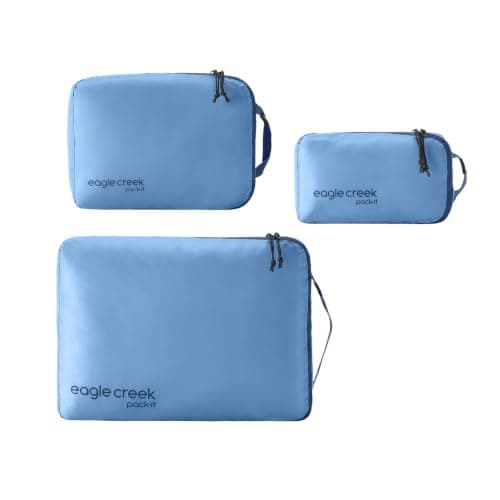
Eagle Creek Eagle Creek Pack-It Isolate Cube Set
Eagle Creek Pack-It Isolate Cube Set

Three solid-panelled cubes in XS, S and M with a top handle and a stackable build, and the most direct answer to a duffel's central weakness. A duffel is a bag with no skeleton; stackable, solid-sided cubes give it one. They hold their shape when they are not completely full, they stack without slumping, and the top handle means you can lift the bottom layer out of a deep bag without tipping the whole thing onto a bed.

Best for structure
6.8
$59.00Amazon

#ad · Live prices from the Amazon Product API, as of Sep 23, 2026. Where we have no verified live price we show none — a gap beats a rotted number.

In detail

The picks, in full

01
Bagail Bagail 8-Set Packing Cubes

Best overall for a duffel

Bagail 8-Set Packing Cubes

8-piece setMesh topPolyesterMultiple sizes
8.4/10
Value: $2.12 /cube

Eight mesh-topped cubes in a mix of sizes, and a duffel is the bag that most rewards having a lot of them. The floor layer alone wants two or three, the clothing layers want three or four more, and the mixed sizing is what lets you tile the base properly rather than leaving gaps. The mesh top is the second reason: a duffel is packed in layers and you need to identify a cube from above without lifting it out.

Structure
6
Capacity
9
Findability
9
Weight
8
Value
10

Pros

  • Eight cubes is enough to build a floor and still layer clothes above it
  • Mixed sizes tile the base of a duffel rather than leaving corner gaps
  • Mesh tops let you read the layer from above without unpacking it

Cons

  • Plain polyester with a large mesh area, so not a hard-use set
  • Soft-sided cubes only hold a flat floor if you fill each one properly

Don't buy this if…

your duffel is a weekend bag. Eight cubes in a small duffel leaves no room for clothes, and a three or four-cube set is the right scale.

$16.98View on Amazon

$19.9915% off

Price as of Sep 23, 2026. Prices change — Amazon's at checkout is the one that counts.

#ad · we may earn a commission from this link to Bagail 8-Set Packing Cubes

02
Gonex Gonex Compression Packing Cubes (4-Piece)

Best for fitting a week in

Gonex Compression Packing Cubes (4-Piece)

Compression4-piece setExpandableRipstop nylon
7.8/10
Value: $5.75 /cube

Four compression cubes in ripstop nylon with expandable bodies, and the set that answers the other half of the duffel question. A duffel has no rigid shell, so unlike a suitcase it will keep accepting things until you cannot close it — which means the constraint is genuinely volume rather than a fixed frame. Compression is what buys that volume back, and four cubes is enough to compress the bulky half of a week while leaving the rest uncompressed.

Structure
7
Capacity
10
Findability
6
Weight
7
Value
9

Pros

  • Real compression on all four cubes, which a soft-sided bag actually benefits from
  • Expandable bodies swallow an overfilled load before compressing it
  • Four cubes is the right scale for most mid-size duffels

Cons

  • Compression creases anything that is not knitwear or fleece
  • A compressed cube is denser, which makes a duffel heavier to carry by hand

Don't buy this if…

your duffel already closes. Compression solves a volume problem and adds zipper weight if you do not have one.

$22.99View on Amazon

Price as of Sep 23, 2026. Prices change — Amazon's at checkout is the one that counts.

#ad · we may earn a commission from this link to Gonex Compression Packing Cubes (4-Piece)

03
Eagle Creek Eagle Creek Pack-It Isolate Cube Set

Best for structure

Eagle Creek Pack-It Isolate Cube Set

3-cube set (XS/S/M)Solid panelsTop handleStackable
6.8/10
Value: $19.67 /cube

Three solid-panelled cubes in XS, S and M with a top handle and a stackable build, and the most direct answer to a duffel's central weakness. A duffel is a bag with no skeleton; stackable, solid-sided cubes give it one. They hold their shape when they are not completely full, they stack without slumping, and the top handle means you can lift the bottom layer out of a deep bag without tipping the whole thing onto a bed.

Structure
10
Capacity
7
Findability
3
Weight
8
Value
6

Pros

  • Solid panels hold shape, which is what a structureless bag needs most
  • Stackable by design, so the layers stay layers
  • Top handle, which matters more in a deep duffel than in a flat suitcase

Cons

  • Nothing visible without unzipping, so the layer has to be remembered or labeled
  • Three cubes at a premium price will not fill a large duffel on their own

Don't buy this if…

you want to read the bag at a glance. Solid cubes in a deep bag is the combination most likely to end in unpacking everything.

$59.00View on Amazon

Price as of Sep 23, 2026. Prices change — Amazon's at checkout is the one that counts.

#ad · we may earn a commission from this link to Eagle Creek Pack-It Isolate Cube Set

Choosing cubes for a duffel specifically

Buy for the base, then for the layers

The first decision is what tiles the bottom of your bag. Measure the base of the duffel and pick cubes that cover it in two or three pieces with minimal gaps — that is the floor. Only then think about the clothing layers above. Most people buy a set and hope; measuring the base takes a minute and changes which set is right.

Firm beats spacious

In a suitcase a slightly under-filled cube is harmless. In a duffel it is the problem, because a soft cube provides no structure and the bag has none of its own. Choose sizes you will genuinely fill, which in practice means more small and medium cubes and fewer large ones than you would buy for a hard case.

Decide whether you need compression at all

A duffel has no fixed volume, so it keeps accepting things right up until the zip will not close — which means people overfill duffels far more often than suitcases. If that is you, compression genuinely helps. If your bag already closes comfortably, compression is extra zipper weight for a problem you do not have. The fork is set out in compression vs regular packing cubes.

Mesh helps more in a deep bag

You look down into a duffel rather than across it, so being able to identify a cube from above without lifting it is worth more here than anywhere else. That points toward mesh tops, with the usual trade-offs — structure and durability — covered in mesh vs solid packing cubes. A reasonable compromise is solid cubes for the floor layer, where visibility does not matter, and mesh above.

The short version

Flat floor, layers not compartments, heavy low and centered, soft things in the corners, first-needed on top. For most duffels the Bagail eight-piece is the right kit because you need enough cubes to build a floor and still layer above it; add compression if you routinely overfill, and solid stackable cubes if the sag is what bothers you most. The duffel-specific product ranking is on our duffel roundup, and the weekend-scale version is on best packing cubes for a weekend.
How we picked

We haven't tested these on a plane — and we say so

Every site in this category says it tested twenty cubes. We haven't tested any. We compiled the published manufacturer specs, computed the numbers that decide the buy — capacity, compression, cost per cube — and scored each set against a published rubric. The scores are judgments from documented research, not measurements we took. Where a figure came from a manufacturer's spec sheet we name it in Sources. Prices are pulled live from Amazon.

Questions

Frequently asked

How do you pack a duffel bag to maximize space?

Build a flat floor of firmly packed cubes across the base, load upward in horizontal layers rather than filling end to end, and push soft shapeless items into the rounded corners the cubes cannot reach. A duffel has no rigid shell, so nearly all its volume is usable — the space people lose is at the corners and in the sag under a badly built floor.

How do you pack a duffel bag for 7 days?

Four to six cubes, sized rather than counted up: one large for tops, one large for bottoms, one medium for underwear and socks, one small for oddments, and a laundry bag that starts empty. For a week, scale the size of each cube rather than adding more of them — the counting logic is the same as in how many packing cubes do I need.

Do packing cubes work in a duffel bag?

They work better in a duffel than anywhere else, because a duffel has no internal structure of its own and cubes supply it. Firmly packed cubes create a level floor and stackable layers, which is what stops the bag sagging into a bowl and lets you lift one layer out without excavating the rest. Under-filled cubes do not do this, so fill them properly.

How do you pack a duffel bag without wrinkling clothes?

Keep anything that creases in the top layer, flat and unweighted, and put the heavy rigid things at the bottom where they cannot press on it. Skip compression for tailored garments — pressure is what sets a crease. For a suit specifically, build the flat floor first and lay it across the top; the full method is in how to pack a suit.

Should heavy items go at the bottom of a duffel?

At the bottom and near the middle, along the length of the bag. A duffel is carried from a strap at its midpoint rather than rolled, so weight stacked at either end makes it swing and dig into your shoulder. Keeping the dense items low and centered is free and it is the single biggest difference in how a loaded duffel feels to carry.

Is a duffel bag better than a suitcase?

For volume per external dimension, yes: a duffel has no wheels, frame or telescopic handle eating into it, so almost all of the bag is usable. For living out of, no — one opening and no compartments means everything has to be designed in. Cubes close most of that gap, which is why a packed duffel and a packed suitcase end up much closer than the bags themselves suggest.

Keep reading

Receipts

Sources & how we got these numbers

We do not run a testing lab, and we do not pretend to. Every dimension, capacity and compression figure traces to the manufacturer's own spec or listing; prices come live from Amazon. Where we couldn't verify something, we say so on the page rather than quietly leaving it out. Read our full method.