Skip to content
Fold & Ferry

Decisions & how-to · Guides

How to use compression bags for packing

The mechanism is simple and almost everyone gets two things wrong: what goes in the bag, and how full to fill it. Here is the method for roll-up bags and pump bags, plus what to do on the way home.

By Stephen V.Updated How we research
#ad

We earn a commission when you buy through our Amazon links, at no extra cost to you. It never affects our rankings, and we say so when the cheaper product is the better buy. How this works.

Compression bags work the same way whether or not they come with a pump: seal the clothes in, then get the air out. The two things almost everyone gets wrong are what goes inside (soft lofted clothing only) and how full to fill it (about two thirds, never to the zip). Get those right and the rest is mechanical. The steps are below, with the roll-up method and the pump method both covered.

What goes in, and what definitely does not

A compression bag only works on trapped air, so the contents decide whether the product does anything at all. In: t-shirts, knitwear, fleece, sweatshirts, pyjamas, a puffer or synthetic jacket, towels. Out, for three different reasons:

  • Dense items, because there is nothing to remove. Jeans, chinos, trainers, a shell jacket. You will seal the bag, see no change and blame the bag.
  • Hardware, because it kills the film. Belt buckles, metal zips, underwired bras, anything with a hook. Under compression these press hard against thin film and that is how a bag stops sealing.
  • Tailoring and anything damp. A suit or a dress shirt comes out of a compression bag creased in a way that takes a steamer to fix — those belong in a garment folder. Damp clothing sealed in an airtight bag for eight hours comes out smelling of something you will remember.

The two-thirds rule

This is the single most useful thing on this page. Fill the bag to about two thirds and leave the top third empty. An overfilled bag cannot be sealed cleanly: the fabric bunches at the zip, a fold gets caught in the teeth, and the bag quietly loses air over the next six hours until you open your case to find it fully inflated again. Almost every “it did not hold” complaint in this category is an overfilled bag with a blocked seal.

Matching the bag size to the load is how you stay inside the rule, which is why packs with two or three published sizes are more useful than packs of identical bags. A coat goes in a large; three days of tops goes in a medium.

Rolling versus pumping

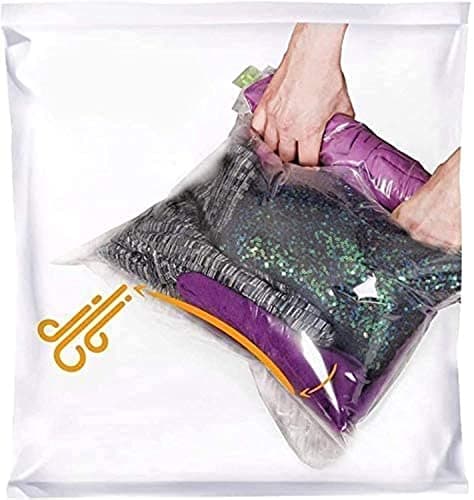
Rolling needs no equipment. Lay the sealed bag flat, start at the end away from the valve, and roll tightly toward it so the air is driven out through the one-way valve. The limit is reach: rolling cannot get at air trapped in the middle of a thick load, so a bulky coat ends up flatter than it was but not flat.

Pumping draws air out through the valve from the outside, so it reaches what rolling cannot, and it takes seconds instead of a minute of effort on a hotel floor. A rechargeable pump is the easiest; a hand pump cannot go flat. Either way, never pump a bag whose zip is not fully closed — you will pull the seal apart and conclude the bag is faulty.

The mistakes that waste a pack of bags

  • Filling to the top. Covered above, and the cause of most failures.
  • Rolling the clothes before they go in. Rolls trap air in the core where no valve can reach it, and they make a lumpy slab that will not lie flat. Fold flat and stack.
  • Sealing the zip in one pass. Run it twice, the second time with a finger on the seal, and look along the whole length for caught fabric.
  • Compressing something you need on Tuesday. A sealed bag is one directional. Put the clothes you will wear during the trip in compression cubes and save the bag for what you will not touch.
  • Leaving it compressed for months.Long storage under compression is hard on a down jacket's loft and sets creases permanently. Open the bag when you get home.

Where the compressed bag goes in the case

Flat in the base, against the back panel, first. A compressed bag is the densest and least flexible object you are packing, so it should define the shape rather than be squeezed in around everything else. Shoes go along the hinge, toiletries and anything that can leak go in their own container on top, and the cube loading order takes over from there. If the bag is going in a backpack rather than a case, it goes in first too, at the bottom, for the same reason.

Before you commit to this method at all, it is worth being clear about what it buys you: volume, and not one gram of weight. See do compression bags reduce weight, and are compression bags worth it for whether the whole approach suits your trips.
The short answer

Quick picks

#ProductBest forScorePrice
01
The Chestnut The Chestnut Roll-Up Compression Bags (12-Pack)
The Chestnut Roll-Up Compression Bags (12-Pack)

The bag the roll-up method above is written for. The Chestnut lists a 12-pack as four large plus eight medium bags needing no vacuum: you seal the zip and roll from the closed end, pushing air out through a one-way valve. Two sizes matters for the method — the large bags are for a coat or a week of knitwear, the mediums for a few days of tops, and matching bag size to load is what keeps you inside the two-thirds fill rule. Twelve bags means you can keep one empty for the return leg without thinking about it.

Best for the no-pump method
7.8
$18.94Amazon
02
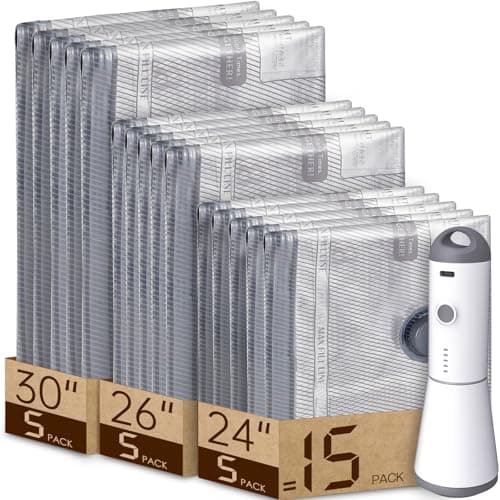
Vacbird Vacbird Travel Vacuum Bags with Rechargeable Pump
Vacbird Travel Vacuum Bags with Rechargeable Pump

The set for the powered version of step five. Vacbird lists carry-on sized vacuum bags with a rechargeable pump included, reusable. A powered pump does the job in seconds, reaches air a roll leaves behind, and removes the need for floor space entirely — which is the practical reason people who travel constantly end up with one. Carry-on sizing is the detail to check on any vacuum set, because the default size in this category is wardrobe storage and a bag larger than your case helps nobody.

Best for the pump method
8.2
$29.99Amazon
03
Vacuum Storage Bags Vacuum Storage Bags with Hand Pump (20-Piece Combo)
Vacuum Storage Bags with Hand Pump (20-Piece Combo)

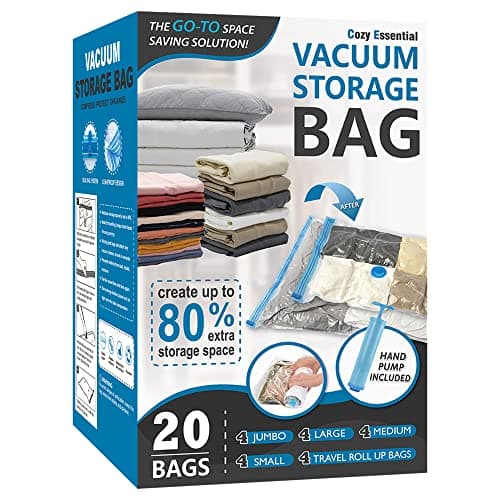
The pick if you like the pump method but not the dependency. Listed as a 20-piece combo in mixed sizes with a hand pump included. A hand pump needs no battery, no cable and no pre-trip charging, so step five works on day fourteen exactly as it did on day one — which is a real advantage over a rechargeable unit on a long trip. The trade is effort: hand-pumping a large bag takes a minute of actual work, and twenty bags is a household-scale quantity rather than a trip-scale one.

Best pump that cannot go flat
7.4
$19.98Amazon

#ad · Live prices from the Amazon Product API, as of October 5, 2026. Where we have no verified live price we show none — a gap beats a rotted number.

In detail

The picks, in full

01
The Chestnut The Chestnut Roll-Up Compression Bags (12-Pack)

Best for the no-pump method

The Chestnut Roll-Up Compression Bags (12-Pack)

12-pack4 large + 8 mediumNo vacuum neededRoll to compress
7.8/10
Value: $1.58 /bag

The bag the roll-up method above is written for. The Chestnut lists a 12-pack as four large plus eight medium bags needing no vacuum: you seal the zip and roll from the closed end, pushing air out through a one-way valve. Two sizes matters for the method — the large bags are for a coat or a week of knitwear, the mediums for a few days of tops, and matching bag size to load is what keeps you inside the two-thirds fill rule. Twelve bags means you can keep one empty for the return leg without thinking about it.

Ease of method
8
Compression
8
Seal reliability
6
Reusability
7
Value
10

Pros

  • Published size split (4 large, 8 medium) so you can match the bag to the load
  • No equipment at all, which makes the method work in any hotel room
  • Enough bags to keep spares, which is what the return-leg step needs

Cons

  • Rolling needs a flat surface and a bit of force, which a cramped room makes awkward
  • Thin film: a caught zip or a buckle is a bag you throw away

Don't buy this if…

…you want the flattest possible result on a bulky coat. Rolling cannot reach the air a powered pump can, and the Vacbird set below is the upgrade.

$18.94View on Amazon

Price as of October 5, 2026. Prices change — Amazon's at checkout is the one that counts.

#ad · we may earn a commission from this link to The Chestnut Roll-Up Compression Bags (12-Pack)

02
Vacbird Vacbird Travel Vacuum Bags with Rechargeable Pump

Best for the pump method

Vacbird Travel Vacuum Bags with Rechargeable Pump

Rechargeable pump includedCarry-on sizedVacuum sealReusable
8.2/10
Value: —

The set for the powered version of step five. Vacbird lists carry-on sized vacuum bags with a rechargeable pump included, reusable. A powered pump does the job in seconds, reaches air a roll leaves behind, and removes the need for floor space entirely — which is the practical reason people who travel constantly end up with one. Carry-on sizing is the detail to check on any vacuum set, because the default size in this category is wardrobe storage and a bag larger than your case helps nobody.

Ease of method
10
Compression
10
Seal reliability
7
Reusability
8
Value
6

Pros

  • Rechargeable pump included, so step five takes seconds and no floor space
  • Carry-on sized bags rather than wardrobe-shelf sizes
  • Reaches a flatter result than rolling on lofted loads

Cons

  • Charge the pump before you travel; a flat pump means no re-compression on the way home
  • One more device in the bag, and the valve remains the system's failure point

Don't buy this if…

…you travel twice a year. Roll-up bags cost a fraction as much and the method above works fine without a pump.

$29.99View on Amazon

Price as of October 5, 2026. Prices change — Amazon's at checkout is the one that counts.

#ad · we may earn a commission from this link to Vacbird Travel Vacuum Bags with Rechargeable Pump

03
Vacuum Storage Bags Vacuum Storage Bags with Hand Pump (20-Piece Combo)

Best pump that cannot go flat

Vacuum Storage Bags with Hand Pump (20-Piece Combo)

Hand pump included20-piece comboMixed sizesVacuum seal
7.4/10
Value: $1.00 /bag

The pick if you like the pump method but not the dependency. Listed as a 20-piece combo in mixed sizes with a hand pump included. A hand pump needs no battery, no cable and no pre-trip charging, so step five works on day fourteen exactly as it did on day one — which is a real advantage over a rechargeable unit on a long trip. The trade is effort: hand-pumping a large bag takes a minute of actual work, and twenty bags is a household-scale quantity rather than a trip-scale one.

Ease of method
6
Compression
9
Seal reliability
7
Reusability
7
Value
8

Pros

  • Hand pump needs no charging, so the method never fails on a dead battery
  • 20 pieces in mixed sizes, per the listing — covers a move or a whole family
  • Reaches a flatter result than rolling, without any electronics

Cons

  • Genuine physical effort per bag, which adds up across a full case
  • Mixed sizes include storage-scale bags that will not fit inside luggage

Don't buy this if…

…you are packing one carry-on. This is the household option; a 12-pack of roll-up bags is sized for a trip.

$19.98View on Amazon

Price as of October 5, 2026. Prices change — Amazon's at checkout is the one that counts.

#ad · we may earn a commission from this link to Vacuum Storage Bags with Hand Pump (20-Piece Combo)

How we picked

We haven't tested these on a plane — and we say so

Every site in this category says it tested twenty cubes. We haven't tested any. We compiled the published manufacturer specs, computed the numbers that decide the buy — capacity, compression, cost per cube — and scored each set against a published rubric. The scores are judgments from documented research, not measurements we took. Where a figure came from a manufacturer's spec sheet we name it in Sources. Prices are pulled live from Amazon.

Questions

Frequently asked

How do you use compression bags without a vacuum?

Fill the bag about two thirds full with flat-folded soft clothing, close the zip seal in two passes, lay the bag flat, then roll it firmly from the sealed end toward the one-way valve so the air is pushed out. Roll-up bags such as the Chestnut 12-pack here are designed for exactly this and need no pump at all.

Why does my compression bag keep losing air?

Nearly always one of two things: the bag was overfilled so fabric bunched at the zip, or a thread or corner of clothing is caught in the seal. Empty it to about two thirds, run the zip closed twice with a finger pressed behind the slider, and check the full length of the seal. The other cause is a puncture from hardware — a buckle or a metal zip — which cannot be reliably repaired.

How full should you fill a compression bag?

About two thirds, leaving the top third empty so the zip can close over flat film rather than bunched fabric. If the clothes reach the zip, take something out. Matching the bag size to the load is the easy way to stay inside the rule, which is why packs with two or three published sizes are more useful than packs of identical bags.

Should you roll or fold clothes for a compression bag?

Fold flat and stack the folds. Rolling traps air in the core of each roll where the valve cannot reach it, and a bag full of rolls compresses into a lumpy slab that will not lie flat in a case. Rolling is a good technique for a cube and the wrong one for a compression bag — see how to fold clothes for packing cubes.

Can you put shoes in a compression bag?

You can, and it is a poor use of one. Shoes are dense, so there is no trapped air to remove, and their soles and eyelets press into thin film under compression. Put them in a dedicated shoe bag instead, which also keeps pavement dirt away from clean clothes.

Can I reuse travel compression bags?

Yes, as long as the film and the valve are intact — that is the point of the zip-and-valve design. Treat them as a consumable, though: a punctured bag will not hold and cannot be trusted after a patch. None of the brands here publish a film thickness or a cycle count, so we quote neither.

Do compression bags work on a puffer jacket?

Better than on anything else — a down or synthetic puffer is mostly trapped air, which is exactly what the bag removes. Two caveats: use a pump rather than rolling if you want the full effect, and unpack it when you get home rather than storing it compressed, because long compression is hard on loft.

Keep reading

Receipts

Sources & how we got these numbers

We do not run a testing lab, and we do not pretend to. Every dimension, capacity and compression figure traces to the manufacturer's own spec or listing; prices come live from Amazon. Where we couldn't verify something, we say so on the page rather than quietly leaving it out. Read our full method.