Organizing a suitcase is a container problem, not a folding problem. There are six categories of thing in every suitcase — clothes, shoes, liquids, electronics, documents and laundry — and a case is organized when each one has its own container and disorganized when any two are sharing. Sort into the six, give each a home, load dense things along the hinge, and then repack the same way every morning.
This is a different question from how to pack
We have a guide for how to pack a suitcase with packing cubes, and it covers the loading method: how to fill cubes, where to put them, how to build layers. This page is about the layer above that — which containers you need at all, how the six categories divide up, and crucially how a case stays organized on day nine rather than only on the morning you left. Most people have the packing part roughly right and no system at all for the other two.
The six categories and their containers
| Category | Container | Why not a cube |
|---|
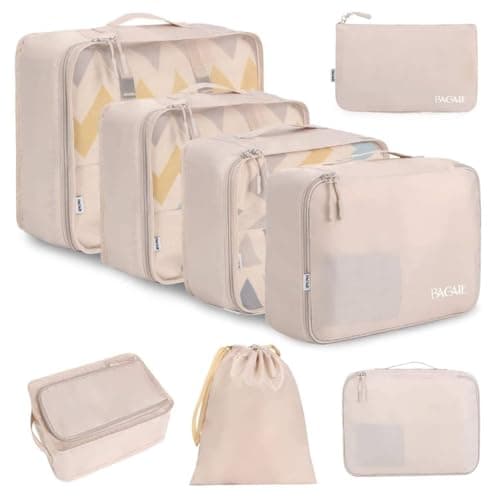
| Clothes | Packing cubes, sorted by type | This is what a cube is for |
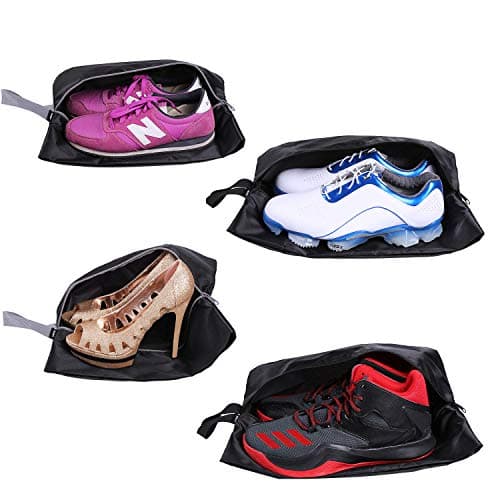
| Shoes | A zipped shoe bag per pair | Soles carry pavement dirt into clean fabric |
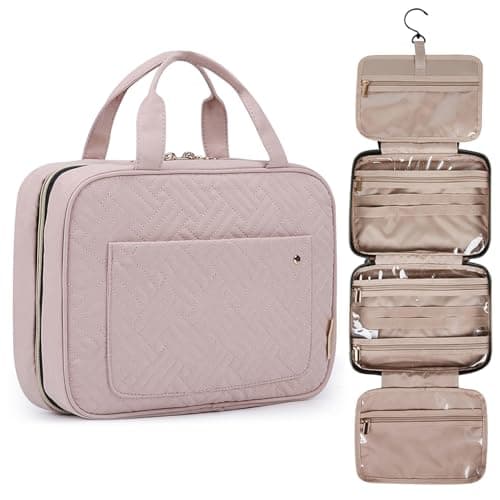
| Liquids and toiletries | A water-resistant toiletry bag with decanted bottles | A cube is not wipe-clean and does not contain a leak |
| Electronics | A pouch with elastic loops | A cable in an open compartment sinks and tangles |
| Documents and valuables | A wallet or organizer in the bag that stays with you | Irreplaceable things do not go in a case at all |
| Laundry | A dedicated bag, used from day one | Worn clothes among clean ones is how the system collapses |
That is the whole architecture, and it is the same architecture the travel organization hub is built around — one roundup per container, because each job has a different answer.
Where things go inside the case
A suitcase has three distinct regions and they want different things. The hinge side — the edge at the bottom when the case stands on its wheels — takes the heavy and dense items: shoes, the toiletry bag, anything with hardware. Weight low and near the wheels makes a case roll stably rather than tipping, and it keeps hard objects off your clothes.
The main well takes the clothes cubes, stacked flat in layers with the heaviest at the bottom. The lid takes flat and light things: a document folder, a garment folder if you are carrying tailoring, the thin layer you want on top. Then fill the triangular corner gaps with soft small items so nothing can shift, because a case whose contents move in transit arrives disorganized no matter how well you packed it.
The habit that actually keeps it organized
Everything above is about the first morning. The reason most organized suitcases are a mess by day four is that there is no rule for the other thirteen mornings. The rule is two minutes long: worn clothes go directly into the laundry bag, and everything else goes back into its own container rather than on top of the pile. Not into a cube, not into the lid, not loose — back where it came from.
That is the difference between a case you can find a shirt in on day ten and a case you upend onto a hotel bed. It also makes the final repack trivial, because nothing has to be sorted at the end — it was never unsorted. On a long trip, pair it with a laundry bag that handles damp as well as dirty, and consider one sealed compression bag for the return leg: how to use compression bags covers that specifically.
Organizing a small suitcase
In a small case the six categories do not change, but two of the containers do. Use slim cubes rather than standard-depth ones so the lid closes flat, and collapse the electronics and documents categories into your personal item rather than the case — which is what a personal item is for, and what how to pack a personal item bag sets out. Decant all liquids, because full-size bottles are mostly water and in a small case that weight is the binding constraint: travel bottles covers the containers and the capacity rule.
Organizing a suitcase for a long trip
Past about ten days, the thing that breaks the system is laundry volume — by the end, half of what is in your case is worn. Two adjustments handle it. Give laundry a real container rather than a spare cube, which our laundry bag roundup ranks, or use a divided clean-and-dirty cube from the with-a-laundry-bag roundup. And plan the wash into the itinerary rather than hoping for it — the arithmetic is in how to pack for two weeks in a carry-on, and the high-capacity cube sets are in the long trips roundup.