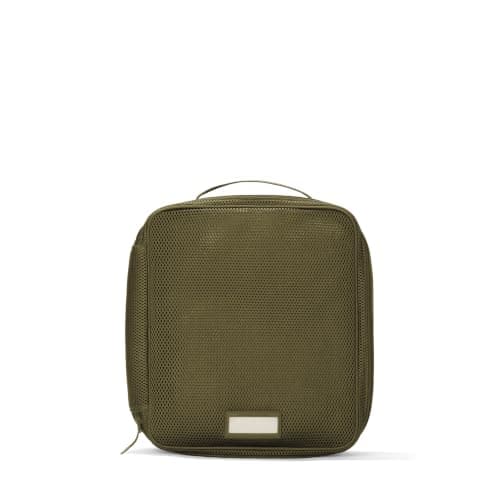
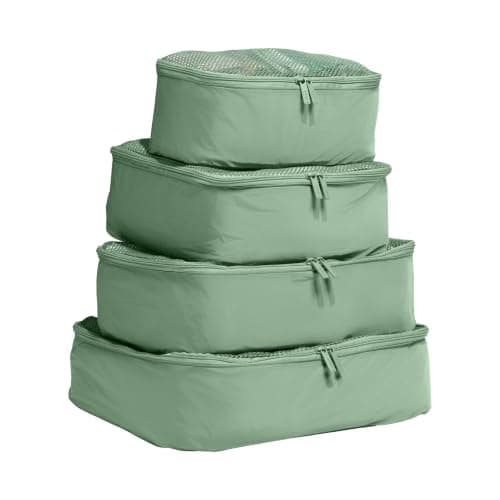
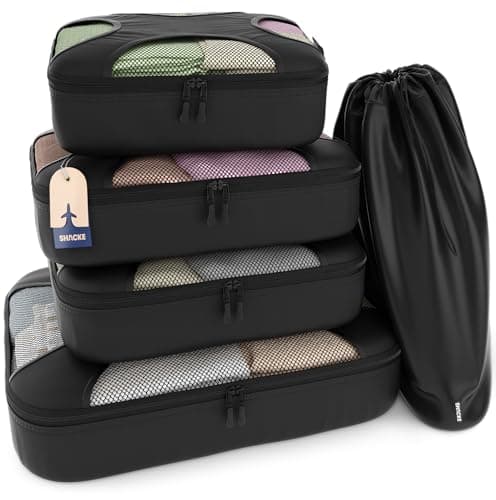
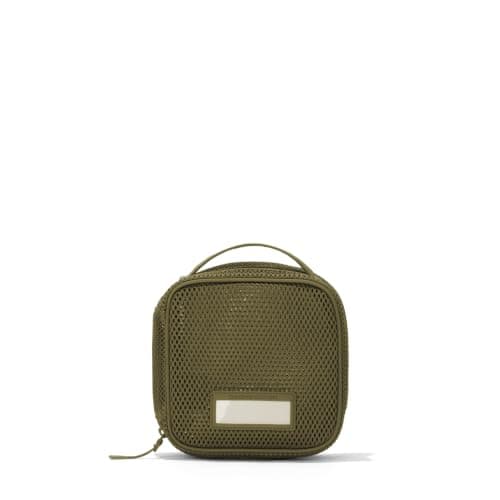
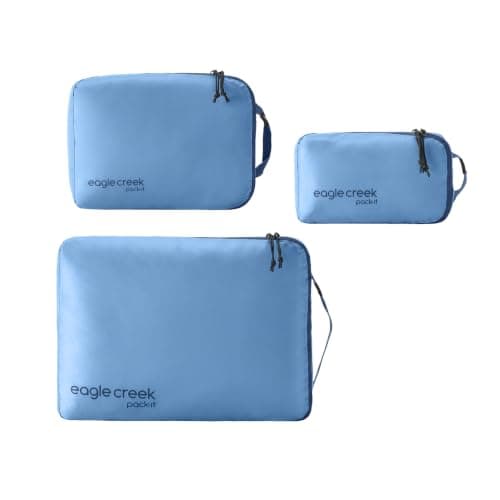
The short version. The best structured packing cube for most people is the Eagle Creek Pack-It Isolate set - solid panels, a top handle and published stackability, which is the full definition of structure in a cube you can still fold flat. If you want the extreme version, the Dagne Dover Roma (Large) is a genuine shell that stands up empty. The budget pick is the Shacke Pak 5-set - a published four-inch cube depth and water-resistant nylon at a fraction of the premium prices, with the laundry bag thrown in.
A normal packing cube is a fabric bag that becomes a rectangle only because the clothes inside it are pressed into one. Take half the clothes out and it is a sagging pouch again, and the space it was holding open collapses into the gaps around it. A structured cube is one that keeps a rectangle regardless - because the panels are solid and stiff, because the shell is reinforced, because the depth is fixed, or because a frame and straps hold it. That is the whole category, and everything good and bad about it follows from that one property.
Four different things sold as "structured"
The word is doing a lot of work in this category and it means four distinct constructions. Knowing which one you are buying is most of the decision.
| Construction | On this page | Holds shape empty? | Folds flat for storage? |
|---|
| Solid stiff panels | Eagle Creek Isolate, Away Insider | Partly - keeps corners, will lean | Yes |
| Reinforced shell | Dagne Dover Roma (large and small) | Yes - stands up on its own | No |
| Published fixed depth | Shacke Pak (4 in deep) | No - but the stack stays regular | Yes |
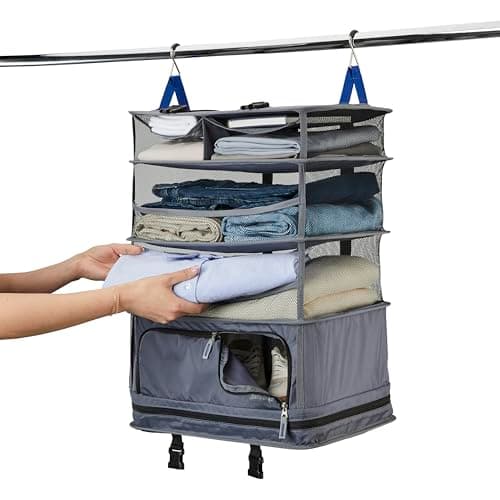
| Frame and straps | Samsonite Fortis 2.0 closet system | Yes, and it hangs | No - 2.31 lb by its own listing |
The column that catches people out is the last one. Structure you cannot collapse is structure you carry home empty, and on the return leg - when the clothes are dirty, the souvenirs are in the case and nothing folds the way it did - a rigid cube is the item you resent. Soft cubes crush down and give that space back. Shells do not.
What structure actually buys you
- A rectangle at any fill level. The real benefit. A half-full structured cube still stacks, still tiles and still sits square against the case wall, so the packing plan survives a trip where things get used.
- Crush protection. Only the shell picks deliver this properly. Anything with a shape worth keeping - a hat, a folded dress shirt, a wash kit with a glass bottle in it - benefits from a container the rest of the case cannot squeeze.
- Handling. Underrated and immediate. A handled, firm cube lifts out of a packed case in one movement. A soft cube has to be grabbed by the zipper, which is also the component you least want to pull on.
- Standing up. A shell that stands open on a hotel shelf turns the cube into a drawer for the week, and that is a genuinely different experience from unzipping a slumped bag on a bed every morning.
What it does not buy you is space. Structure costs volume by definition - the cube holds its walls apart whether or not anything needs them there - so a structured set fits less into the same case than a soft set does. If space is the constraint, the answer is the opposite direction entirely: compression cubes or compression bags, both of which deliberately destroy the rectangle to get the volume back.
How we ranked these, and what we could not check
Five criteria: shape retention (does it keep a rectangle when it is a third full), handling (handles, and whether there is anything for a handle to pull against), build (fabric, closures, published claims), stackability (whether a pile of them stays a pile) and value, which the live price and the published piece count work out below.
What we could not check, stated plainly. Only one product on this page publishes dimensions and a weight - the Samsonite closet system, quoted above in its own figures. For the Dagne Dover shells and the Away set we could read no inch dimension and no weighton the listings served to us, so none is printed, and that is a real reason to measure your case before buying a rigid container. The Shacke four-inch depth is the brand's own published figure. Nobody in this category publishes a stiffness or compression-resistance measurement, so where we say a shell protects its contents we are describing construction rather than quoting a test. We have not packed with any of these; our scores are judgments from published listings and documented research, exactly as our methodology states.
Three questions, and the second one is the one people skip and regret.
1. Is your case hard-shell or soft?
A structured cube and a hard-shell case agree with each other - rectangular interior, rectangular contents, everything tiles. A structured cube in a soft duffel or a backpack fights the bag, because a duffel has no corners for the cube to use and the cube will not flex into the shape the bag wants. Best packing cubes for a duffel bag is the page for that, and it argues the opposite way on purpose.
2. How full is the case on the way home?
The question that decides between stiff panels and a true shell. If you come home with more than you left with, buy something that folds flat - the Eagle Creek set or the Shacke set - because a shell you cannot collapse is dead volume on the return leg. If the case is the same both ways and the contents need protecting, the shell is worth it.
3. Do you need to see in?
Everything on this page is opaque, and that is not incidental - solid panels are what make it structured. If identification matters more to you than shape, best mesh packing cubes is the page, and mesh vs solid packing cubes argues both sides. A reasonable middle route is a structured set plus a color-coding system, which replaces seeing in with knowing which cube is which.
What not to buy
Avoid a rigid shell in a size you have not measured against your case. A soft cube that is slightly too big just squashes; a shell that is slightly too big does not go in at all, and two of the picks here publish no dimension to check. Avoid buying a whole structured set to solve one crushing problem- a single shelled cube added to the soft set you already own is the cheaper and better fix. And be skeptical of "structured" on a listing that names no construction: solid panels, a reinforced shell, a published depth and an internal frame are four different products, and a listing that will not say which one it is usually means the first one at best.