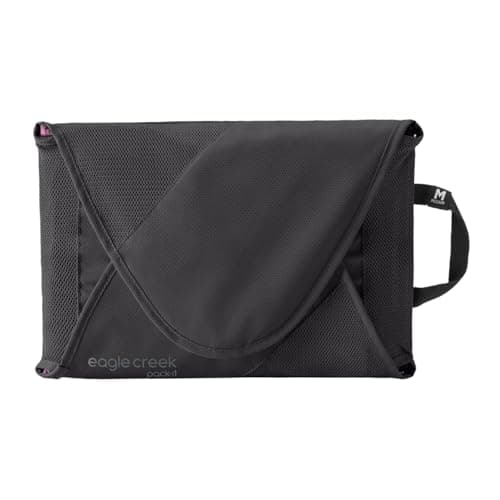
For most trips the answer is the suitcase, plus a garment folder inside it. A folder like the Eagle Creek is 14 by 10 by 1 inch and 0.59 lb published, it keeps you to one bag, and it puts the crease somewhere you chose. Take the garment bag when the suit has to arrive ready to wear with nobody available to hang it up, when you are carrying three or more suits, or when the garment is a floor-length dress that no case can hold unfolded. Those are the three real cases, and outside them a garment bag is a second piece of luggage doing a job a ten-ounce accessory already does.
What each container is actually for
These two things are not competing versions of the same product, which is why the comparison confuses people. A suitcase is a rigid or semi-rigid box that carries everything you own for a trip in a shape airlines have agreed to accept. A garment bag is a fabric envelope built around a coat hanger, whose entire purpose is to let one specific class of clothing travel without being folded at the shoulders.
That is the one genuine functional difference, and it is worth being precise about it, because the marketing around this category implies a wrinkle advantage that is broader than it is. A garment bag does not prevent creases. It prevents onecrease: the hard fold across the shoulders and chest that happens when a jacket goes flat into a case. A suit carried in a good folder still arrives with a fold line at the waist, and that line is the one tailoring hides and steam removes. The shoulder fold is the one that makes a jacket look slept in. So the real question is not “which keeps a suit better” but how much is avoiding that one fold worth to you in weight, capacity and airport friction — and the answer varies enormously by trip.
The comparison, on published numbers
Registry figures only, each one the product's own published listing spec. A blank means the brand publishes none and we have not substituted an estimate.
| Factor | Suitcase + garment folder | Soft garment bag | Rolling garment bag |
|---|
| Shoulder fold | Folded, at a controlled line | Not folded at all | Not folded at all |
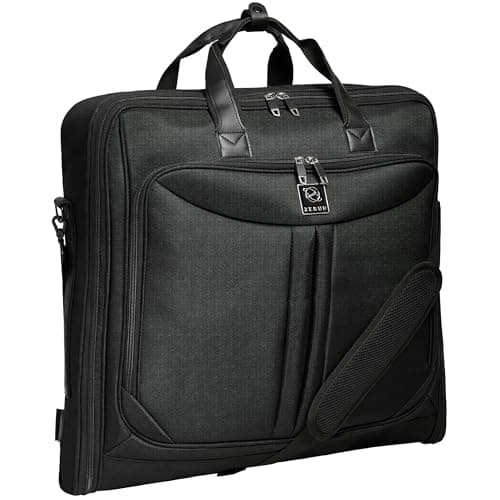
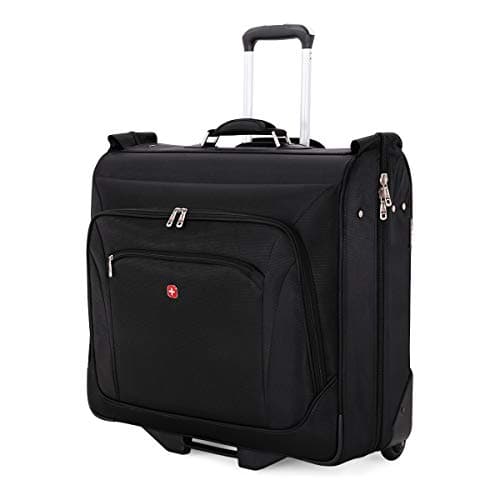
| Weight of the container itself | 0.59 lb (Eagle Creek folder), inside a case you own | 2.87 lb (ZEGUR), 1.63 lb (BALEINE) | 11.6 lb (SwissGear 7895) |
| Everything that is not a suit | The whole case | A shoe pocket, if the bag has one | Four compartments |
| Standard US domestic sizer (about 22 x 14 x 9 in) | Fits, because the case was built for it | About 22 in square folded - wider than 14 in | 9.5 in deep - over on depth |
| Hanging capacity | Up to 12 items folded, per Eagle Creek | 4 items (ZEGUR), 3 suits (MATEIN XXL) | Suits plus a packed wardrobe |
| Overhead bin | Normal case behavior | Awkward shape, often laid flat on top | Usually checked or gate-checked |
| Arrives ready to wear | Needs hanging and often steaming | Hang the bag, done | Hang the bag, done |
The row that decides most arguments is the sizer row. A bag marketed as a carry-on garment bag is frequently not carry-on sized once folded, and the makers publish the numbers that prove it: a bag folded to about a 22-inch square is a foot wider than the 14 inches a typical US domestic sizer allows. Airlines vary, gate agents vary, and soft bags squash in ways hard cases do not — which is precisely why so many travelers report that it “usually” works. “Usually” is a different proposition from a case that fits by design, and the full set of folded footprints is in our garment bag roundup. For the general rules, see IATA's cabin baggage guidance and then your own airline, because the allowance is theirs and not an industry standard.
When the garment bag wins
You step off the plane and into the event. This is the strongest case and it is not really about fabric. If there is no hotel room between the airport and the room you need to look right in, the suit cannot be folded, because the fix for a folded suit is a hanger and two hours. A garment bag moves the suit from one closet to another with no interval required.
Three or more suits, or a suit plus a jacket plus shirts.Hanging capacity scales much better than folding capacity. ZEGUR publishes four items, MATEIN's XXL publishes three suits, and the double-layer MATEIN publishes two hanging compartments. A folder packs up to about a dozen items, but by the third suit you are stacking folded jackets on each other, which reintroduces exactly the pressure crease you were avoiding.
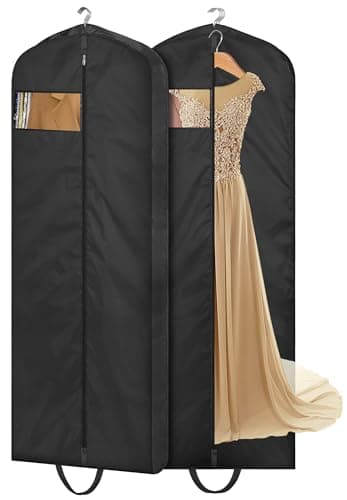
The garment is floor-length.A gown is longer than any suitcase, full stop. That is not a technique problem. MISSLO's 65-inch bags weigh 0.64 lb for a pair, which means the usual weight objection to garment bags disappears entirely in this one scenario.
You are driving. The entire weight-and-sizer argument against garment bags is an airline argument. In a car, a garment bag hooked over the back seat is the single best way a suit has ever traveled, and it costs you nothing.
When the suitcase wins
One suit, and a trip with other clothes in it. This is most business travel. You need shoes, shirts, a laptop, toiletries and something to wear at dinner, and all of that lives in a case regardless. Adding a garment bag means two bags, and a folder at 0.59 lb means one.
You are flying carry-on only. A case is designed around the sizer; a folded garment bag is usually not. If keeping the bag with you matters — and for a suit that has to arrive, it matters a lot — the case is the container with the predictable outcome.
You are weight-limited. The spread here is dramatic. The folder route spends 0.59 lb on the suit-carrying hardware. The soft garment bag route spends between 1.63 and 2.87 lb. The rolling route spends 11.6 lb. On a cabin allowance measured in kilograms, that is the difference between packing a pair of shoes and not.
You want one bag. Hanging clothes and everything else do not mix well in a garment bag. Our how to pack a carry-on walkthrough and how to organize a suitcase both assume one container, because one container is what nearly everyone actually wants.
The folder is the answer most people are looking for
A garment folder is a flat sleeve with a plastic or card board inside it. You lay the jacket face down, fold the sleeves back along the board, fold once at the waist, and wrap the folder's wings over the top. The board is the mechanism: it makes the fold land in the same place every time, and holds it there so the fold cannot migrate while the case moves. That controlled fold at the waist is a line a tailor built the garment to tolerate.
The cost is ten to fourteen ounces and about an inch of case depth. The benefit is that your suit travels in the bag you were already taking, through a sizer it already fits, with your packing cubes stacked around it. For a single suit on a trip with other clothes, that combination beats a dedicated garment bag on every measure except the one the garment bag exists for. Our garment folder roundup ranks six of them on published dimensions, and garment folder vs packing cube explains why a folder is not just a flat cube.
The honest limit on both
Neither container irons anything. A garment bag prevents the shoulder fold; a folder controls where the waist fold lands. Neither removes a crease the garment arrived with, and neither is a substitute for a hanger and a steamy bathroom on arrival. Anything you read that promises wrinkle-free travel is describing a reduction in creasing, not its absence, and we publish no wrinkle figure for any product on this site because nobody has a repeatable way to measure one. The mechanism, and its limits, are in do packing cubes wrinkle clothes.
How to decide in about a minute
Count the suits, then count the nights
One suit on a trip of any length: suitcase, plus a folder. Two suits: still the suitcase if you are carry-on only, the garment bag if you are checking anyway. Three or more: the garment bag, because folded jackets stacked on each other recreate the crease you were avoiding. More than about five nights with three suits and a full wardrobe: the rolling garment bag, and accept the 11.6 lb.
Ask whether there is a hotel room between the airport and the event
If the answer is yes, a folded suit is fine — hang it on arrival and it relaxes. If the answer is no, nothing that folds is fine, and the decision is made for you regardless of weight. This single question resolves more of these arguments than any spec.
Check the folded footprint against your airline, not against the marketing
“Carry-on garment bag” is a product category name, not a guarantee. Look at the folded dimensions the maker publishes and compare them with your airline's stated allowance. A bag folding to about a 22-inch square is wider than the roughly 14 inches a standard US domestic sizer allows, whatever the listing title says. If the bag has to go in the cabin, that number matters more than any other on the page.
Weigh the empty container before you pack it
Empty weight is the most underrated number in luggage and the easiest to find — most of these brands publish it. The range on this page is 0.59 lb to 11.6 lb for containers that all carry a suit. On a weight-limited ticket, the container you choose can cost you more allowance than the clothes you are arguing about. We make the same point about cube sets in do packing cubes add weight.
Remember what a garment bag cannot hold
A garment bag holds hanging clothes and, if you are lucky, one pair of shoes. It does not hold a wash bag, a laptop, folded layers or dirty laundry, which means a garment bag is almost always a second bag rather than a replacement one. Price the decision as “case plus garment bag” against “case plus folder,” because that is the real comparison. If the rest of the bag is unsorted, the travel organization hub has the container for each job.
If you take the bag, learn to load it properly
A garment bag loaded badly performs worse than a folder loaded well — the suit slides, the shoulders pull against the hanger, and the fold happens anyway in the wrong place. The sequence that avoids all three is in how to pack a garment bag, and the fold itself, for whichever route you take, is in how to pack a suit.
The short version
Suitcase plus a garment folder for one suit and a normal trip — it is 0.59 lb, it fits the sizer, and it keeps you to one bag. Soft garment bag when the suit must arrive ready to wear, when there are three or more of them, or when you are driving. Rolling garment bag for a week of meetings where you need suits and a wardrobe and you are checking anyway. And a long dress bag when the garment is floor-length, because that is the one case with no argument in it at all.