Skip to content
Fold & Ferry

Decisions & how-to · Guides

Compression cubes vs vacuum bags: which one should you pack?

Both of these compress. The difference is what you give up to get it — a cube keeps your clothes sorted and squeezes less, a vacuum bag squeezes harder and turns your suitcase into one solid brick you cannot dip into.

By Stephen V.Updated How we research
#ad

We earn a commission when you buy through our Amazon links, at no extra cost to you. It never affects our rankings, and we say so when the cheaper product is the better buy. How this works.

For almost everybody, buy the compression cubes. A cube gives you most of the squeeze and all of the organization, and it is the one you will still be using in three years. Buy vacuum bags instead in one specific situation: a bulky, lofted load — winter coats, ski layers, a duvet — going into a bag that is limited by volume and not by weight, on a trip where you will not need to open the bag until you arrive.

These are not the same comparison as cubes versus bags

We already have a guide for packing cubes versus compression bags, and it answers a different question: regular cubes organize and compression bags maximize, so the answer is usually “the right one for the job.” This page is narrower and harder. Both things here compress. The question is whether a zipper or a pump is the better way to do it, and what each one costs you.

What each mechanism actually does

A compression cube has a second zipper that pulls the top panel down toward the base. The limit is mechanical: the panels can only close as far as the packed clothes will compact under hand pressure, because your arm is the only force involved. The cube stays a cube, so it stays sorted and stays openable.

A vacuum or roll-up bag seals the clothes inside an airtight sleeve and then removes the air, either with a pump or by rolling the bag so the air escapes through a one-way valve. Removing air is more effective than squeezing because you are not fighting trapped air at all — you are taking it out. The result is a dense flat slab.

Neither of these makes clothes lighter. This is worth saying twice because the vacuum bag is the product that most often tempts people into forgetting it: a bag that looks half the size weighs exactly what it weighed before, and the usual consequence is a compact, surprisingly heavy case at the check-in desk. We have a whole guide on whether compression bags reduce weight because the search volume on that misunderstanding is substantial.

The comparison

—Compression cubesVacuum / roll-up bags
How it compressesSecond zipper pulls a panel downAir removed through a valve, by pump or by rolling
How much it compressesLess — limited by hand pressureMore, especially on lofted items
Clothes stay sortedYes, one category per cubeNo, the bag is one sealed volume
Access mid-tripOpen a cube, take a shirt, close itBreak the seal and repack the whole bag
Equipment to carryNoneA pump, unless the bag is a roll-up type
Effect on weightNone (adds the cube's own fabric)None (adds the bag's own film)
WrinklesFirm packing reduces movement, so fewer creasesDense compaction sets creases hard
LifespanYears; fabric and zippers are the wear pointShorter; the valve and the film are the wear points
Reclaims suitcase shapeYes — cubes stack into a structured blockPartly — a slab fills the base and nothing else

The three questions that decide it

  • Is your limit volume or weight? Volume means compression helps and the harder-compressing option wins. Weight means neither helps at all and you should buy nothing on this page — take something out instead.
  • How lofted is the load? Compression only acts on trapped air. A week of t-shirts, knitwear or a puffer jacket is mostly air, and a pump transforms it. Jeans, boots, toiletries and a shell jacket are already dense, and no mechanism on this page does anything useful to them.
  • Will you open the bag before you arrive? This is the question people skip and then regret. A sealed bag is a one-way container: it is superb on the return leg with a case full of worn clothes, and it is miserable on a four-hotel trip where you need a clean shirt on Tuesday. Cubes have no such penalty.

The combination almost nobody mentions

The setup experienced packers actually use is both, assigned by job. Cubes carry the clothes you will wear during the trip, because you need to get at them. A single sealed bag carries the one bulky thing you will not touch until you arrive — the coat, the extra fleece — and then becomes the dirty-laundry container on the way home, where “sealed” stops being a drawback and starts being a feature. That costs less than kitting out the whole case either way, and it puts each mechanism where its weakness does not apply. Our compression bag roundup ranks the bag half of that properly, and the compression cube roundup ranks the cube half.

How we scored the four picks

Compression— how much the mechanism can physically remove, judged on the mechanism rather than on any brand's percentage claim; we publish no compression percentage anywhere on this site because we have not measured one and nobody selling these publishes a method. Organization — whether your clothes stay in categories. Access on the road — what it costs you to retrieve one garment. Durability — fabric and the failure point, which for a bag is always the valve. Value — live price against what it replaces. Our methodology states plainly that these are judgments from documented specs and not measurements we took.
The short answer

Quick picks

#ProductBest forScorePrice
01
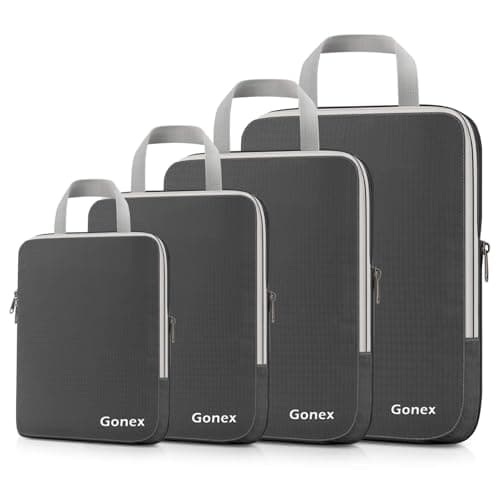
Gonex Gonex Compression Packing Cubes (4-Piece)
Gonex Compression Packing Cubes (4-Piece)

The pick if you want compression without giving up the thing cubes are for. A four-piece expandable set in ripstop nylon, with the second zipper that drops a packed cube's height. You keep sorted categories, you keep being able to open one cube without disturbing the others, and you get a real reduction in the loft of soft clothing. What you do not get is the extreme flattening a pump achieves, because a zipper can only pull the panels as close as the clothes will let it.

Best compression cube
8.8
$16.99Amazon
02
The Chestnut The Chestnut Roll-Up Compression Bags (12-Pack)
The Chestnut Roll-Up Compression Bags (12-Pack)

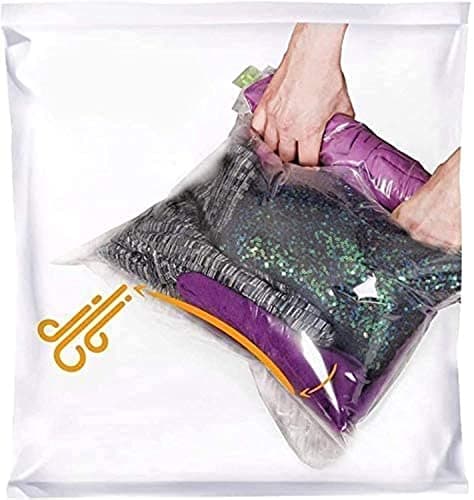
The middle option, and the one most travelers should try first. The Chestnut lists a 12-pack as four large plus eight medium bags that need no vacuum at all: you fill the bag, seal the zip, then roll it from the closed end and the air pushes out through a one-way valve. You get most of the way to a vacuum result with nothing to carry, nothing to charge and nothing to leave in a hotel room. The bag is still a sealed brick when you are done, so the access and wrinkle penalties below apply to it just as much as to a pumped bag.

Best no-vacuum bag
6.2
$18.94Amazon
03
Vacbird Vacbird Travel Vacuum Bags with Rechargeable Pump
Vacbird Travel Vacuum Bags with Rechargeable Pump

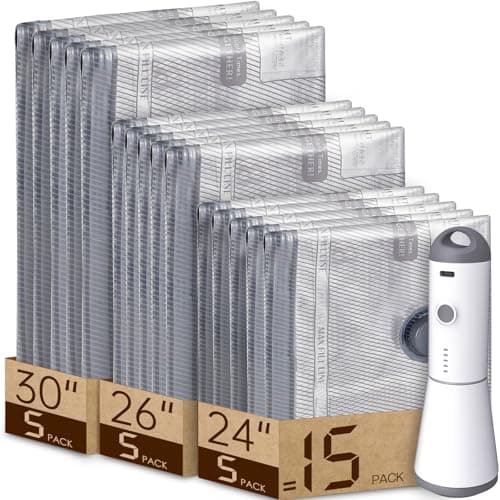
The maximum-compression option on this page, and the only one that uses a real pump. Vacbird lists carry-on sized vacuum bags with a rechargeable pump included, reusable. A powered pump pulls out air a roll cannot reach, so a lofted load — a puffer jacket, a week of knitwear — flattens further than any zipper or roll will manage. The cost is everything in the right-hand column of the table below: no sorting, no access, a pump to charge, and a valve that is the one part of the system that can fail.

Best vacuum bag
5.2
$29.99Amazon
04
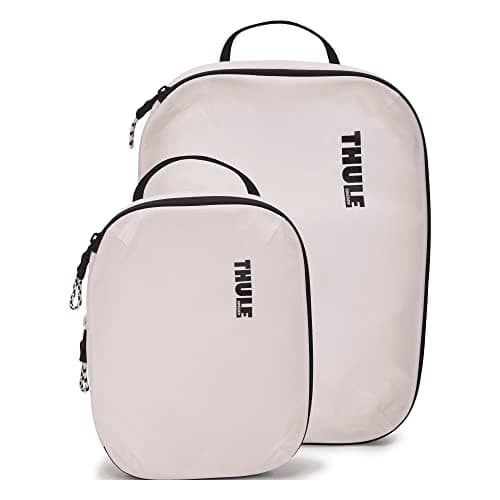
Thule Thule Compression Cube Set
Thule Compression Cube Set

The cube to buy if you have settled the argument in favour of cubes and want one that will last. Thule lists a compression set with a zip-down panel and a durable build. Two pieces rather than six, which tells you what it is for: this is the set for someone who packs the same way every trip and wants two well-made containers rather than a drawer full of cheap ones. The compression mechanism is the same zip-down panel as every cube here, so the physics are identical to the Gonex — what you are paying for is fabric, zippers and the chance the set survives a decade.

Best premium cube
8.2
$52.94Amazon

#ad · Live prices from the Amazon Product API, as of October 5, 2026. Where we have no verified live price we show none — a gap beats a rotted number.

In detail

The picks, in full

01
Gonex Gonex Compression Packing Cubes (4-Piece)

Best compression cube

Gonex Compression Packing Cubes (4-Piece)

Compression4-piece setExpandableRipstop nylon
8.8/10
Value: $4.25 /cube

The pick if you want compression without giving up the thing cubes are for. A four-piece expandable set in ripstop nylon, with the second zipper that drops a packed cube's height. You keep sorted categories, you keep being able to open one cube without disturbing the others, and you get a real reduction in the loft of soft clothing. What you do not get is the extreme flattening a pump achieves, because a zipper can only pull the panels as close as the clothes will let it.

Compression
7
Organization
10
Access on the road
10
Durability
8
Value
9

Pros

  • Compresses while keeping clothes sorted into separate, openable containers
  • Four pieces, expandable, in ripstop nylon per the listing, at a mid-range price
  • Reusable indefinitely with no valve, no pump and nothing to puncture

Cons

  • A zipper compresses less than a vacuum, and on a lofted jacket noticeably less
  • Removes volume and zero weight, like every compression product here

Don't buy this if…

…you are trying to fit a duvet, a ski jacket and a week of knitwear into a cabin bag. That is the job a pump does better, and the Vacbird set below is built for it.

$16.99View on Amazon

$21.9923% off

Price as of October 5, 2026. Prices change — Amazon's at checkout is the one that counts.

#ad · we may earn a commission from this link to Gonex Compression Packing Cubes (4-Piece)

02
The Chestnut The Chestnut Roll-Up Compression Bags (12-Pack)

Best no-vacuum bag

The Chestnut Roll-Up Compression Bags (12-Pack)

12-pack4 large + 8 mediumNo vacuum neededRoll to compress
6.2/10
Value: $1.58 /bag

The middle option, and the one most travelers should try first. The Chestnut lists a 12-pack as four large plus eight medium bags that need no vacuum at all: you fill the bag, seal the zip, then roll it from the closed end and the air pushes out through a one-way valve. You get most of the way to a vacuum result with nothing to carry, nothing to charge and nothing to leave in a hotel room. The bag is still a sealed brick when you are done, so the access and wrinkle penalties below apply to it just as much as to a pumped bag.

Compression
8
Organization
4
Access on the road
3
Durability
6
Value
10

Pros

  • 12 bags in two sizes, per the listing, at the lowest cost per bag here
  • No pump to carry, charge, lose or explain at security
  • Rolls flat for the outbound leg and weighs almost nothing when not in use

Cons

  • You compress by rolling, which takes floor space and effort in a hotel room
  • A sealed bag cannot be dipped into: opening it means repacking it

Don't buy this if…

…you need to get at your clothes daily. A roll-up bag is a one-direction container — brilliant on the way home with worn clothes, awkward for a trip with four hotels.

$18.94View on Amazon

Price as of October 5, 2026. Prices change — Amazon's at checkout is the one that counts.

#ad · we may earn a commission from this link to The Chestnut Roll-Up Compression Bags (12-Pack)

03
Vacbird Vacbird Travel Vacuum Bags with Rechargeable Pump

Best vacuum bag

Vacbird Travel Vacuum Bags with Rechargeable Pump

Rechargeable pump includedCarry-on sizedVacuum sealReusable
5.2/10
Value: —

The maximum-compression option on this page, and the only one that uses a real pump. Vacbird lists carry-on sized vacuum bags with a rechargeable pump included, reusable. A powered pump pulls out air a roll cannot reach, so a lofted load — a puffer jacket, a week of knitwear — flattens further than any zipper or roll will manage. The cost is everything in the right-hand column of the table below: no sorting, no access, a pump to charge, and a valve that is the one part of the system that can fail.

Compression
10
Organization
3
Access on the road
2
Durability
5
Value
6

Pros

  • Rechargeable pump included, per the listing — no manual rolling or hand-pumping
  • Carry-on sized bags rather than wardrobe-storage sizes that do not fit luggage
  • The flattest result available for lofted clothing, by a clear margin

Cons

  • A pump is one more device to charge, pack and not lose; a dead pump means no re-compression
  • Compression removes volume and no weight at all, which is the trap this product creates

Don't buy this if…

…your bag is weight-limited rather than volume-limited. A vacuum bag will let you build a small, solid case that is comfortably over the airline's weight allowance, which is the single most common expensive mistake in this category.

$29.99View on Amazon

Price as of October 5, 2026. Prices change — Amazon's at checkout is the one that counts.

#ad · we may earn a commission from this link to Vacbird Travel Vacuum Bags with Rechargeable Pump

04
Thule Thule Compression Cube Set

Best premium cube

Thule Compression Cube Set

CompressionSetDurable buildZip-down panel
8.2/10
Value: $26.47 /cube

The cube to buy if you have settled the argument in favour of cubes and want one that will last. Thule lists a compression set with a zip-down panel and a durable build. Two pieces rather than six, which tells you what it is for: this is the set for someone who packs the same way every trip and wants two well-made containers rather than a drawer full of cheap ones. The compression mechanism is the same zip-down panel as every cube here, so the physics are identical to the Gonex — what you are paying for is fabric, zippers and the chance the set survives a decade.

Compression
7
Organization
9
Access on the road
10
Durability
10
Value
5

Pros

  • Thule's build quality and a proper zip-down compression panel
  • Two pieces, which suits a packer with a fixed routine rather than a changing one
  • Nothing to charge, nothing to puncture, and no valve as a failure point

Cons

  • The most expensive route to compression on this page, several times the cost per piece of the bags
  • Two pieces is not enough to sort a long trip without buying more

Don't buy this if…

…this is your first compression purchase. Buy the four-piece Gonex or a pack of roll-up bags first, find out which mechanism you actually use, and spend the money once you know.

$52.94View on Amazon

Price as of October 5, 2026. Prices change — Amazon's at checkout is the one that counts.

#ad · we may earn a commission from this link to Thule Compression Cube Set

How we picked

We haven't tested these on a plane — and we say so

Every site in this category says it tested twenty cubes. We haven't tested any. We compiled the published manufacturer specs, computed the numbers that decide the buy — capacity, compression, cost per cube — and scored each set against a published rubric. The scores are judgments from documented research, not measurements we took. Where a figure came from a manufacturer's spec sheet we name it in Sources. Prices are pulled live from Amazon.

Questions

Frequently asked

Are compression packing cubes or vacuum bags better?

Cubes for almost every trip, because they compress reasonably well and keep your clothes sorted and reachable. Vacuum bags only when you have a bulky lofted load, a volume-limited bag and no need to open it until you arrive — a ski trip, a winter move, or the return leg of any trip. The best setup is often both: cubes for what you wear, one sealed bag for the coat and then for laundry.

Do vacuum bags compress more than compression cubes?

Yes, on lofted clothing. A cube's zipper can only compact clothes as far as hand pressure allows, while a pump removes the trapped air entirely. We do not publish a percentage for either, because we have not measured one and no brand in this category publishes a test method behind the figures on their listings.

Do compression cubes or vacuum bags wrinkle clothes more?

Vacuum bags, clearly. Dense compaction holds fabric in whatever fold it was in, and the longer it sits the harder the crease sets. A firmly packed cube actually reduces creasing compared with loose clothes sliding around a case, because nothing moves. See do packing cubes wrinkle clothes for the mechanism.

Can you use vacuum bags without a vacuum?

Yes — roll-up bags are designed for it. You fill the bag, seal the zip, then roll from the closed end and the air leaves through a one-way valve. The Chestnut 12-pack here is that type, listed as four large plus eight medium bags requiring no vacuum. You get less compression than a powered pump achieves and you carry no equipment, which for most travelers is the better trade. Full method in how to use compression bags.

Do compression cubes or vacuum bags save weight?

Neither. Both remove volume and zero weight, and both add a little of their own — the cube's fabric or the bag's film. If you are over an airline's weight limit, nothing on this page helps and the only fix is carrying less. See do compression bags reduce weight.

Are compression cubes worth it over regular cubes?

Only if your bag will not close. Regular cubes organize and compression cubes organize and squeeze, and the squeeze costs money, a little weight and an extra zipper to fail. Our compression versus regular cubes guide works through when the upgrade earns its keep.

Keep reading

Receipts

Sources & how we got these numbers

We do not run a testing lab, and we do not pretend to. Every dimension, capacity and compression figure traces to the manufacturer's own spec or listing; prices come live from Amazon. Where we couldn't verify something, we say so on the page rather than quietly leaving it out. Read our full method.