Skip to content
Fold & Ferry

Decisions & how-to · Guides

How to pack a suit without wrinkling it

A suit creases where it folds, so the whole technique is about controlling where the folds happen and stopping them moving afterwards. Six steps, then the containers that make it repeatable.

By Stephen V.Updated How we research
#ad

We earn a commission when you buy through our Amazon links, at no extra cost to you. It never affects our rankings, and we say so when the cheaper product is the better buy. How this works.

A suit does not crease because it was in a suitcase. It creases because the fabric was bent sharply, in the wrong place, and then held there under pressure for several hours. Every technique worth knowing follows from that sentence: control where the bend happens, give it a radius instead of an edge, and stop anything pressing on it.

Why suits crease differently from everything else

A jacket is a structured garment. It has canvas or fusible interlining across the chest and in the lapels, shoulder padding, and a tailored roll where the lapel turns. Those structures are shaped, and they resist being flattened — which is why a jacket folded like a shirt comes out looking wrong in a way a shirt does not. Trousers are simpler: they have one pressed crease down each leg and folding along it costs nothing.

Wool is also the fabric most willing to recover. A wool suit hung in a humid bathroom for an hour will drop most travel creases on its own. A linen or cotton-blend suit will not, and no packing technique changes that — which is worth knowing before you choose what to travel in.

The honest limit of any container

This is the point most articles skip. A garment folder prevents new creases. It cannot remove ones that are already there, and it does not press anything. Nobody publishes a measured wrinkle-reduction figure for these products, so we do not quote one either — the same position our garment folder roundup takes. What a folder genuinely does is make one controlled fold in the same place every time and hold it there. That is worth real money if you travel in a suit often, and nothing at all if you do it once a year.

Bag by bag

  • Suitcase or carry-on: the ideal case. The suit lies flat across the whole footprint, on top of everything else, and comes out first. Build a level floor underneath it out of firmly packed cubes.
  • Backpack: harder, because a pack is a vertical tube that curves against your back. Fold the suit to the width of the pack, keep it against the flat back panel rather than the curved front, and accept one extra fold. Our backpack packing guide covers the wider ordering problem.
  • Duffel: the hardest, because a duffel has no shape of its own and whatever you put in it decides the topography. Build a flat floor of cubes first, then lay the suit across the top — the method in how to pack a duffel bag.
  • Garment bag: the best result and the worst convenience. It hangs the suit rather than folding it, which is why hotels prefer them and why nobody wants to carry one through an airport. The comparison is in packing cubes vs garment bags.

Three things that make it worse

  • Compressing the suit. Compression cubes and roll-up bags are excellent for fleece and terrible for tailoring. Pressure is exactly what sets a crease.
  • Rolling it. Rolling works beautifully for jersey and knitwear and badly for a structured jacket, because the chest canvas cannot follow the curve. The general case for and against is in packing cubes vs rolling.
  • Leaving it packed. The single biggest variable is how long the fold is held. An hour is nothing; two days in a case at the far end is what sets a crease permanently.

The steps below are the method. The products after them are the containers that make it repeatable — and if you only travel in a suit occasionally, the method alone is genuinely enough.

The short answer

Quick picks

#ProductBest forScorePrice
01
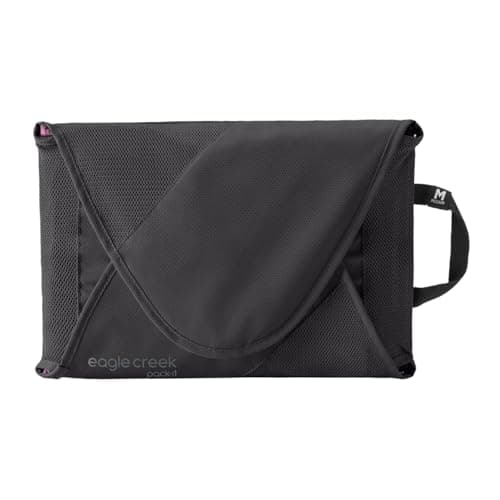
Eagle Creek Eagle Creek Pack-It Reveal Garment Folder (Medium)
Eagle Creek Pack-It Reveal Garment Folder (Medium)

A 14 by 10 by 1 inch folder with a folding board included, rated by the listing for up to 12 items and weighing 0.59 pounds empty. The folding board is the part that matters and the part cheap folders omit: it gives you the identical fold every time, at the same place, with a radius rather than a sharp edge. One inch deep means it lies flat across the top of a packed case, which is exactly where a suit belongs.

Best overall
8.2
$35.00Amazon
02
Briggs & Riley Briggs & Riley Travel Essentials Garment Folder
Briggs & Riley Travel Essentials Garment Folder

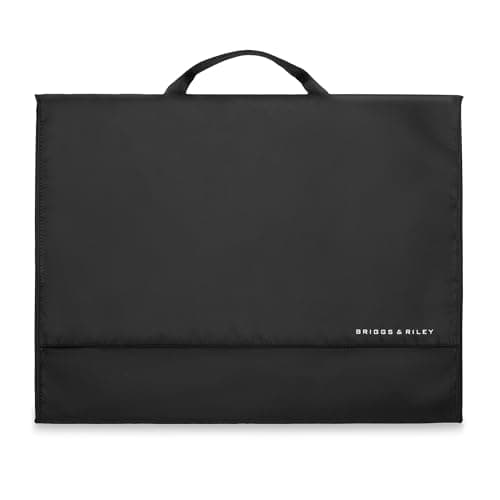
A 16.5 by 13 inch folder with a folding board, adjustable wings and an integrated handle, and the largest footprint of the folders we rank. Size is the specification that matters most for a suit specifically: a larger board means fewer folds, and fewer folds means fewer places a crease can form. The adjustable wings let the fold width match the garment rather than forcing the garment to match the folder, which is the difference between a suit and a shirt.

Best for a suit you will be judged in
8.2
$75.00Amazon
03
Osprey Osprey Ultralight Garment Folder
Osprey Ultralight Garment Folder

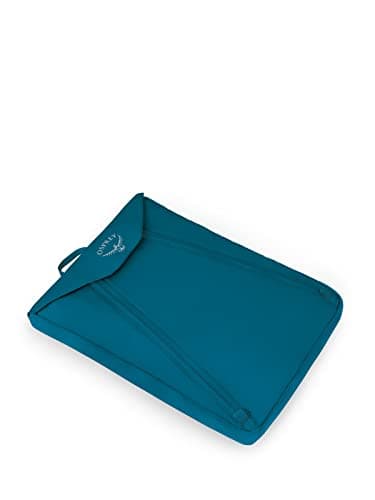
A 15.7 by 11 by 2 inch folder at 0.41 pounds empty with a dual-zip wide opening and a recycled main fabric, and the pick if you are carrying a suit in a bag you also have to lift into an overhead locker. At 0.41 pounds it is the lightest folder we can quote a published weight for, and the wide dual-zip opening means the folded garment goes in flat rather than being posted through a gap, which is where a careful fold usually gets undone.

Lightest option
8.2
$42.00Amazon
04
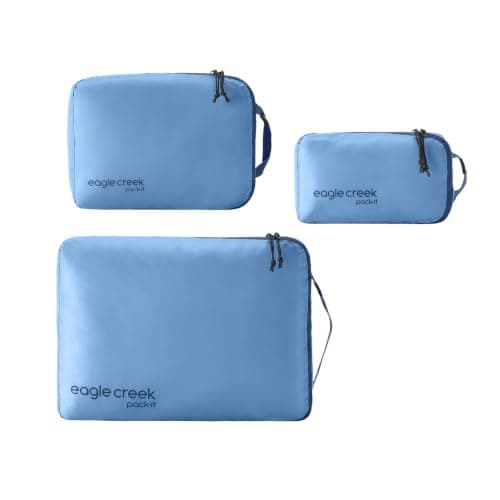
Eagle Creek Eagle Creek Pack-It Isolate Cube Set
Eagle Creek Pack-It Isolate Cube Set

Three solid-panelled cubes in XS, S and M with a top handle and a stackable build, and they are here for a structural reason rather than a garment one. A suit packs flat on top of a level surface, and a level surface is what stacked, solid-sided cubes create. Soft, sagging cubes leave a lumpy topography and every lump becomes a crease line under the suit. Solid, stackable cubes are the flattest floor you can build inside a case.

Best for the rest of the bag
7.6
$59.00Amazon

#ad · Live prices from the Amazon Product API, as of Sep 23, 2026. Where we have no verified live price we show none — a gap beats a rotted number.

In detail

The picks, in full

01
Eagle Creek Eagle Creek Pack-It Reveal Garment Folder (Medium)

Best overall

Eagle Creek Pack-It Reveal Garment Folder (Medium)

14 x 10 x 1 inFolding board includedHolds up to 12 items0.59 lb empty
8.2/10
Value:

A 14 by 10 by 1 inch folder with a folding board included, rated by the listing for up to 12 items and weighing 0.59 pounds empty. The folding board is the part that matters and the part cheap folders omit: it gives you the identical fold every time, at the same place, with a radius rather than a sharp edge. One inch deep means it lies flat across the top of a packed case, which is exactly where a suit belongs.

Crease control
9
Capacity
8
Build
9
Weight
7
Value
8

Pros

  • Folding board included, so the fold is repeatable rather than improvised
  • One inch deep, so it lies flat on top of everything else
  • Rated for up to 12 items per the listing, so it takes shirts as well as the suit

Cons

  • 0.59 lb empty is real weight to add to a carry-on
  • 14 by 10 inches is a medium footprint and a long jacket needs the fold to be right

Don't buy this if…

you travel with a suit twice a year. The technique above works without any folder at all, and a soft item at the fold line does most of the same job for nothing.

$35.00View on Amazon

Price as of Sep 23, 2026. Prices change — Amazon's at checkout is the one that counts.

#ad · we may earn a commission from this link to Eagle Creek Pack-It Reveal Garment Folder (Medium)

02
Briggs & Riley Briggs & Riley Travel Essentials Garment Folder

Best for a suit you will be judged in

Briggs & Riley Travel Essentials Garment Folder

16.5 x 13 inFolding board includedAdjustable wingsIntegrated handle
8.2/10
Value:

A 16.5 by 13 inch folder with a folding board, adjustable wings and an integrated handle, and the largest footprint of the folders we rank. Size is the specification that matters most for a suit specifically: a larger board means fewer folds, and fewer folds means fewer places a crease can form. The adjustable wings let the fold width match the garment rather than forcing the garment to match the folder, which is the difference between a suit and a shirt.

Crease control
10
Capacity
9
Build
10
Weight
6
Value
6

Pros

  • 16.5 by 13 in, the largest board here, so the suit folds fewer times
  • Adjustable wings match the fold to the garment rather than the other way round
  • Integrated handle, so it lifts out of the case without being unpacked

Cons

  • The most expensive item on this page by a clear margin
  • A large footprint needs a large case; it will not lie flat in a small carry-on

Don't buy this if…

your case is a compact carry-on. A board that does not lie flat has to be bent to fit, which defeats the entire purpose.

$75.00View on Amazon

Price as of Sep 23, 2026. Prices change — Amazon's at checkout is the one that counts.

#ad · we may earn a commission from this link to Briggs & Riley Travel Essentials Garment Folder

03
Osprey Osprey Ultralight Garment Folder

Lightest option

Osprey Ultralight Garment Folder

15.7 x 11 x 2 in0.41 lb emptyDual-zip wide openingRecycled main fabric
8.2/10
Value:

A 15.7 by 11 by 2 inch folder at 0.41 pounds empty with a dual-zip wide opening and a recycled main fabric, and the pick if you are carrying a suit in a bag you also have to lift into an overhead locker. At 0.41 pounds it is the lightest folder we can quote a published weight for, and the wide dual-zip opening means the folded garment goes in flat rather than being posted through a gap, which is where a careful fold usually gets undone.

Crease control
7
Capacity
8
Build
8
Weight
10
Value
8

Pros

  • 0.41 lb empty per the listing, the lightest published figure here
  • Dual-zip wide opening, so a folded suit goes in without being disturbed
  • Recycled main fabric, per the listing

Cons

  • Two inches deep, so it takes more of the case than the flattest folders
  • No folding board mentioned, so the fold itself is still down to you

Don't buy this if…

you want the folder to do the folding. Without a board you are still making the fold by hand, and the board is the part that makes it repeatable.

$42.00View on Amazon

Price as of Sep 23, 2026. Prices change — Amazon's at checkout is the one that counts.

#ad · we may earn a commission from this link to Osprey Ultralight Garment Folder

04
Eagle Creek Eagle Creek Pack-It Isolate Cube Set

Best for the rest of the bag

Eagle Creek Pack-It Isolate Cube Set

3-cube set (XS/S/M)Solid panelsTop handleStackable
7.6/10
Value: $19.67 /cube

Three solid-panelled cubes in XS, S and M with a top handle and a stackable build, and they are here for a structural reason rather than a garment one. A suit packs flat on top of a level surface, and a level surface is what stacked, solid-sided cubes create. Soft, sagging cubes leave a lumpy topography and every lump becomes a crease line under the suit. Solid, stackable cubes are the flattest floor you can build inside a case.

Crease control
7
Capacity
7
Build
10
Weight
8
Value
6

Pros

  • Solid panels hold their shape, creating a genuinely level surface
  • Stackable by design, which is exactly what the suit needs beneath it
  • Top handle, so the cubes lift out without disturbing the garment above

Cons

  • Nothing is visible without unzipping, so labeling matters
  • Three cubes at a premium price is a high cost per cube

Don't buy this if…

you already own cubes that hold their shape. Any firm, evenly packed cube gives the suit a flat floor; this is a refinement, not a requirement.

$59.00View on Amazon

Price as of Sep 23, 2026. Prices change — Amazon's at checkout is the one that counts.

#ad · we may earn a commission from this link to Eagle Creek Pack-It Isolate Cube Set

Do you actually need a garment folder?

Frequency is the whole test

If you travel in a suit monthly, a folder with a board pays for itself in not having to think about the fold and in arriving ready. If you do it for a wedding once a year, the nested-shoulder fold plus a soft item at the fold line gets you most of the way for nothing. Be honest about which you are, because a folder is one of the easiest pieces of travel gear to buy and never use.

Measure your case before you buy the board

A folder only works if it lies flat, and a board that has to be bent to fit the case is worse than no board at all. Check the folder's footprint against the internal dimensions of your case: 16.5 by 13 inches wants a full-size case, while 14 by 10 fits most carry-ons. This is the single most common reason a garment folder ends up in a closet.

Insist on a folding board if crease control is the point

The board is the mechanism. Without it, a garment folder is a flat pouch and the fold is still whatever you made by hand — which means it is different every time and the bend has whatever radius it happens to have. Two of the folders ranked above include a board and one does not; that difference is what the scores reflect.

Give the suit a flat floor

Whatever you carry the suit in, what sits underneath it decides the result. Firmly packed cubes with some structure create a level surface; half-empty soft cubes create a lumpy one, and every lump presses a line into the garment above. This is a genuinely free improvement and it is why solid, stackable cubes appear in the picks on a page about suits.

The short version

Nest the shoulders, fold along existing seams, wrap the fold, pack flat on top, hang it on arrival. If you do that often, the Eagle Creek folder with its board is the best-value way to make it repeatable; if the suit really matters, the larger Briggs & Riley board means fewer folds; if weight is the constraint, the Osprey at 0.41 lb is the lightest published option. And if you want the whole folder category rather than the four picks here, it is on our garment folder roundup.
How we picked

We haven't tested these on a plane — and we say so

Every site in this category says it tested twenty cubes. We haven't tested any. We compiled the published manufacturer specs, computed the numbers that decide the buy — capacity, compression, cost per cube — and scored each set against a published rubric. The scores are judgments from documented research, not measurements we took. Where a figure came from a manufacturer's spec sheet we name it in Sources. Prices are pulled live from Amazon.

Questions

Frequently asked

How do you pack a suit in a carry-on without wrinkles?

Turn one shoulder inside out and nest the other inside it, fold the jacket along the center back seam and once at the waist, fold the trousers along their own pressed crease, and lay the whole thing flat on top of everything else so nothing presses on it. Put it in last, take it out first, and hang it immediately on arrival. Most wool travel creases fall out within an hour.

Should I roll or fold a suit?

Fold. Rolling is excellent for jersey, knitwear and casual cotton, and poor for tailoring: a jacket has structured canvas across the chest and shaped shoulders that cannot follow a curve without distorting. Fold along seams the tailor already put there, because a crease that lands on an existing seam disappears and one across an open panel does not.

Do garment folders actually prevent wrinkles?

They prevent new ones by making one controlled fold in the same place every time and holding it flat. They cannot remove creases that are already in the garment and they do not press anything. No manufacturer publishes a measured wrinkle-reduction figure, so we do not quote one — what we can say is that a folding board makes the fold repeatable, which is the actual mechanism.

Can I put a suit in a packing cube?

You can, and it is better than loose in the bag, but a cube is the wrong shape: it is a deep rectangle, so a jacket has to be folded several times to fit and every extra fold is another crease line. A garment folder is wide and flat by design, which is the whole difference. Where cubes do help a suit is underneath it, creating a level floor to lie on.

How do you pack a suit in a backpack?

Fold it to the width of the pack rather than to its own natural fold, keep it flat against the back panel where the pack is least curved, and accept one more fold than a suitcase would need. Pack it last so nothing is loaded on top of it. A pack is genuinely the hardest case for a suit, and the realistic aim is fewer creases rather than none.

How do you get creases out of a suit after traveling?

Hang it as soon as you arrive and give it an hour. Wool has real recovery and most travel creases drop out on their own. If they do not, hang it in the bathroom while you run a hot shower — steam relaxes the fibres without the risk of an iron on a structured garment. Linen and cotton blends recover far less well, which is worth knowing before you choose what to travel in.

Keep reading

Receipts

Sources & how we got these numbers

We do not run a testing lab, and we do not pretend to. Every dimension, capacity and compression figure traces to the manufacturer's own spec or listing; prices come live from Amazon. Where we couldn't verify something, we say so on the page rather than quietly leaving it out. Read our full method.