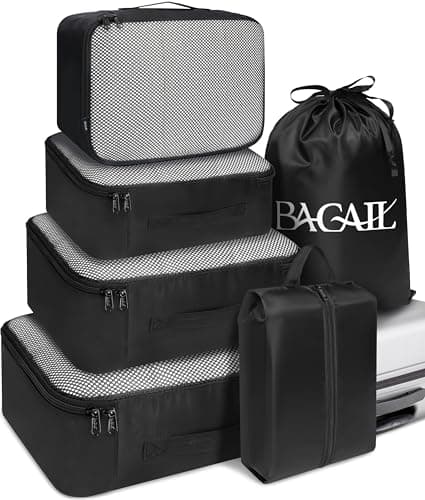
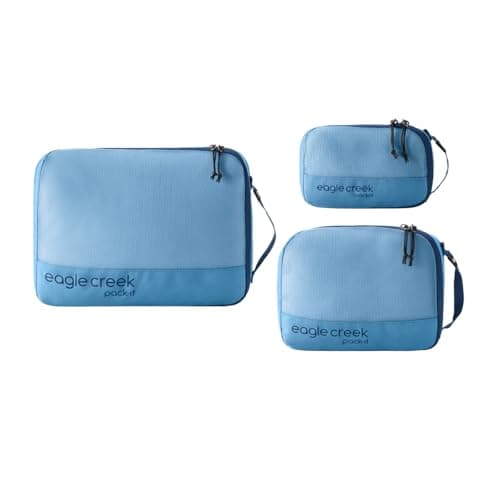
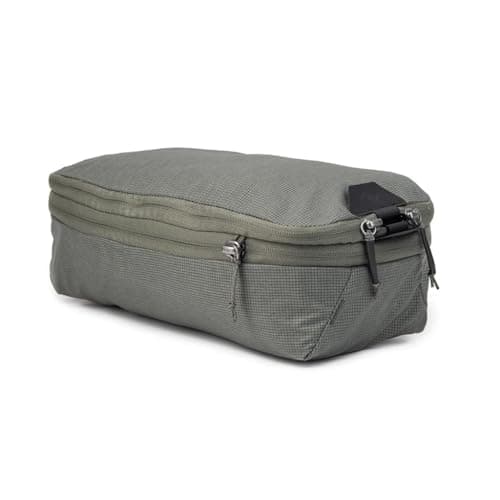
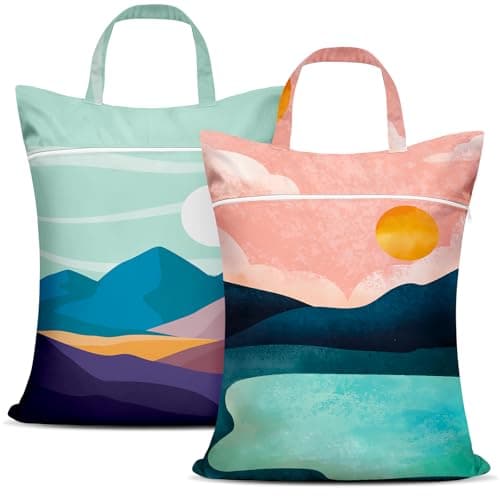
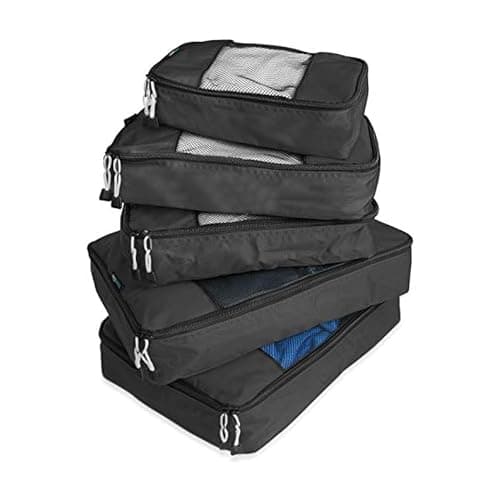
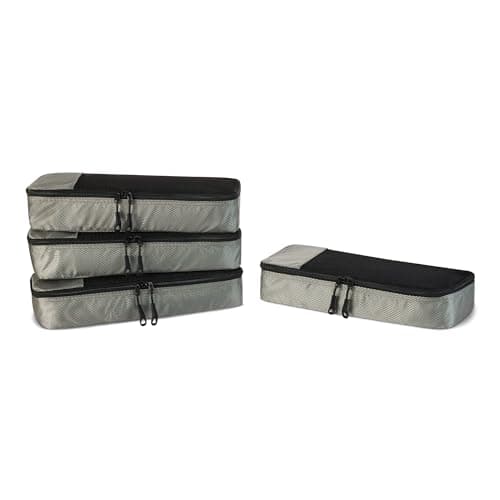
Almost every packing cube sold is designed around a suitcase: deep, rectangular, sized to tile the base of a carry-on. A diaper bag is none of those things. It is shallow, it is soft, it is full of vertical pockets, and you open it one-handed while holding a baby. A cube set that is excellent in a suitcase can be actively bad in a changing bag, and that is the whole reason this page exists separately from our roundup for kids, which is about packing a suitcase for a child rather than organizing the bag you carry every day.
What a diaper bag actually needs from a cube
Three things, in this order, and they are not what a general roundup ranks on.
- Slim, not big.A changing bag's usable space is shallow. A slim cube lies flat against the back panel and leaves the depth for bottles, a changing mat and a flask. A standard-depth cube eats the bag.
- Visible without opening. Mesh is not a ventilation feature here. It is so you can find the spare vest in one movement, in a dim changing room, with one hand. Every pick above has mesh or a window for exactly this reason.
- Somewhere for what goes wrong. No fabric cube is waterproof. The soiled outfit needs a lined bag or a dedicated compartment, and pretending a cube will cope is how the clean clothes stop being clean.
The system that actually works
Most people who make cubes work with a baby end up at the same three-cube arrangement, and it is worth stating plainly because it is simpler than it sounds: one cube for changing (diapers, wipes, a folded mat, cream), one for a complete spare outfit, and one lined bag that stays empty until it is needed. Feeding kit usually wants its own pocket rather than a cube, because bottles are the wrong shape.
The trick that keeps it working is the spare-outfit cube. Pack it as a complete outfit — vest, sleepsuit, socks — and never raid it for anything else. The moment it becomes a general clothes cube you are back to rummaging, and rummaging with one hand is what the system was meant to eliminate. Color-coding the cubes by child makes the same idea scale to two, which is the approach our color-coding guide sets out in full.
Clear cubes, and why we did not rank one
Clear packing cubes for a diaper bag is a real thing people search for, and the instinct behind it is right — you want to see in. Our answer is a mesh panel rather than a clear vinyl one, for two reasons. Mesh breathes, and a diaper bag holds things that are occasionally damp; sealed vinyl does not, and damp in a sealed container is how a bag starts to smell. Mesh also folds without cracking, and vinyl at this price point does not survive being crushed in the bottom of a bag for a year. Every pick here gives you the visibility without the vinyl.
How these were ranked
On fit in a real changing bag first, then one-handed access, build, weight and value. As everywhere on this site, the scores are judgments from documented research — published manufacturer specs and retailer listings applied to a published rubric — not measurements from a lab we do not have. Piece counts, fabrics and panel types are each product's own listing figures, and prices are pulled live from Amazon and date-stamped.
The buyer's guide: choosing for a bag you open fifty times a day
Measure the bag, not the cube
The specification that decides this purchase is your changing bag's main compartment depth, and almost nobody checks it. Lay the bag flat and look at how deep the main compartment is once a bottle and a changing mat are already in it. That remaining depth is what your cube has to fit inside. It is usually far less than people assume, which is why slim cubes win this page and standard ones do not.
Small beats large, every time
On a suitcase page, a large cube is efficient. Here it is a liability: a large cube in a soft bag becomes a sagging brick that blocks every other pocket. Two small cubes hold the same volume, pack around the bottles instead of displacing them, and let you take one out without emptying the other. If you are choosing between a set with two larges and a set with two extra smalls, take the smalls — the reverse of the advice on our large-cube roundup.
Check that everything is washable
Diaper-bag cubes get dirty in ways travel cubes never do, and a cube that cannot go in a machine is a cube you will eventually bin. All of the fabric picks here wash; the waterproof bags specifically state machine washable, which is the one you will actually be laundering. Our washing guide covers what survives a hot cycle and what does not.
Buy the wet bag first if you buy nothing else
If your budget is one item, it is not a cube. It is the lined, machine-washable bag, because that solves the only failure mode in a diaper bag that ruins the rest of the contents. Organization is a convenience; containment is not. The cubes make the bag pleasant to use. The wet bag is what stops one incident emptying the whole thing onto a changing table.
One cube per job, and never mix
The discipline is more important than the product. A changing cube that also holds snacks is a cube you will have to open and search, which defeats the point entirely. Give each cube a single job, keep the spare outfit sealed as an outfit, and the whole system works one-handed. That principle is the same one behind what to pack in each cube, applied to the bag you carry every single day rather than twice a year.
The short version
For most changing bags the Amazon Basics slim set is the buy — the shape is right and the price means losing one does not matter. Want enough cubes to keep a permanent set in the car? Bagail's six-piece. Want the one that resists a leak and includes a genuinely tiny cube? Eagle Creek Reveal. Want clean and soiled handled inside a single container? The Peak Design small, at a price only you can justify. And whatever else you buy, buy the waterproof wet bags — two of them, so one is always out of the wash. If you are starting from scratch and want the concept explained before you spend anything, begin with what packing cubes are.