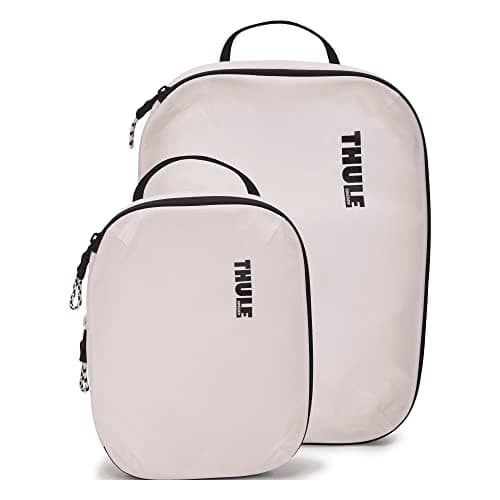
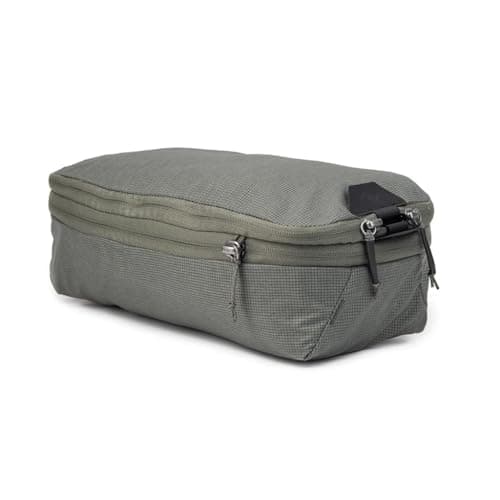
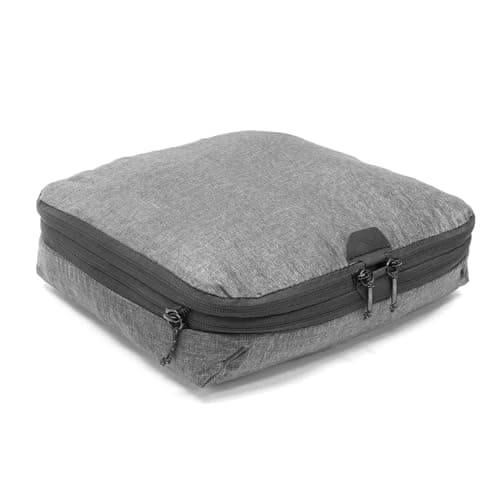
If you want one exceptional cube, buy the Peak Design medium; if your case will not close, buy the Thule compression set. That is the whole comparison in one line, and the reason it resolves that cleanly is that the two brands are not really competing. Peak Design sells single cubes with a divider inside them and solves an organization problem. Thule sells a compression set with a zip-down panel and solves a volume problem. Work out which problem you have first, because the wrong premium cube is the most expensive mistake in this category.
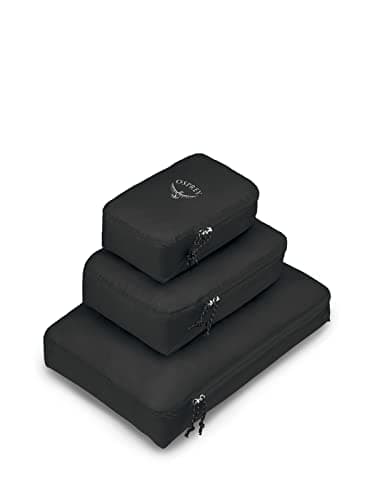
There is a third answer and we would rather print it than hide it: for most people, the Osprey Ultralight set does 80 percent of what either does, weighs less than both, and costs a fraction. The case for Peak Design is the dual compartment and the weatherproof shell. The case for Thule is the compression zipper. If neither of those sentences describes a problem you have, you are paying for materials rather than for function.
The one difference that decides it: how they are sold
Peak Design sells cubes individually, in multiple sizes. Thule sells a set. That is not a pricing detail, it is the design philosophy made visible. Buying singly means you match the cube to the bag - a small cube for a personal item, a medium for a carry-on - and you never own a cube you do not use. It also means a four-cube trip costs four times, which at this tier is a serious number. Buying a set means one price, coarser size choices, and a couple of cubes that may not fit your particular bag.
| Question | Peak Design | Thule |
|---|
| How it is sold | Single cubes, small and medium | As a set |
| Compression | Built in, shrinks as the cube empties | Zip-down panel, compresses the packed load |
| Interior | Dual compartment - clean one side, worn the other | Single compartment |
| Shell | Weatherproof | Durable luggage-brand build |
| Best at | Organizing a bag you already fit into | Fitting into a bag you do not |
Is either worth five budget sets?
Sometimes, and the honest test is how often you travel and what fails. A budget compression cube fails at the zipper, usually the compression zipper, usually when it has been closed against an over-packed cube. If you fly monthly, you will go through several budget sets in the time one premium cube lasts, and the premium cube wins on cost per trip. If you fly twice a year, a budget set will still be fine when you replace your suitcase, and the premium cube is a purchase about how you want your bag to feel rather than about money. Both are legitimate; only one of them is an economic argument.
Two features here genuinely have no budget equivalent. The Peak Design dual compartment replaces an entire clean-dirty system in one cube - the alternative is a dedicated clean/dirty cube, which we cover in how to pack dirty clothes. And a genuinely weatherproof shell is rare below this tier, which matters if your cube travels in a pannier or a boat rather than a suitcase. Everything else - a box, a zip, a mesh panel - the budget tier does adequately, as Bagail vs BAGSMART works through.
How we scored them
Build - fabric class, closure quality and brand warranty position, judged from published specs. Compression - whether the mechanism takes real volume out of bulky clothing. Organization - internal division and how many jobs one cube does. Value - live price against the function, not against the finish. Flexibility - how well the item adapts to a bag or a trip it was not bought for. Judgments from documented specs, per our methodology - no lab, no abrasion test, no claim of either.