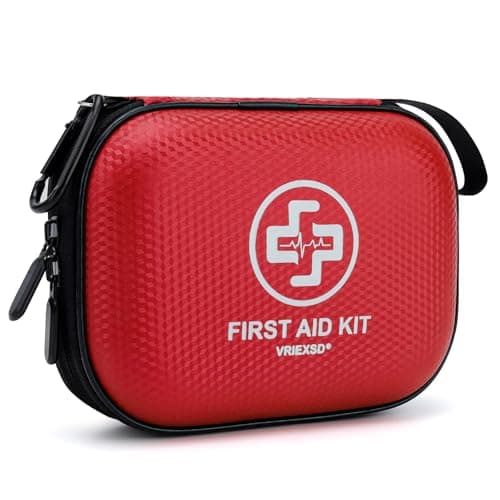
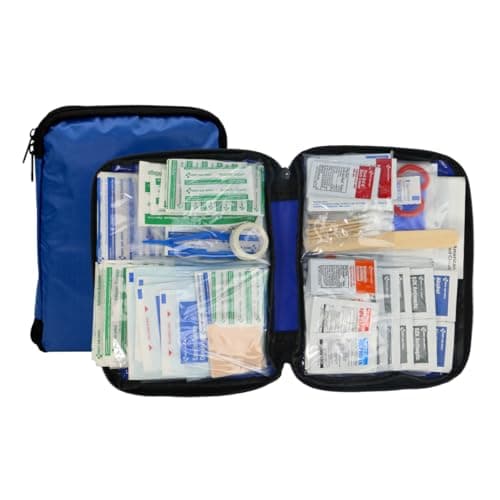
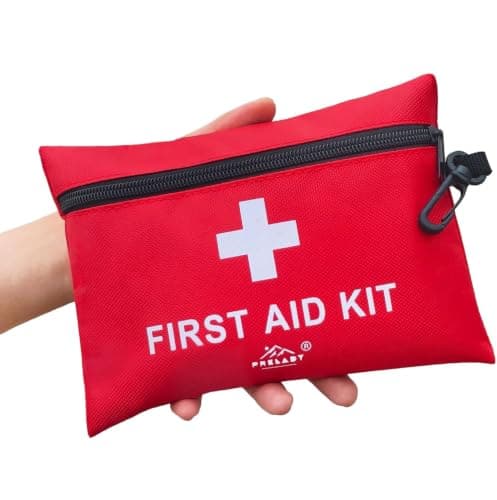
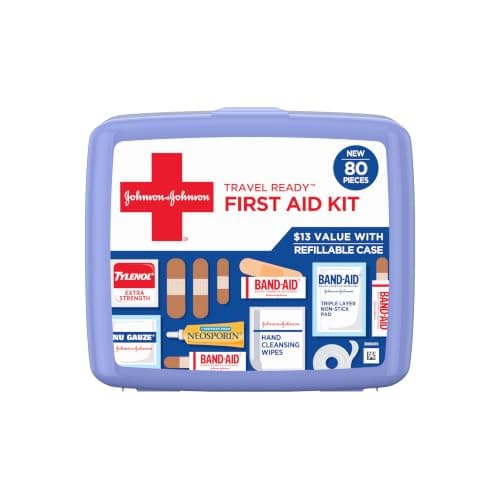
The short version. The best travel first aid kit under $25 for most people is the BAND-AID Travel Ready 80-piece kit, because it is the only kit under this cap whose contents are named brands - BAND-AID, NEOSPORIN and TYLENOL - and the medicines are the half of a kit you want to be able to identify in a country where the packaging is in another language. If the kit is going somewhere wet, the Vriexsd 150-piece waterproof EVA kit is the only hard shell under the ceiling. The budget pick is the Prelady 152-piece pouch at well under a quarter of the cap - a flat pouch that fits a case lid pocket, which is the kit you will actually have with you.
Here is what the $25 ceiling actually excludes, and it is a short and specific list. We checked every first aid kit in our catalog against the live price feed before writing this page. The cap leaves out exactly two of them, and both are wilderness kits from the same specialist manufacturer. Everything else we rank in this category clears it.
That is unusually clean as a finding, and it collapses the decision into one question: how far are you from a pharmacy?If the answer is "under an hour" - a city, a resort, a road trip, anywhere with a chemist - then under $25 you can buy a kit that is genuinely as good as you need, because the job is covering the first few hours of a minor injury until you can buy whatever you actually want. If the answer is measured in days, a budget kit is the wrong tool and no amount of piece count fixes it.
What the wilderness kits cost money for
Worth knowing precisely, so you can tell whether you need it. The two kits this cap excludes publish a specific set of things, and none of them is "more plasters".
| What you are paying extra for | Why it costs money | Do you need it under an hour from a pharmacy? |
|---|
| A waterproof inner bag | Keeps the dressings sterile and dry through days of weather, not just intact in a drawer. | No |
| A trauma pad | Addresses a bleed that cannot wait for help to arrive. | No - help is the answer instead |
| A wilderness first aid guide | Protocols for when evacuation is hours or days away, which is a different discipline from first aid. | No |
| Blister-specific care | Hydrocolloid dressings and moleskin, because on foot a blister is a trip-ending injury. | Only if you are walking all day |
| A published very low weight | Specialist kits publish figures as low as a fifth of a pound, because every ounce is carried. | No |
Read that list and the conclusion is reassuring rather than disappointing: the premium in this category buys self-sufficiency, and self-sufficiency is worth nothing on a trip where a pharmacy is down the street. If you are hiking, paddling or going properly remote, go and read the full first aid roundup, which ranks both wilderness kits alongside everything here and explains what they contain. For everyone else, this page is the whole answer.
Why piece count is the wrong number
Every kit in this band leads with a piece count, and it is close to meaningless as a comparison. The reason is simple arithmetic: adhesive bandages are the cheapest item in a kit and they come in five or six sizes, so a manufacturer can take a kit from 80 pieces to 300 almost entirely by adding plasters. A 298-piece kit is not three times better than an 80-piece kit; it has about three times as many of the one component you can buy anywhere in the world for very little money.
What actually separates these five is three things, in this order.
- Whether the medicines are identifiable. Dressings are commodities and broadly fine at any price. Drugs are not: an unbranded sachet with no manufacturer tells you nothing about dose or ingredient, and that is the one part of a kit where knowing what you are holding matters. Only one kit under this cap solves it.
- Whether it includes scissors. The most-missed item in budget kits. Tape and gauze both have to be cut, and a kit without scissors quietly fails at the moment you need it.
- Whether the case keeps its layout. A kit you own for three years and use twice is mostly a storage problem. Soft pouches let contents settle into a heap and let damp in; a rigid shell keeps everything where it was put. This is why the hard-shell pick ranks second despite anonymous contents.
How we picked these, and what we could not check
A kit appears here only if the live Amazon price feed showed it under $25 with a buyable offer on the day this page was written, with the as-of date printed under the comparison table. No price appears in the page text. The criteria are contents quality (identifiable medicines, real tools), portability (published footprint and weight), case (structure and water protection), capacity and value.
What we could not check, stated plainly.Every dimension, weight and piece count above is the manufacturer's own published figure; we have opened none of these kits and counted nothing. The Prelady kit publishes no weighton the listing served to us, so none is printed for it. We have not verified the expiry dating on any kit's contents - which is a real limitation, because the medicines in a kit expire and the dressings effectively do not, so check the dates when yours arrives and again before each long trip. Nothing on this page is medical advice and nothing here is a substitute for care: a kit covers minor injuries and the first few minutes of anything worse. Our scores are judgments from published listings and documented research, which is what our methodology says in exactly those words.
The two things worth adding yourself
Every kit in this band is missing the same two items, and both are cheap enough that buying the kit plus the additions still comes in under the cap.
The first is your own medication, in a container that survives a bag. No kit includes what you personally take, and a prescription loose in a wash bag is how a dose gets crushed or lost - travel pill organizers ranks the containers for that, including the airtight ones. The second is tweezers, which almost nothing at this price includes and which are the tool you will actually reach for, because splinters and ticks are far more common holiday problems than wounds.
One sequencing note that costs nothing: keep the kit somewhere you can reach without unpacking. A first aid kit buried under cubes at the bottom of a case is a kit you will not use for a scraped knee at the beach, which is precisely the injury it exists for. How to organize a suitcase covers where the reach-me-first items go, and the travel organization hub has the rest of the containers in the order they are worth buying.
Three questions, and the first one is the only one that really matters.
1. How far are you from a pharmacy?
Under an hour - a city, a resort, a road trip - and any kit on this page is enough, because the job is the first few hours of a minor injury. Measured in days, and this is the wrong page: you want a wilderness kit with a waterproof inner bag and blister care, and the full roundup ranks those.
2. Will you carry it, or pack it?
A kit you carry during the day has to be light and flat, which points at the lightest pick or the budget pouch - and a kit that is with you beats a better kit in the hotel. A kit you packas the group's supply can afford the weight, and the 298-piece kit is the restocking answer. Plenty of people are best served by both: the big one in the case, the flat one in the daypack.
3. Is it going somewhere wet?
A boat, a bike, a beach, a rainy trailhead - buy the hard waterproof shell and accept the weight. In a suitcase it is paying volume for protection you will not use, and the soft cases are better shapes.
What not to buy
Do not buy on piece count. It is the one number every listing leads with and it is almost entirely adhesive bandages in several sizes - the cheapest component, and the one you can replace anywhere in the world. Do not treat a tourniquet as a capability: one appears in a kit on this page, and applied without training it can do real harm. And do not buy a kit instead of carrying your own medication properly - that is the gap no kit fills, and it is the one most likely to matter.
Medication, which is a different container problem
A kit under a price cap covers injuries. For prescriptions, best travel medicine bags ranks on the question that actually decides it — bottles or doses — and notes the one rule worth carrying: the TSA's published liquids rule lists medications among its exemptions to the quart-bag limits, so liquid medication is not competing for room in your 3-1-1 bag.