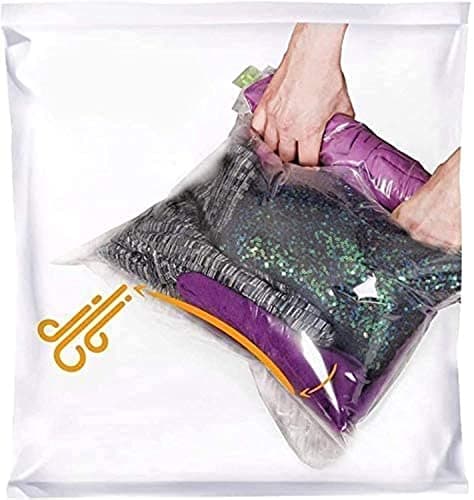
Compression bags squeeze harder than any cube. They also let you build a suitcase that is small, solid and 4 kg over the airline limit — here is how to use them without that happening.
We earn a commission when you buy through our Amazon links, at no extra cost to you. It never affects our rankings, and we say so when the cheaper product is the better buy. How this works.
Compression bags are the most misunderstood product on this site, because they look like a more aggressive packing cube and they are not remotely the same thing. A compression cube organizes clothes and squeezes them a bit. A compression bag does not organize at all — it is a sealed plastic sack whose only function is to remove air. It squeezes harder than any cube ever will, and it introduces two problems cubes do not have. Both are covered below, because if nobody warns you about them you will discover them at an airline check-in desk.
The two mechanisms, and why the difference matters
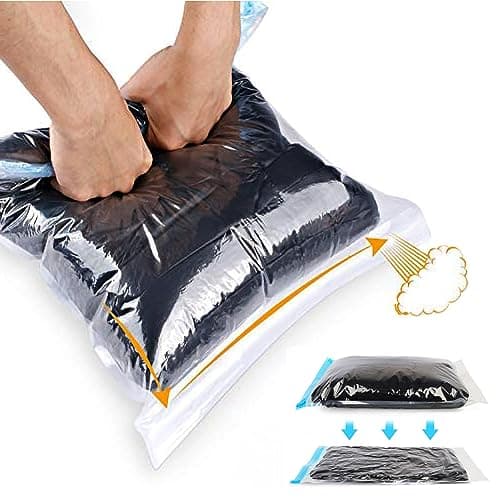
Roll-up bags have a one-way valve. You seal the bag, then roll it from the closed end and the trapped air is forced out through the valve. No pump, no electricity, works in a hotel room or an airport. Vacuum bags use a pump — hand, rechargeable or a household vacuum cleaner — to draw the air out. Vacuum compresses noticeably harder, because a pump pulls out air that rolling simply cannot reach. The catch is the pump: the flight home is where people discover their bags will not re-compress because the vacuum cleaner is 4,000 miles away. That single fact is why the roll-up sets rank higher here for travel, and why the pump set that ranks well is the one with a rechargeable pump you can actually take with you.
The weight trap — read this before you buy
Compression removes volume. It removes exactly zero grams. This is not a technicality; it is the single most common way compression bags cause a problem. A checked bag has both a size limit and a weight limit, and the moment you stop being constrained by size you fill the space you just freed — which is how a suitcase that was previously too bulky becomes a suitcase that is nine kilos over the allowance and costs you an excess-baggage fee larger than everything you packed. Compression bags are a volume tool. If weight is your binding constraint, the answer is packing less, and how to pack light is the more useful page for you than this one.
The second problem: creasing
Vacuum-compressing a shirt presses every fold flat under atmospheric pressure for the duration of the flight, and it comes out looking exactly as you would expect. Compression bags are wonderful for things that cannot crease — puffer jackets, fleeces, sweaters, underwear, towels, and everything on the return leg when it is all dirty anyway — and a poor choice for anything you plan to wear straight off the plane. Most people who use them well use them for half the bag, not all of it. Cubes handle the rest; that split is the subject of packing cubes vs compression bags.
How we ranked them
Compression — how much air the mechanism actually removes. Ease of use — whether you can do it alone, in a hotel room, in under a minute. Durability — film thickness and how many trips the seals survive. Travel-friendly — the honest score for whether it works away from home, which is where hand pumps and vacuum-cleaner-dependent bags lose points. Value — live Amazon price against the set size. See our methodology for how the scores are built.
The short version
For nearly everyone: the Chestnut roll-up set. No pump to lose, twelve bags, cheap enough to find out whether you like the category. If you have a genuine bulk problem — a winter trip, a long haul with ski gear, a move — the Vacbird rechargeable pump set compresses hardest and still works in a hotel. The hand-pump combo is the value route to the same squeeze if you do not mind the effort. And whichever you pick: weigh the bag before you leave for the airport.
The safest first purchase in the category. Twelve bags across two sizes, double-zip seals, and no pump to lose or charge — you zip the bag, roll it, and the air leaves through valves at the bottom. Cheap enough per bag to learn whether compression suits how you travel before spending real money.
The pick when you genuinely need maximum squeeze on the road. A rechargeable pump means a real vacuum seal in a hotel room with no outlet gymnastics — and unlike a hand pump, it takes seconds rather than a workout.
The cheapest honest entry point. Same roll-to-compress mechanism as the Chestnut set, twelve bags in two sizes, and low enough in price that losing one to a split seam is not a real cost.
Vacuum-level compression without a device to charge. The included hand pump is slower and more effort than an electric one, but it never runs out of battery, and twenty bags across mixed sizes is a lot of set for the money.
A clear twelve-pack that needs no pump. Transparency is the underrated feature here — you can see which bag holds what without opening any of them, which is the one thing compression bags are traditionally terrible at.
#ad · Live prices from the Amazon Product API, as of October 14, 2026. Where we have no verified live price we show none — a gap beats a rotted number.
In detail
The picks, in full
01
Best overall roll-up set
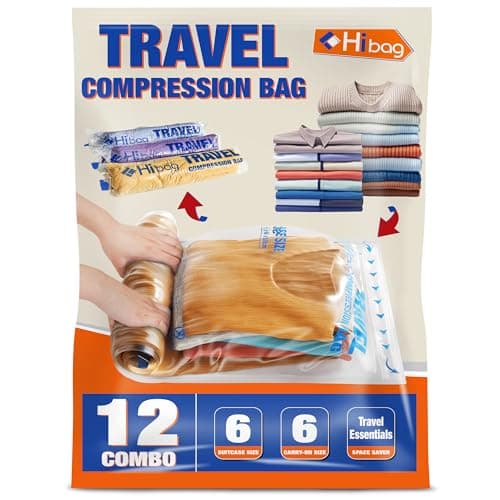
The Chestnut Roll-Up Compression Bags (12-Pack)
12-pack4 large + 8 mediumNo vacuum neededRoll to compress
8.4/10
Value: $1.58 /bag
The safest first purchase in the category. Twelve bags across two sizes, double-zip seals, and no pump to lose or charge — you zip the bag, roll it, and the air leaves through valves at the bottom. Cheap enough per bag to learn whether compression suits how you travel before spending real money.
Compression
7
Ease of use
9
Durability
7
Travel-friendly
10
Value
9
Pros
+No pump needed — you roll the air out with your hands or your knees
+Four large plus eight medium covers a real trip without buying twice
+Well under two dollars a bag, which matters because these are semi-disposable
Cons
−Roll-up compresses less than a vacuum seal does
−Film bags crease everything and rustle — this buys volume, not tidiness
Don't buy this if…
…you are compressing a duvet or a ski jacket for storage — that is a vacuum job and a roll-up bag will not get close.
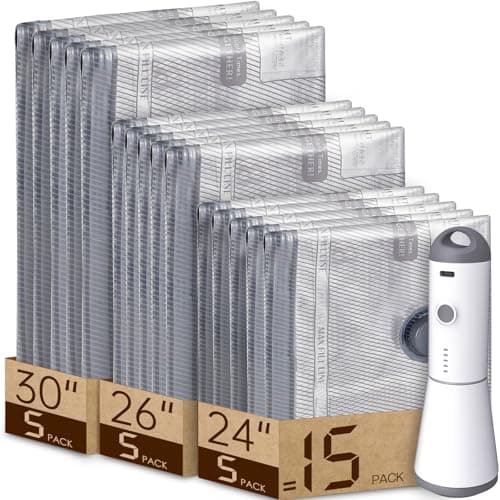
The pick when you genuinely need maximum squeeze on the road. A rechargeable pump means a real vacuum seal in a hotel room with no outlet gymnastics — and unlike a hand pump, it takes seconds rather than a workout.
Compression
10
Ease of use
7
Durability
7
Travel-friendly
7
Value
6
Pros
+Rechargeable pump works away from home, which hand pumps and household vacuums do not
+Vacuum seal compresses meaningfully harder than any roll-up bag
+Carry-on sized bags rather than storage-sized ones
Cons
−The pump is one more device to charge, carry and lose
−Most expensive option here, and the pump is the failure point
Don't buy this if…
…you fly with a strict weight allowance. Vacuum bags are exactly the tool for turning a bag that was too big into a bag that is too heavy.
Price as of October 14, 2026. Prices change — Amazon's at checkout is the one that counts.
#ad · we may earn a commission from this link to Vacbird Travel Vacuum Bags with Rechargeable Pump
03
Best budget roll-up bags
Roll-Up Travel Compression Bags (No Vacuum)
Roll to compressNo pump requiredMixed sizesBudget price
7.8/10
Value: —
The cheapest honest entry point. Same roll-to-compress mechanism as the Chestnut set, twelve bags in two sizes, and low enough in price that losing one to a split seam is not a real cost.
Compression
7
Ease of use
9
Durability
5
Travel-friendly
9
Value
9
Pros
+Lowest-cost way into travel compression bags
+No pump, no batteries, nothing to charge
+Mixed sizes so you are not forced into one footprint
Cons
−Six medium and six large only, so a sock bag costs you a whole medium
−Seals need care; a crooked zip closure leaks air overnight
Don't buy this if…
…you want the size mix that matches how most people pack — the Chestnut set costs about twice as much and gives you eight mediums rather than six.
Vacuum Storage Bags with Hand Pump (20-Piece Combo)
Hand pump included20-piece comboMixed sizesVacuum seal
7.0/10
Value: $0.85 /bag
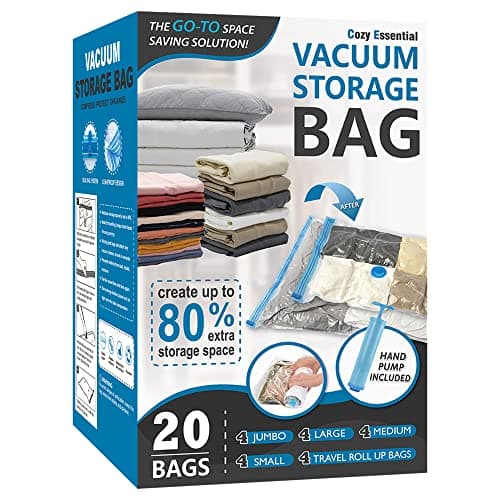
Vacuum-level compression without a device to charge. The included hand pump is slower and more effort than an electric one, but it never runs out of battery, and twenty bags across mixed sizes is a lot of set for the money.
Compression
9
Ease of use
5
Durability
7
Travel-friendly
6
Value
8
Pros
+Hand pump cannot go flat, which matters mid-trip
+Twenty-piece combo covers travel and off-season home storage
+Vacuum seal compresses far harder than roll-up bags
Cons
−Hand-pumping a large bag is genuinely tedious
−Bulky pump to carry if you want to re-compress for the trip home
Don't buy this if…
…you want to travel light — carrying a hand pump to save suitcase volume is a trade that only makes sense on long trips.
Price as of October 14, 2026. Prices change — Amazon's at checkout is the one that counts.
#ad · we may earn a commission from this link to Vacuum Storage Bags with Hand Pump (20-Piece Combo)
05
Best transparent set
ALMING Compression Bags (12-Pack)
12-packNo pump neededTransparentRoll to compress
7.4/10
Value: $1.08 /bag
A clear twelve-pack that needs no pump. Transparency is the underrated feature here — you can see which bag holds what without opening any of them, which is the one thing compression bags are traditionally terrible at.
Compression
7
Ease of use
8
Durability
6
Travel-friendly
8
Value
8
Pros
+Transparent film means you can identify contents without unsealing
+Twelve bags, no pump required
+Priced between the budget and Chestnut sets
Cons
−Roll-up compression, so not vacuum-level squeeze
−Clear film shows every crease and scuff — cosmetic, but it looks worn fast
Don't buy this if…
…you want your packing to look tidy on arrival. Compression bags of any kind crease clothes; that is the trade you are making.
This is the question that separates travel compression bags from home-storage ones, and the listings are deliberately vague about it. If the pump is a household vacuum hose fitting, the bag works beautifully at home and is useless on the return leg of your trip. Look for the words "no vacuum needed" (roll-up) or a pump that is included and portable. Everything else is a storage product wearing a travel label.
Bag size, not bag count
A twenty-piece set sounds better than a twelve-piece one until you find that fourteen of them are jumbo bags built for duvets. For travel, small and medium bags are the useful sizes: they fit a suitcase footprint and they compress to something you can still position in a bag. A jumbo compressed bag becomes a single rigid slab that wastes the corners of your case.
Seal type and how it fails
Almost all of these use a double zip-lock seal plus a valve. The failure is rarely dramatic — it is a bag that looks sealed at night and has quietly re-inflated by morning, because a single fold of fabric was caught in the zip. Run the slider twice and check the seal is clear of fabric along its whole length. That habit does more for reliability than any price difference between these sets.
What to put in them, and what never to
Yes: puffer jackets, fleece, sweaters, towels, underwear, and everything dirty on the way home. No: shirts, linen, anything tailored, anything you will wear within an hour of landing, and anything with structure you want to keep. The rough rule is the same one that governs compression cubes — soft and lofty compresses well, dense and structured does not — and it is explained in full in how compression packing cubes work.
They are not a replacement for cubes
Worth saying plainly: a suitcase packed entirely in compression bags is a nightmare to live out of. To get one shirt you unseal a bag, and to re-pack you need the pump you may not have. Most experienced packers use compression bags for bulk and cubes for daily access — the jacket and the sweaters get sealed, the things they touch every day stay in cubes. If you are still choosing between the two categories, start at packing cubes vs compression bags.
Before you choose a bag over a cube
A compression cube does a weaker version of the same job while keeping your clothes sorted and reachable, and for most trips that trade goes the cube's way. If you have not settled that question yet, settle it first: our compression cubes versus vacuum bags comparison sets the two mechanisms against each other, and are compression bags worth it names the four situations where nothing on this page is the right purchase.
The question buyers ask immediately after this one
Compression bags crease clothes more than cubes do, and the longer the bag stays sealed the harder the crease sets - so the real decision is which clothes go in one. Do compression bags wrinkle clothes works through the mechanism, names the fabrics that shrug it off and the ones that do not, and gives the split that lets you use compression without arriving looking like it.
How we picked
We haven't tested these on a plane — and we say so
Every site in this category says it tested twenty cubes. We haven't tested any. We compiled the published manufacturer specs, computed the numbers that decide the buy — capacity, compression, cost per cube — and scored each set against a published rubric. The scores are judgments from documented research, not measurements we took. Where a figure came from a manufacturer's spec sheet we name it in Sources. Prices are pulled live from Amazon.
Questions
Frequently asked
Do travel compression bags actually work?+
Yes, on bulky, air-heavy items — jackets, sweaters, fleece, towels. They remove trapped air, so the saving scales with how much air the item held. On dense clothes like jeans there is very little air to remove and the bag does almost nothing. They save volume, not weight.
Do compression bags reduce the weight of my luggage?+
No. Compression removes air, which weighs nothing. Your bag gets smaller and stays exactly as heavy — and because the freed space tempts you to pack more, compression bags are a common cause of going over a weight limit. Weigh your bag before you leave for the airport.
Roll-up or vacuum compression bags for travel?+
Roll-up for most travelers: no pump to lose, works anywhere, and re-compressing for the trip home takes a minute. Vacuum for maximum squeeze — but only buy a vacuum set whose pump is portable, or you will not be able to re-seal the bags away from home.
Are compression bags better than compression packing cubes?+
They compress harder and organize worse. A compression cube keeps clothes sorted and accessible while squeezing modestly; a compression bag is a sealed sack that squeezes a lot and gives you no access without unsealing. Most people use bags for bulk and cubes for daily items — see packing cubes vs compression bags.
Can you reuse travel compression bags?+
Yes, many times, until the seal or the valve fails. The usual cause of early failure is fabric caught in the zip seal, which lets air back in overnight. Run the slider along the full length twice and keep the film away from sharp objects and zippers.
We do not run a testing lab, and we do not pretend to. Every dimension, capacity and compression figure traces to the manufacturer's own spec or listing; prices come live from Amazon. Where we couldn't verify something, we say so on the page rather than quietly leaving it out. Read our full method.