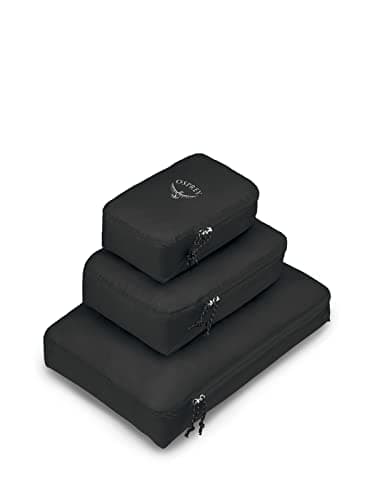
Yes, packing cubes add weight. Anyone telling you otherwise is selling something. The useful question is how much, and whether that amount is worth what you get — and that is answerable with real numbers, because some manufacturers publish empty weights on their listings.
The published numbers we can actually quote
These are figures from the products' own Amazon listings, not estimates:
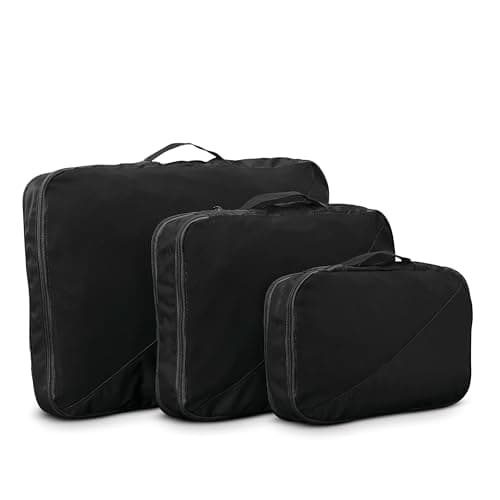
- Samsonite 3-piece compression set: 0.88 lb. That is about 400 grams for three cubes, or roughly 0.29 lb (133 g) per cube.
- Samsonite 6-piece compression set: 1.43 lb. About 649 grams for six, or roughly 0.24 lb (108 g) per cube. Worth noting: 1.43 is not double 0.88, so the six-piece is not simply two of the three-piece, and the listing does not state the piece breakdown.
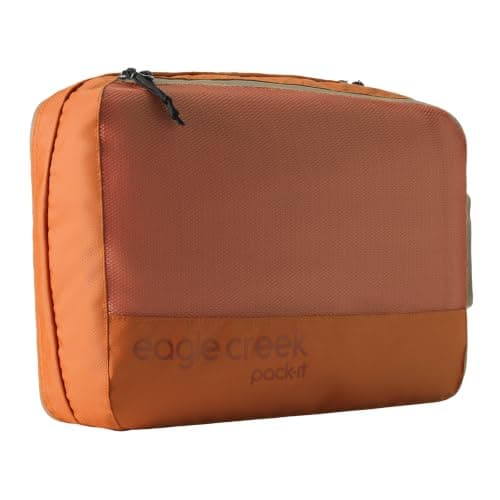
- Eagle Creek Reveal Clean/Dirty cube, medium: 0.34 lb empty. About 154 grams for one divided cube.
- Thule Clean/Dirty cube: 0.4 lb empty. About 181 grams.
That is the honest available evidence. Most budget brands — Bagail, Veken, Amazon Basics — do not publish an empty weight at all, so we will not print one for them. Where a number does not exist, this site says so rather than inventing a plausible one.
What that means against a real allowance
Take the Samsonite three-piece at 0.88 lb. If your airline gives you a 10 kg (22 lb) cabin allowance, that set is about 4% of everything you are permitted to carry. The six-piece at 1.43 lb is about 6.5%. Against a 23 kg (50 lb) checked allowance the same sets are about 1.8% and 2.9%. Allowances vary enormously between carriers and fare types, so use your own number — but the shape of the answer holds: a cube set is low single-digit percentages of a cabin allowance, and close to noise on a checked one.
Put in clothing terms, 400 grams is roughly a pair of jeans or two t-shirts. That is the real exchange rate. It is not nothing, and on a strict cabin-only trip it is a genuine decision.
The thing almost everyone gets wrong
Compression does not reduce weight. Not by a gram. A compression cube expels air, and air is what nothing weighs. If your bag suddenly closes after you compress everything, it weighs precisely what it did before, plus the extra zipper. This trips people up constantly at the check-in desk, and it is why our winter roundup carries the same warning: if your constraint is kilograms, compression is the wrong tool entirely.
When cubes are worth the weight, and when they are not
Worth it: trips longer than about four days, where you will be unpacking and repacking repeatedly. Any trip where you live out of the bag rather than out of a wardrobe. Any bag shared between two people. Any bag with a checked allowance, where a few hundred grams is statistically irrelevant.
Not worth it: a one-night trip with a change of clothes. A strict cabin-only fare where you are already fighting the scales. Any situation where you own more cubes than you have categories — the surplus cube is pure weight and this is the most common version of the mistake.
How to cut the weight without losing the system
- Carry fewer cubes. Four cubes that are each full beat six that are each two-thirds empty, and the saving is immediate.
- Skip compression if your bag already closes. The second zipper is weight you are paying for a feature you are not using.
- Prefer a divided cube over two cubes. One divider weighs less than a second zipper, a second set of seams and a second body.
- Buy mesh-topped cubes. The saving is small — grams, not ounces — but it is real, and it is free. The other consequences of that choice are in mesh vs solid packing cubes.
Where these numbers come from
Every weight on this page is the figure published on that product's own Amazon listing. We have not weighed anything: this site does not run a lab and says so on our methodology page. The percentage calculations are arithmetic on those published weights against stated allowances, and you can redo any of them in a few seconds. Where a manufacturer publishes no weight, no weight appears here.
Buying for a weight-limited bag
Check whether the listing publishes a weight at all
It is the fastest filter available. A brand that publishes an empty weight is a brand confident about it, and it lets you do exactly the arithmetic above before you buy. Most budget listings do not, which is not automatically damning but does mean you are buying blind on the one specification you have decided to care about.
Count your categories before your cubes
The biggest weight saving in this category is not a lighter cube, it is one fewer cube. Write down the groups you genuinely separate — tops, bottoms, underwear, one small for oddments is four for most people — and buy that many. A set of eight bought because it was better value adds the weight of four cubes you will not fill. The counting exercise is set out properly in how many packing cubes do I need.
Decide whether you are limited by weight or by space
They are different constraints and they want opposite purchases. Limited by space? Buy compression and accept the extra grams. Limited by weight? Buy the fewest, lightest plain cubes you can and skip compression entirely. Being clear about which one you are actually up against is the whole decision, and it is the same fork that decides compression versus regular cubes.
Weigh the bag, not the cubes
A luggage scale costs less than a single cube and settles every argument on this page for your actual bag rather than a hypothetical one. If you fly cabin-only on strict fares, it is the single most useful thing you can own — more useful than any cube, because it tells you the truth before the airline does.
The short version
A three-cube compression set with a published weight costs you about 0.88 lb, or roughly 4% of a 10 kg cabin allowance — about two t-shirts. On a checked bag it is noise. On a strict cabin-only fare it is a real decision, and the answer is fewer cubes rather than no cubes. Compression never helps with weight. And if you want the lightest end of the category ranked on its own terms, our ultralight roundup covers it, while how to pack light addresses the far bigger variable, which is the clothes.