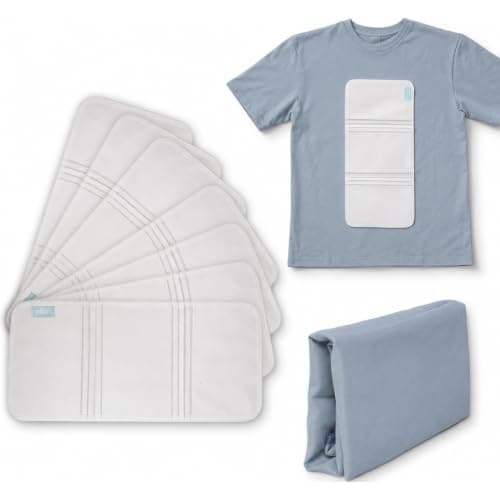
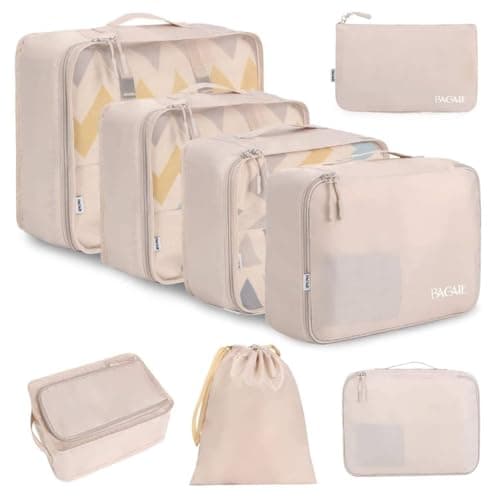
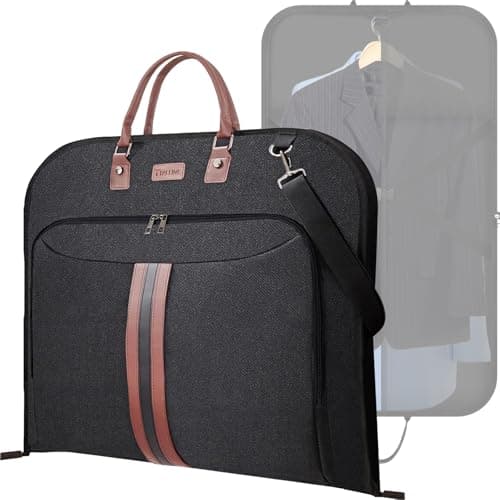
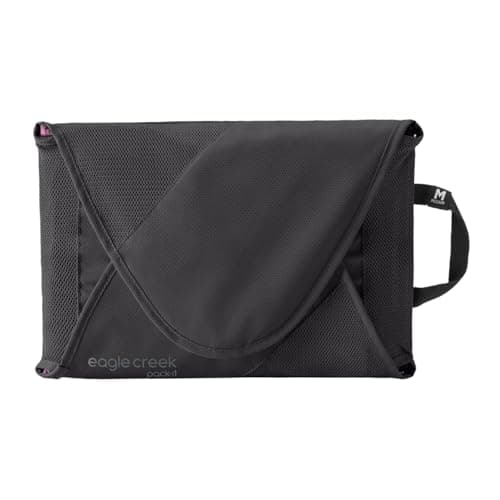
Clothes wrinkle in a suitcase for four reasons - the bend, the pressure, the time and the fabric - and the fix is to attack whichever one you can actually control. In practice that means: fold woven garments along deliberate lines rather than randomly, roll knits, pack the case firmly so nothing shifts, put the crease-prone items on top where nothing presses them, and hang everything within ten minutes of arriving. A garment folder with a board does the first job better than technique alone; everything else is free.
Before anything else, the honest limit of this page: nothing here prevents wrinkles, and we publish no wrinkle figure for any product because there is no repeatable way for us to measure one. That is the same position we take in do packing cubes wrinkle clothes and do compression bags wrinkle clothes. What you can do is control where the creases fall and how long the fabric is held there. That is a smaller claim and it is the true one.
The four causes, and what each one responds to
| Cause | What is happening | What fixes it |
|---|
| The bend | Fabric held folded sets a line where it is folded | Fold deliberately, on a board, in the fewest possible places |
| The pressure | Weight on top of a fold drives the crease in harder | Load order - heavy at the bottom, smart clothes last and flat |
| The time | Hours under pressure set the crease; minutes do not | Unpack and hang within ten minutes of arriving |
| The fabric | Linen and untreated cotton hold a crease; wool and synthetics recover | Choose what you pack, because this one is decided before you leave |
The fourth row is the one people skip and it is the most powerful. A linen shirt will crease in any container, in any fold, in any case, and will still be creased when you arrive. A merino top, a travel-weave trouser or a wrinkle-resistant cotton blend will come out of a squashed cube looking acceptable. If arriving uncreased genuinely matters, the fabric choice outranks every technique below it.
Fold the wovens, roll the knits
This is the rule and it is not a compromise between two camps. Woven fabric - a dress shirt, a cotton trouser, a linen anything - has a structure that takes a set, so you want few folds in known places. Knitted fabric - t-shirts, underwear, jersey dresses, merino - has loops that spring back, so a roll puts no permanent line in it and saves space at the same time. Rolling a dress shirt is the classic error: it puts a continuous soft crease across the whole garment and bunches it at the collar and cuffs, which are precisely the parts anyone looks at. The full argument is in packing cubes vs rolling, and the folds themselves are in how to fold clothes for packing cubes.
Pack firm, not tight - and know the difference
A loose case is worse than a full one. Clothes that can move will move, and a garment that slides for four hours arrives folded somewhere you did not choose. A firmly packed case holds everything in the shape you put it in. But firm is not the same as forced: a case crammed past closing is a press, and a compression cube cranked onto a woven shirt is a small one. Use compression on knitwear, fleece and anything mostly air; keep it away from anything you will wear to something. Compression vs regular packing cubes sets out which load is which.
The load order that keeps the pressure off
Shoes and anything hard go at the wheel end of the case, where the telescoping handle already eats space. Heavy folded items next. Cubes of knitwear and underwear fill the middle and the gaps. The folder - or the stack of shirts, or the dress - goes in last, flat, across the whole case, with nothing on top of it. That order is not about wrinkles alone, but it is the single biggest change most people can make for free. How to organize a suitcase has the full sequence.
The first ten minutes decide the rest
Creases set over hours under pressure. A shirt that comes out of a case and goes onto a hanger twenty minutes after you land will usually relax on its own; the same shirt left in the case overnight will not. Hang the smart items first, before the shoes come off. If something still needs help, hanging it in a closed bathroom during a hot shower lets the steam do most of the work - which is also the honest answer to the hotel iron, because irons are often absent and in some settings, including most cruise cabins, are prohibited.