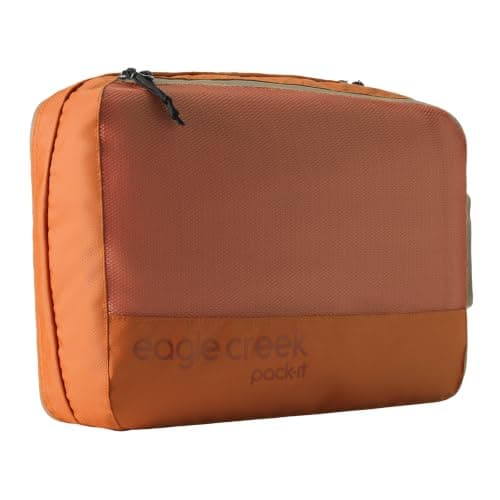
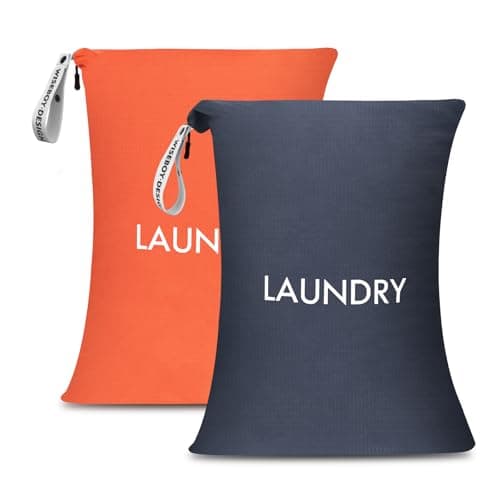
Pack the empty bag on the way out, and put the first worn item in it on the first night. That one rule is most of the method - the reason this problem feels unsolvable is that people start solving it on day four, by which point every clean cube has already had worn clothes in it. For dry worn clothes buy a zipped laundry bag; for swimwear, a towel or gym kit buy a separate waterproof one, because damp and odor are two different problems with two different containers.
Why day one matters and day four does not
Worn clothes are not a volume problem - they take up roughly the space they took up clean. They are a contamination problem, and contamination is one-directional. Once a worn t-shirt has spent a night in the cube with your clean shirts, the cube is a worn-clothes cube; emptying it does not undo that, and the smell that develops over the remaining four days is in everything.
So the method is not a packing technique at the end of the trip. It is a container decision at the beginning, and the cost of making it is one flat folded bag in the outbound case.
Odor and damp are different problems
Nearly all the bad advice in this area comes from treating them as one.
Odor needs a closed top. Smell moves with air, so an open bag - which is what a drawstring bag is - does essentially nothing to contain it. A zip closes the opening. That is the whole mechanism, and it is why a zipped bag is worth the small premium for any trip over a few days. We will not tell you a bag eliminates odor: the listings claim containment, none of them publishes a test method, and we have not measured one.
Damp needs a waterproof barrier. Moisture travels through fabric by wicking and does not care whether the top is closed. A zipped fabric bag with a wet swimsuit in it becomes a damp bag, and a damp bag inside a closed suitcase in a warm hold is the actual origin of the smell people blame on worn clothes. A waterproof lining stops the moisture at the bag wall.
The consequence is that one bag cannot do both well. A waterproof bag holds moisture in - which is correct for a swimsuit for a few hours and wrong for a week of worn clothes, which need to breathe or they go musty. That is why the sensible kit is two bags: one zipped fabric bag for dry worn clothes, one waterproof bag for anything actually wet.
What to look for
- A zip, for dry worn clothes. The one feature that distinguishes a container from a sack. A drawstring separates a pile; it does not close.
- A waterproof lining, for wet things. Non-negotiable if swimwear, gym kit or a towel is involved, and pointless if they are not.
- Machine washable. The bag collects everything the clothes had on them. A bag you can put in the machine with its own contents stays usable for years; one you cannot becomes the problem.
- Packs flat empty. You are carrying it outbound for nothing, so it should cost nothing. A folded fabric bag is close to free; a structured hamper is not.
- Size it to the trip, generously. A bag that is full on day four is a bag that stops being used on day five. Worn clothes do not compress themselves.
- Two bags beat one big one.Dry and wet, or your clothes and a partner's. Both splits are more useful than extra capacity in a single bag.
The options, compared
| Method | Contains odor | Handles damp | Best for |
|---|
| Zipped laundry bag | Yes - a closed top is the mechanism | No | Dry worn clothes on any trip over two nights |
| Waterproof wet/dry bag | Partly | Yes - a lined barrier | Swimwear, gym kit, a wet towel |
| Drawstring laundry bag | No - open at the top | No | Bulk: stripped bedding, a moving day, a big pile |
| Clean/dirty divided cube | Partly - fabric divider | No | Short trips in small bags, with no second container |
| Divided cube with a TPU panel | Better - Thule claims the panel limits transfer | Partly, by Thule's claim | Short trips where you want the best of the one-container answer |
| Hotel laundry bag | No - it is a thin sack | No | An emergency, for one night |
| Supermarket carrier bag | No, and it rustles | Sort of, until it tears | Nothing. Everyone has tried it |
| Compression bag, return leg only | Yes - sealed | Yes - sealed | Flying home with a case full of worn clothes |
The return-leg trick
On the way home, worn clothes are the best compression load there is. The reason is that every drawback of a sealed bag has disappeared: you will not need to open it, you do not care how creased the contents are, and the clothes are going straight in the wash. So if you are coming back with souvenirs and no room, put the worn clothes in a roll-up compression bag, squeeze them down to a slab, and use the reclaimed volume for whatever you bought. It is the only use of compression with no trade-off at all, and our guide to compression and creasing explains why that is specific to this one load.
Laundry on the road, briefly
The longer answer to dirty clothes on a long trip is not a bigger bag - it is washing something. A sink wash of underwear and one t-shirt every few nights, with a bar of soap and a towel to roll the water out, keeps the laundry bag from becoming the largest object in your case and is what makes a two-week carry-on trip possible at all. Our two weeks in a carry-on guide does that arithmetic, and packing cube sets with a laundry bag covers the kits that include the bag so you cannot forget it.
How we scored the three picks
Contains odor- judged on the closure mechanism, not on the listing's adjective: a zip scores above a drawstring because a closed top is how containment works. No odor claim here has been tested by us or, as far as any listing shows, by anybody. Handles damp - whether a waterproof barrier is specified. Capacity - published dimensions against a week of worn clothes. Packs flat outbound - what it costs you on the leg where it is empty. Value - live price per bag. Our methodology states plainly that these are judgments from documented specs and listings, not measurements we took.