A checked bag flips the carry-on math. You're not fighting for every cubic inch — you have a large volume, and the job is to organize it so a two-week trip doesn't become a rummaging exercise on day three. That rewards bigger sets: enough pieces to give every category its own cube, sized to fill a large suitcase rather than a cabin bag. Durability matters more here too, because a checked bag gets thrown around by people who aren't you.
Fill the volume, don't fight it
The trap with a big suitcase is a loose pile that shifts in transit and arrives a mess. Cubes solve that by turning the volume into stacked, square compartments that don't move. Aim for a cube per category — tops, bottoms, underwear, swimwear, a laundry cube — and load the heaviest at the base. The packing method covers loading order.
How many pieces for a checked bag
A large suitcase comfortably takes a 6-to-10-piece set. Ten pieces suit a family or a long, multi-category trip; eight is plenty for one or two travelers. Resist filling every last cube just because you can — even in a checked bag, pack for a week and do laundry rather than doubling clothes. The count guide has the chart.
Compression in a big bag
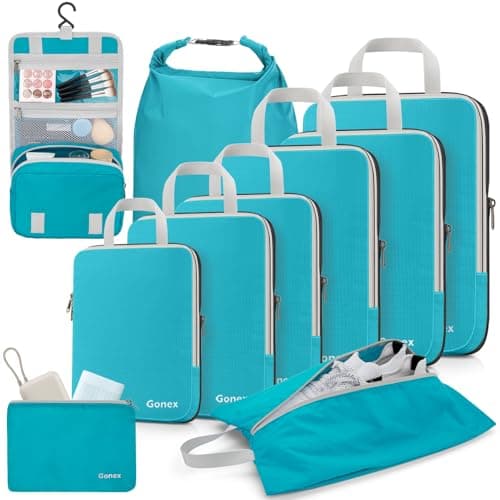
Because a checked bag invites over-packing, compression earns its place if you pack soft, bulky clothes — cinching them down leaves room to actually close the lid. On dense clothes it does little. The compression hub explains exactly when the second zipper pays off.
The short version
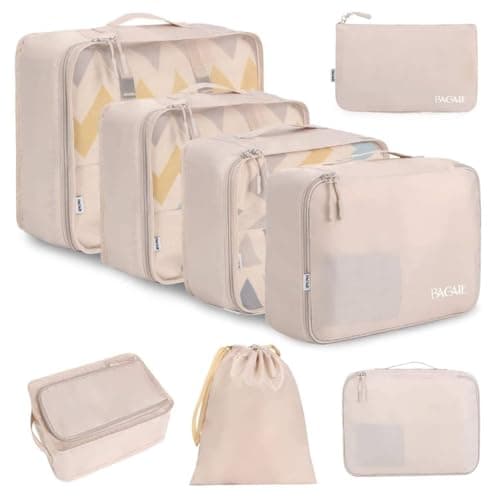
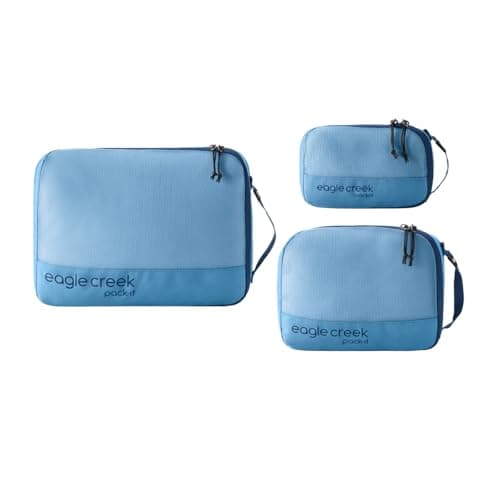
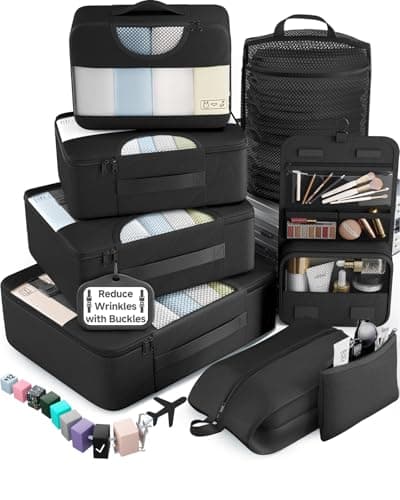
Most checked-bag packers should get the Veken 10-set (a cube for everything) or the Bagail 8-set (best value). Over-packers of soft clothes should add compression with the Gonex 10-piece. Frequent flyers who want a set to survive years of handling should step up to the durable Eagle Creek Reveal. Match the piece count to the trip, not to the bag's capacity.
A checked bag is also where most winter and ski kit travels, and bulky lofted layers are a different ranking problem from the one above. Best packing cubes for winter clothes covers that, including the half of a ski bag that compression does nothing for.