Every packing-cube system works beautifully for about three days. Then the problem changes: it is no longer about where the clean clothes go, it is about where the worn ones go. Put them back in the cube they came from and you have contaminated your only clean container. Leave them loose in the case and by day six your suitcase smells like a laundry basket. A travel laundry bag is a four-dollar fix for the single most common failure of an otherwise well-organized bag.
The empty-cube mistake
The obvious move is to empty one cube as the trip goes on and use it for dirty clothes. It seems elegant and it is a trap. Cubes are unlined polyester and mesh — they hold odor rather than containing it, they wick damp rather than blocking it, and the cube you have just contaminated is the same cube you will want for clean clothes on the way home. A dedicated laundry bag costs less than a coffee, packs flat when empty, and is the only container in the bag you can wash on a hot cycle without worrying about it.
Drawstring, zip, or waterproof?
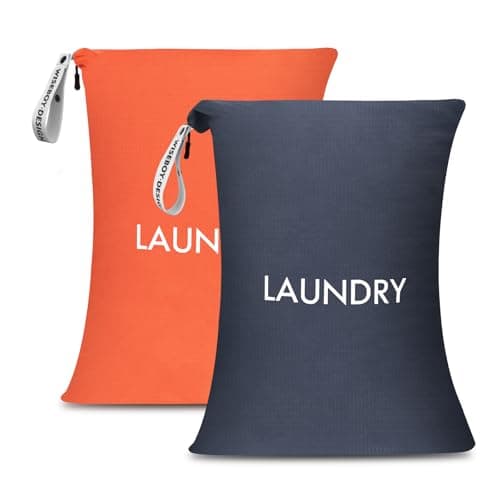
These are three genuinely different products and the right one depends on your trip. Drawstring is the default: cheapest, packs smallest, easiest to stuff things into one-handed, and it leaks odor. Zip closes properly and is the correct choice for hot climates or long trips where clothes sit dirty for a week — the difference on day six is not subtle. Waterproof is a lining, not a closure, and it is what you need the moment wet swimwear, a damp towel or gym kit enters the equation. Most travelers are best served by one drawstring bag for dry laundry and one small waterproof bag for wet items, rather than one bag trying to do both.
Sizing: bigger than you think, but it packs flat
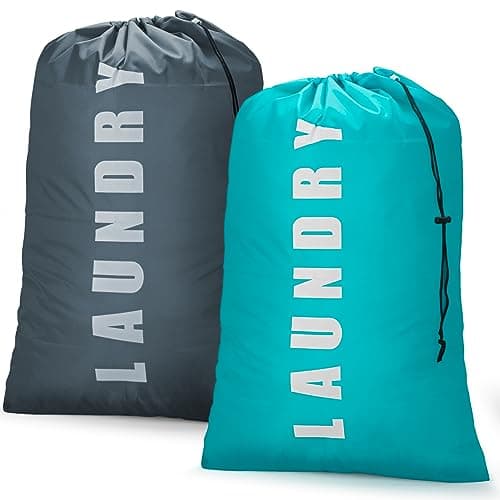
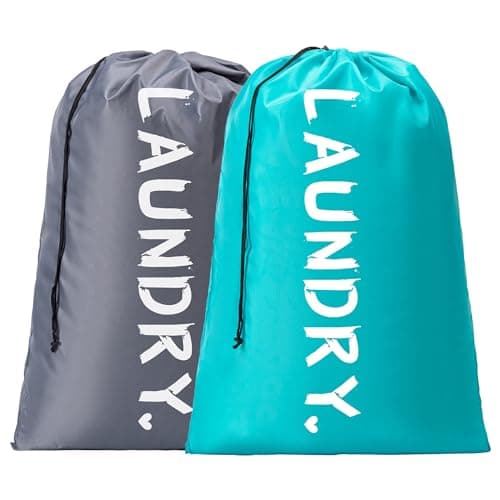
Laundry bags are the one item where over-buying costs nothing, because an empty fabric bag folds to nothing and takes no space on the outbound leg. A 24 x 36 inch bag looks absurd next to a carry-on and holds a week of clothes for two people without becoming an unliftable ball. The failure mode of a too-small laundry bag is worse than the mild inconvenience of a too-large one: a full bag on day four means dirty clothes go back in with the clean ones, which is the exact problem you bought the bag to solve.
How we ranked them
Odor control — closure type is most of this, with fabric doing the rest. Capacity — how many days of clothes it actually swallows. Wet handling — whether a damp towel or swimsuit is contained or merely held. Packs small — how much space it costs you on the way out, when it is empty. Value — live Amazon price divided by the number of bags. As everywhere, these are judgments from documented specs and aggregated owner feedback, not measurements — see our methodology.
The short version
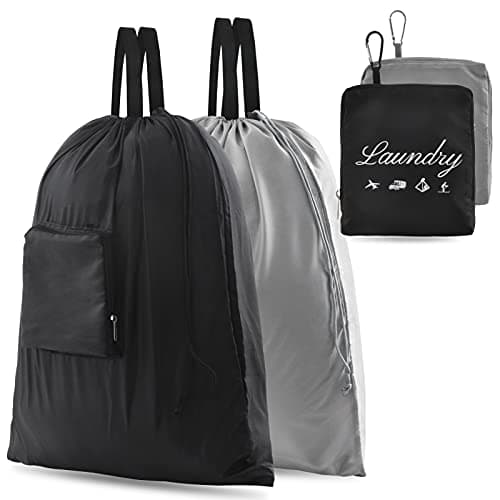
Most people should buy the JHX pair — handles, a carabiner, two bags, and it costs less than lunch. Going somewhere with a pool or a gym? The waterproof pair, and use the second one for wet items only. Long trip in a hot climate? Pay the extra for the zipped WiseBoy bags; odor is the thing that gets away from you. And if the problem is simply volume — a family, a month away — the XL drawstring pairs are enormous and almost free.
The buyer's guide: what to check before you click
Match the closure to your climate, not your budget
In a cool climate on a five-day trip, a drawstring bag is entirely adequate and you will never think about it. In a hot, humid one — or on any trip longer than a week without access to a machine — a zip is worth every cent of the small premium. Damp, warm, enclosed fabric is how a suitcase develops a smell that survives a wash, and the closure is the only thing standing between that and your clean clothes.
Keep wet items in their own bag, always
A wet swimsuit in with dry dirty clothes creates a damp mass that starts to smell within hours. Even the waterproof picks here work far better as a dedicated wet bag than as a general laundry bag that occasionally takes a wet item. One small waterproof bag for wet things plus one large bag for dry laundry is a better system than one expensive bag doing both.
Check it is machine washable
It sounds obvious, and a surprising number of laundry bags are not. A bag that cannot go through a machine becomes the dirtiest object you own within a few trips, and you end up replacing it rather than washing it. Machine-washable is the single spec on a laundry bag listing worth reading twice.
Sort as you go
The reason nearly every pick here is a two-pack is that sorting at the point of use costs nothing and saves the whole job later. Darks in one, lights in the other, and a mid-trip laundromat visit becomes fifteen minutes instead of an hour on a hotel bed. On longer trips people run a third bag for wet or gym items, which is the same one-container-per- category discipline the cube system runs on — see what to pack in each cube.
Where it goes in the bag
Empty on the way out, a laundry bag folds flat and slides down the side of a case or into an outer pocket, costing you nothing. Full on the way home, it is soft and shapeless, so it works as the filler that packs around cubes rather than competing with them — the return leg is the trip where cubes and a laundry bag work together instead of against each other. If you also wash the cubes themselves at the end of a trip, how to wash packing cubes covers doing it without wrecking the fabric.
When to start using one
The container matters less than the timing: separation that begins on day four happens after every clean cube has already held worn clothes. How to pack dirty clothes covers the day-one rule, why odor and damp are two different problems needing two different bags, and the one use of a sealed compression bag with no downside at all.