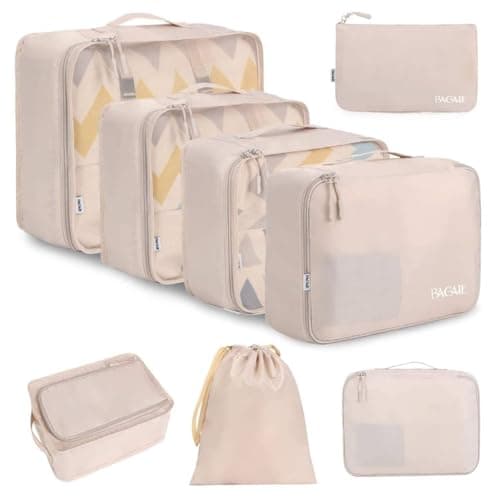
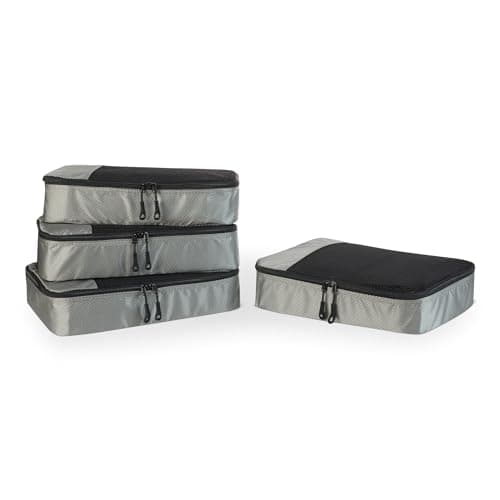
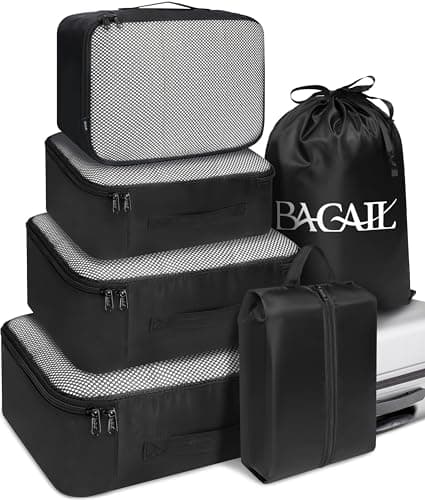
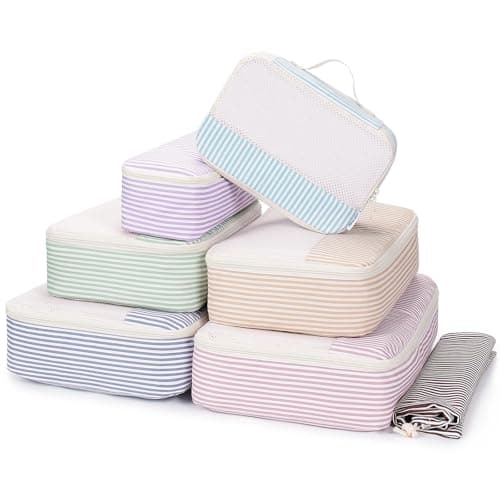
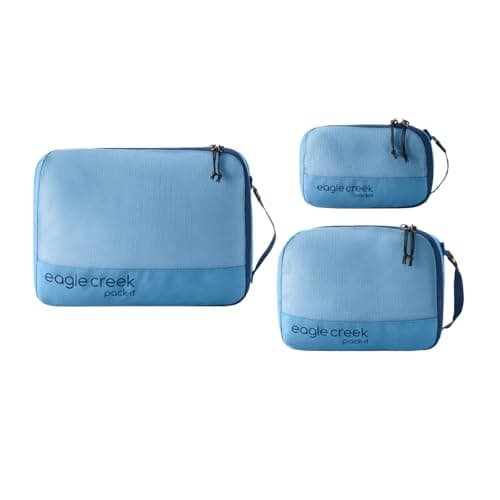
The short version. The best mesh packing cube for most people is the Eagle Creek Pack-It Reveal set, because it puts mesh windows into a ripstop shell instead of making the see-through panel carry the load - that is the configuration for someone who wants to identify a cube without unzipping it and has torn a cheap one before. If you want the most readable cubes for the least money, the Bagail 8-set is the value pick and has the best cost per cube on the page. The budget pick is the Bagail 6-set - the cheapest set here that still has a real full mesh top rather than a token window.
Almost every packing cube sold today has mesh somewhere, so "mesh packing cubes" is not really a product category - it is a question about how much mesh and where. That question has a clear answer and almost nobody states it: a mesh panel is the weakest surface on the cube. It has no abrasion resistance, no water resistance and nothing holding it together but its own weave and the seam it is sewn into. Mesh is what tears first. So the whole decision is a trade between two things you genuinely want - seeing in, and the cube surviving - and the picks above are ranked on where each one lands on that trade.
What the mesh actually buys you
Three things, and it is worth being precise because listings usually imply a fourth that is not true.
- Identification. The real one. A closed suitcase with six opaque cubes in it is a suitcase you have to unpack to search. A mesh panel turns each cube into its own label. This is the benefit that makes people buy a second set.
- Ventilation. Genuine but limited on a mesh-TOPPED cube: air can leave through the top panel, which is better than a sealed box and much worse than the all-mesh bag further down. Matters for anything packed even slightly damp.
- Weight. A mesh panel is lighter than the same area in woven fabric. Real, and small - the difference across a set is grams, not ounces, and do packing cubes add weight does that arithmetic properly.
What it does not buy you is compression. A mesh top vents air out when you press the cube, so a mesh cube feels like it compresses - but nothing holds the smaller volume once you let go. Only a second zipper does that, which is what the compression roundup ranks and what compression vs regular cubes takes apart.
Window or full panel? The one decision that matters
Every cube on this page is one of three designs, and they fail differently.
| Design | Published on | What you gain | What it costs you |
|---|
| Mesh window | Eagle Creek Pack-It Reveal | Shell fabric carries the load and the abrasion; the mesh only has to be seen through | You see less, and you pay premium money for the construction |
| Full mesh top | Bagail 8-set and 6-set, Amazon Basics, Narwey | The whole contents readable at a glance, at the lowest prices in the category | The largest unreinforced panel on the cube is also the one under load when you overpack |
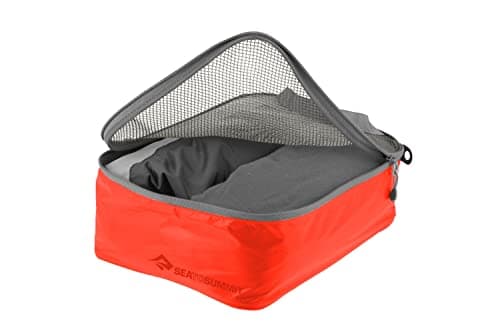
| All mesh | Sea to Summit Garment Mesh Bag | Real two-way ventilation - damp clothes dry instead of being hidden | No structure, no protection, and it is sold one bag at a time |
The practical rule: if you pack cubes until the zipper is tight, buy the window. If you pack them loosely and your problem is finding things, buy the full panel and buy more of them. There is no version of this where the expensive window set is the better value for someone who was never going to tear the cheap one.
How we ranked these, and what we could not check
Five criteria, all of them readable off the listings: visibility (how much of the contents a glance actually tells you), durability (fabric, and where the mesh sits relative to the load path), ventilation (how many faces air can move through), build (zippers, seams, handles, sizes) and value, which the live price and the published piece count work out for you below rather than asking you to.
What we could not check, stated plainly. No brand in this category publishes a mesh weave density, a denier figure for the mesh, or a tear strength - not one, at any price. So nothing on this page claims one, and where we say a panel is the weak point we are describing a construction fact (an unreinforced panel under load) rather than quoting a test. We have also not packed with these ourselves. Our scores are judgments from published listings and documented research, which is what our methodology says in exactly those words. If a mesh panel does tear, how to wash packing cubes covers the care that makes it less likely, and how long packing cubes last is honest about what owners report.
Mesh or solid - and why this page is not that argument
Plenty of people arrive here having already decided mesh is a liability, wanting the solid-panel version instead. That is a legitimate position and it has its own page: mesh vs solid packing cubes sets the two formats against each other properly, including the privacy argument (a solid cube means a bag search reveals less) and the dust argument. If you land on solid, the picks are in the premium roundup and the structured roundup, both of which lead with solid-panel sets. This page assumes you have decided you want to see in, and ranks the ways of doing it.
Three questions settle it, in this order.
1. Do you overpack?
Be honest. If the answer is yes - if you compress by sitting on the suitcase, if the zipper complains - buy the window design and stop reading. A full mesh top is the panel that goes, and it goes at the seam. If the answer is no, a full mesh top will outlive your interest in the set and the cheaper picks are simply better buys.
2. Are you buying a system or a replacement?
A first set wants three or four sizes in one box, which points at the four-size and six-piece picks. If you already own cubes and are adding one specific thing - a vented bag for damp kit, a small cube for a personal item - cubes sold individually is the page for that, and it does the arithmetic on when buying one beats buying another box.
3. Does anything you pack go in damp?
Swimwear, gym kit, a towel, hiking layers at the end of a wet day. If yes, a mesh TOP is not enough and you want the all-mesh bag or a dedicated wet container - travel laundry bags ranks the waterproof wet/dry options, and how to pack dirty clothes is the method. A sealed box and a damp towel is how a bag starts to smell.
What not to buy
Avoid any set whose mesh panel runs seam to seam across the largest face of the biggest cube in the box. That is the specific combination that fails - the most load, the least reinforcement - and it is common on cheap XL cubes because mesh is cheaper than fabric. Be skeptical of "breathable" as a selling point on a cube with mesh on one face only: air needs somewhere to go as well as somewhere to come from. And ignore any implication that a mesh top saves space. It does not, and do packing cubes save space explains what actually does.