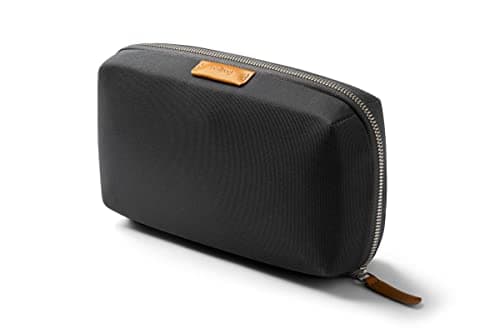
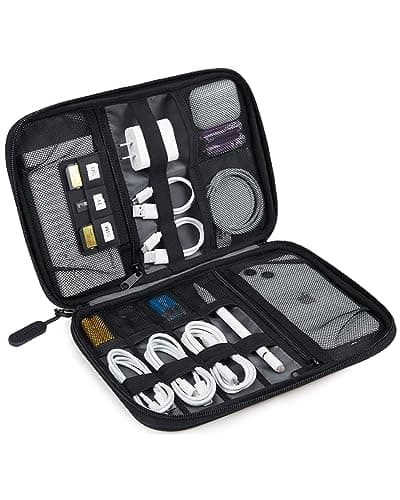
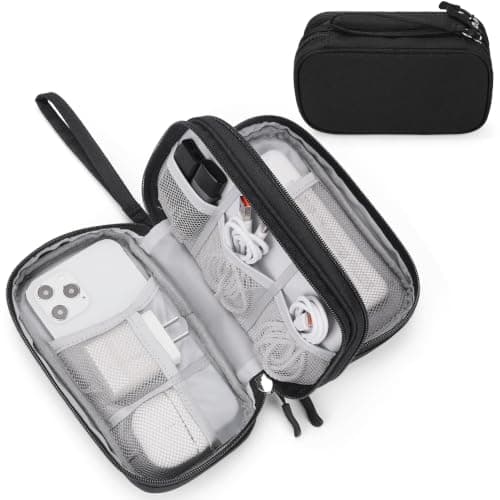
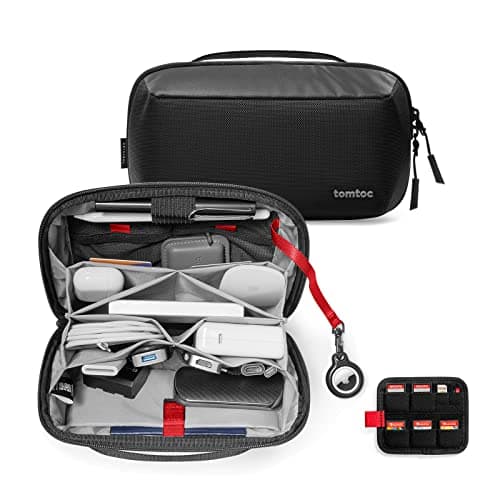
The short version. The best Peak Design Tech Pouch alternative for most people is the tomtoc electronic organizer, because it is the only pick in our catalog with the original's depth by its own published dimensions - and it stands up on a desk, which the original does not claim. If you want the finish and would rather have a flat folio than a deep pouch, the Bellroy Tech Kit is that, at the same money as the original rather than less. The BAGSMART panel is the one that fits beside a laptop, and the budget pick is the FYY pouch, which is about a third of the size and priced to match.
Before any of that, the dimension that decides this search. Peak Design publishes the Tech Pouch at 9.44 x 5.9 x 3.93 inches. That last number is the one to hold on to: nearly four inches of depth, which is why a laptop brick, a coiled cable and a mouse all go in without anything lying flat. Most products sold under "tech organizer" are an inch or two deep. They are not cheaper Tech Pouches - they are a different object that happens to share a search term.
The size range hiding inside one search term
Multiply the published outside dimensions of each of these and the spread is startling. These are bounding boxes- our own arithmetic on the numbers each listing publishes, not measured capacity, and a sewn bag always holds less than its box - but as a way of comparing like with like they are far more useful than the word "large" on a listing.
| Pouch | Published dimensions | Bounding box (our arithmetic) | Published empty weight |
|---|
| Peak Design Tech Pouch (the original) | 9.44 x 5.9 x 3.93 in | ~219 cu in | 0.63 lb |
| tomtoc electronic organizer | 10.24 x 5.91 x 3.94 in | ~238 cu in | 0.57 lb |
| Bellroy Tech Kit | 9 x 5 x 2.8 in | ~126 cu in | 0.39 lb |
| BAGSMART large organizer | 10.6 x 7.5 x 1.2 in | ~95 cu in | 0.2 lb |
| FYY organizer | 7.5 x 4.3 x 2.2 in | ~71 cu in | 0.26 lb |
One of these four is a Tech Pouch-sized object. The others are a half, a bit under a half, and a third. That is not a criticism of the smaller ones - the BAGSMART panel earns its place precisely by being thin - but it does explain the most common disappointment in this category, which is buying a "large tech organizer" for a third of the price and finding that the laptop brick does not go in.
What the Tech Pouch is known for
Four published properties, taken from Peak Design's own listing rather than from reputation, because replacing a product means replacing a specific feature.
| Published property | What it gets you | Closest alternative here |
|---|
| Cable pass-through in an external zip pocket | A power bank charges your phone while it stays stowed inside the closed pouch. | Nothing. No alternative in our catalog publishes a pass-through. |
| Origami-style interior | Sewn panels that expand and hold their shape, so loaded pockets do not collapse into each other. | tomtoc's structured compartments, which also stand the bag up; Bellroy's floating interior wall |
| Clamshell opening and nearly 4 in of depth | Full-depth access to the bottom of the bag, and room for bricks and mice. | tomtoc - the only pick here with the same published depth |
| Weatherproof 400D recycled nylon canvas | A shell that sheds rain, with a coated internal fabric. | Bellroy's recycled water-resistant weave; tomtoc's water-repellent fabric and Aquaguard zipper |
The first row is the one to be honest about. If the pass-through is why you want a Tech Pouch, buy the Tech Pouch - nothing here replicates it. It is a small feature that changes a specific, common moment: you are on a train with a dying phone, and the choice is between a tangle of pouch contents on your lap or a cable running out of a closed bag. None of the alternatives offers that, and pretending otherwise would waste your money.
Rows two to four are where the alternatives genuinely compete - and on row three the top pick does not merely match the original, it publishes slightly more.
About the "cheaper Peak Design" route
The obvious move is to buy the smaller Peak Design pouch instead of a different brand, and we want to be straight about why it is not ranked here. Our price feed has not shown that listing with a confirmed buyable offer: on the day this page was written it returned a price with an empty availability message rather than an in-stock confirmation, which is the same shape a couple of other listings in our catalog return when stock is uncertain. That is an availability fact and not a judgment on the product - but we do not rank a pick we cannot see a confirmed offer for, and you should expect the same uncertainty if you go looking for it.
Which property did you actually want?
If it was the depth, you are in luck, because that is the easiest property on the list to buy elsewhere. The top pick publishes marginally more volume than the original for noticeably less money, and it adds the stand-up structure. This is the single most common real reason people replace a Tech Pouch - they want the capacity, not the badge.
If it was the origami interior, the answer is partial. Nobody else publishes the sewn expanding-panel construction, but two picks here solve the same underlying problem in their own way: tomtoc with compartments rigid enough to stand the bag up, Bellroy with a floating wall that keeps one side's contents off the other's. Neither is the same thing; both stop the pouch becoming a single pile.
If it was the weatherproof shell, every premium pick here publishes a water-resistant fabric and one names its zipper - but note that none of them, including the original, publishes an ingress rating. "Weatherproof" and "water-repellent" are the listings' own words; no brand in this category publishes a number behind them, so we do not print one.
If it was that it looks and feels like a serious object - and that is a legitimate reason to buy something you handle every day - then the Bellroy is the alternative that competes, and it competes at the same price rather than below it. The cheap picks here are good value and they look like what they are. If you want the whole category ranked on its own terms instead of against one product, best travel tech organizers is that page.
How we picked these, and what we could not check
Each pick is matched to a named published property of the original rather than being a general recommendation, and every one carried a live price and an in-stock offer in our feed on the day this page was written - as did the original. The criteria are property match (how directly it replaces something Peak Design publishes), capacity (the published-dimension arithmetic above), build (named fabrics, named zippers, published warranty), access (how much of the contents you can see and reach at once) and value, which the live price works out below.
What we could not check, stated plainly.We have not handled any of these pouches. Every dimension, weight, fabric and feature above is the manufacturer's own published figure, read off the listing on the date in Sources. The cubic-inch figures are our arithmetic on those published outside dimensions- they are bounding boxes for comparison, not measured capacities, and every one of these bags holds less than its box. No brand here publishes a water-ingress rating, a drop rating or a crush rating, so none is claimed. Peak Design's listing describes "lifetime-lasting gear" as part of its company statement; that is the listing's own marketing copy and we did not read any warranty terms for it, whereas tomtoc publishes a 12-month warranty and that figure is tomtoc's. Our scores are judgments from published listings and documented research, which is what our methodology says in exactly those words.
When to just buy the original
A page like this is only useful if it will say that. Buy the Tech Pouch rather than anything here if the cable pass-through is the point - it is the one published feature with no substitute in this category. Buy it if you want the origami interior specifically, because the alternatives solve collapse differently rather than identically. And buy it if you intend to keep it for a decadeand the brand's repair stance is part of what you are paying for - just note that we are quoting its marketing copy on that rather than terms we have verified.
Buy an alternative if your honest need is the same depth for less money (the top pick), if you would rather have a flat folio than a deep pouch, if your kit is small enough that a panel beside your laptop is the smarter use of space, or if you want to test whether a dedicated pouch changes your packing at all before committing. For the rest of the system, how to pack electronics for travel covers what goes in the cabin rather than the hold, and the travel organization hub has the other containers in the order they are worth buying.
Three questions, and the first one decides whether you should buy an alternative at all.
1. Do you need to charge from inside the closed bag?
If yes, stop here and buy the original. The cable pass-through is the one property on this page with no equivalent anywhere in our catalog, and every alternative will annoy you at exactly the moment you wanted it. If you have never once wished for it, ignore the feature entirely - it is the reason the original costs what it costs.
2. What is the bulkiest single thing you carry?
This is the question the bounding-box table is really asking. A laptop brick or a mouse needs three to four inches of depth, which rules out everything here except the top pick. A phone charger, earbuds and two short cables fit a third of that volume comfortably. Measure the worst offender in your kit before you buy on price, because depth is the property that cannot be worked around once the bag is sewn.
3. Where will it live - the main compartment, or a sleeve?
A deep pouch needs a main compartment to sit in and will fight a slim bag. A flat panel slides beside a laptop and disappears. This is where the cheap pick stops being a compromise and becomes the right answer: if your bag is a slim backpack or a document case, 1.2 inches of thickness is a feature rather than a sacrifice.
What not to buy
Avoid buying on the word "large". Published dimensions in this category span a threefold range of bounding-box volume under the same adjective, and the listing photos are all shot full. Be skeptical of "waterproof" on any tech pouch - no brand here publishes an ingress rating, and a zip is not a seal. And do not buy a pouch bigger than the hole it has to live in: an organizer that cannot go into your bag loaded is the one purchase in this category that is entirely wasted.
The same method on the other premium pouch
Bellroy Tech Kit alternatives runs this page's property-by-property approach against Bellroy's listing instead — and hits a harder version of the problem this page had. Bellroy publishes four things, and the one people want substituted is the flat profile, which is a description rather than a figure: no brand in the category publishes a thickness you could check it against. The only depth figure in that whole group belongs to an organizer that expands to 4.4 inches.