The most useful thing anybody can tell you about packing a carry-on for three days is that you probably do not need the carry-on. Three days fits a personal item - the bag that goes under the seat in front of you. That is not a packing stunt or a minimalist flex; it is just what three days of clothes occupies. And it changes the trip in ways that have nothing to do with packing: no fight for overhead space, no gate-check risk when the bin is full, no walk to baggage claim, and on a lot of basic fares, no carry-on fee at all.
That reframing is also what makes this a different problem from the longer cuts. Once the bag is small, the clothes stop being the constraint. Three days of garments is a genuinely small pile. What decides whether the bag closes is the two things in it that do not squash: your shoes and your toiletry bag. Almost every failed three-day pack is one of those two, not the clothes.
What actually fits: the three-day count
A worked example, not a measurement, with the assumptions printed beside it. It assumes one person, mild weather, no formal evening, and the clothes you travel in counting as day one - the term most three-day lists quietly drop, and the reason they come out a garment or two heavy.
| Item | Count | Why |
|---|
| Tops | 3 | One worn on the way, two packed. Three days, three tops. |
| Bottoms | 1, or 2 if one is for an evening | Bottoms reuse. A second pair is a choice, not a requirement. |
| Underwear | 3 | One per day. No washing, no spares needed at this length. |
| Socks | 3 | Same. Also the gap filler - see below. |
| Layer / sweater | 1, worn or carried | Never packed if you can avoid it. It is the bulkiest soft item. |
| Shoes | 1 pair, on your feet | This is the whole game. A second pair is roughly a third of a personal item. |
Add it up and the clothes come to about eleven small items and one worn layer. That is a pile you can hold in two hands. It is not what makes a three-day bag hard.
The two rigid objects
Here is the part no three-day list leads with. Clothes compress, flatten, roll and fill gaps. Shoes and a toiletry bag do none of those things. They occupy the same volume however you pack them, they refuse to change shape around other objects, and in a bag the size of a personal item they are the two items that dictate the layout of everything else.
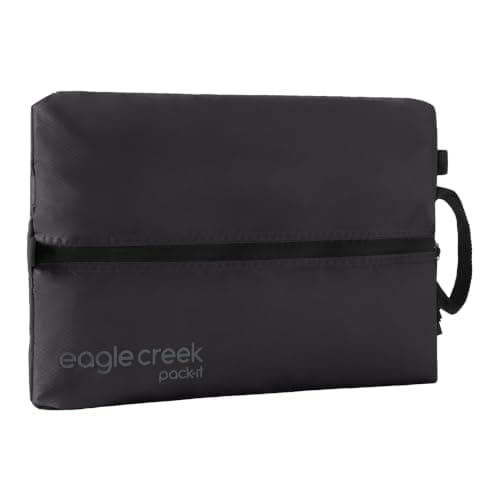
Shoes first, because they are bigger. One pair, on your feet, is the correct three-day answer and it is achievable far more often than people think - the usual objection is one event, and the honest question is whether the event or the shoes is the thing you are committed to. If a second pair genuinely has to come, wear the bulkiest and pack the flattest, and put the packed pair in something - how to pack shoes with packing cubes covers placement, and the shoe bag roundup ranks the bags.
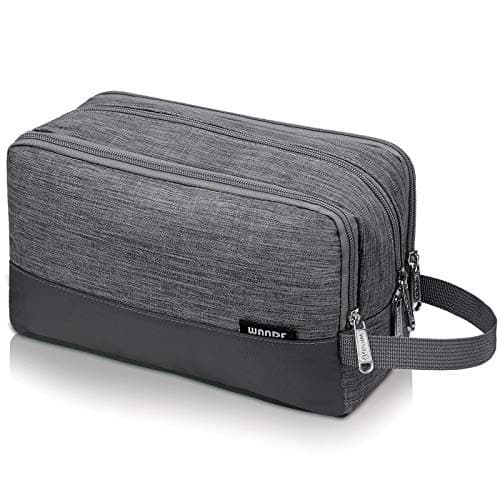
The toiletry bag second, because it is the one you can fix by buying. Most people own one wash bag, sized for the longest trip they take, and carry it on every trip. For three days that is usually a bag two sizes too big, holding a quart bag that could have traveled alone. Swapping to a small dopp kit for short trips is the single cheapest piece of space on this page - the toiletry bag roundup has the sizes, and how to pack a toiletry bag is the method.
One cube, maybe two
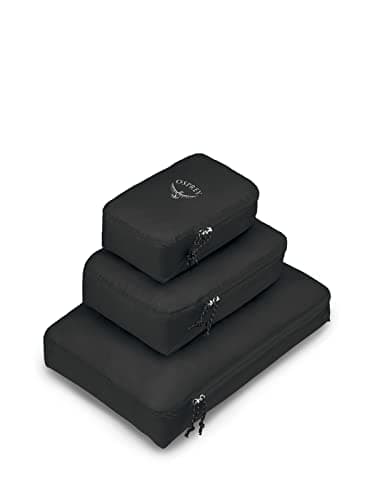
A three-day load does not need a cube system. It needs one cube, and the honest reason to use one at all is not space - cubes save none, which do packing cubes save space goes through - it is that in a soft personal-item bag with no divisions, one cube is the difference between a bag and a sack.
| Cube | Contents | Where |
|---|
| One medium or small | All three tops, the bottoms, underwear, socks | Against the back panel of a backpack, flat |
| Optional second | Worn clothes, from day one | Top of the bag, or an outside pocket |
| No cube | Shoes, toiletry bag, quart bag, layer | Placed around the cube, not inside it |
And here is the one thing three days can do that five days cannot: an emptied cube genuinely can take the worn clothes. On a five-day trip the worn pile grows past the size of any cube you packed, which is why the five-day guide is built around needing a dedicated laundry bag. Three days of worn clothes is three tops and three sets of smalls. That fits in the second cube, and you can skip the laundry bag entirely. It is the only trip length on this site where we say that.
Liquids, and the phrase that is not a status
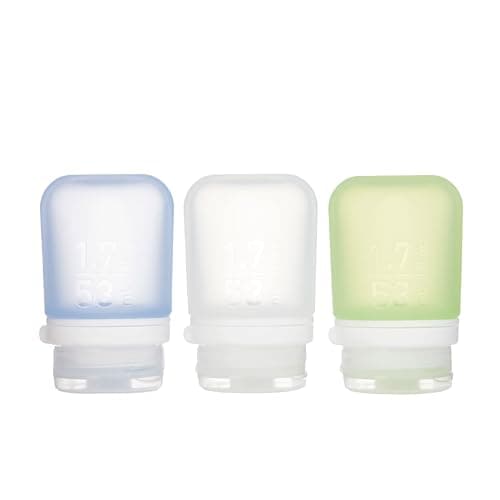
Three days of toiletries fits inside the carry-on liquids rule with room to spare. TSA publishes the limit as travel-sized containers of 3.4 ounces (100 milliliters) or less per item, carried in a quart-sized bag. Worth noting what is not in that: TSA publishes a capacity for the bag rather than a dimension, and it does not approve or certify any brand of liquids pouch, so "TSA approved" printed on one is a seller's phrase - the same thing is true in the cube aisle, which are packing cubes TSA approved takes apart.
For three days, the small bottles are the right bottles. Keep the quart bag in an outside pocket rather than buried, since it is the one item you are guaranteed to be asked for - the clear toiletry bag roundup ranks the pouches, and how to pack liquids in a carry-on covers the exemptions.
If it has to be the carry-on anyway
Sometimes the personal item is not the answer: you are traveling with someone and sharing a case, the trip has a formal evening in it, or the weather means a coat and boots. In that case three days in a carry-on is an easy pack with a different failure mode - too much room. A half-empty case lets contents move in transit and tempts you into filling it, so pack the cube, place the rigid objects, and then use the layer and the socks to fill the gaps rather than adding anything.
A standard US domestic carry-on sizer is commonly quoted at about 22 by 14 by 9 inches and varies by airline; personal-item allowances vary more, and several carriers publish a tighter underseat figure than you would expect. Check the carrier you are flying rather than a general number - that is the one measurement on this page that is worth looking up before you pack. How to pack a personal item bag is the deep version of this, and the personal-item roundup ranks cubes that suit a bag that shape.
What a three-day trip is actually worth buying, in the order it pays off. The list is short on purpose.
1. A smaller toiletry bag
The cheapest space on this page, and the one most people have never considered. If you own one wash bag sized for your longest trip, a small dopp kit for short trips frees more room in a personal item than any cube, any fold and any compression device.
2. One cube
One. Not a set of six. If you are buying a set anyway, buy the lightest one you can - cube fabric is a real fraction of what you carry in a 20-liter bag and almost irrelevant in a wheeled case, which is the only reason an ultralight set is worth its price here. How many packing cubes do I need works the count out across trip lengths.
3. Small bottles, if you are carry-on only
Three days needs the small ones, and a locking cap rather than a flip top because a bottle in a soft bag gets squeezed from every side. Skip this if you are checking a bag.
4. Nothing else. Specifically:
- No compression. Compression is for a bag that will not close. Three days closes. It also buys volume and never a gram, so it does nothing for a weight limit - compression vs regular packing cubes has the full comparison.
- No laundry bag. This is the one trip length where the second cube genuinely does the job, and how to pack dirty clothes is the page for when it stops working - around day four.
- No second pair of shoes, unless an event genuinely requires it. It is roughly a third of a personal item.
If your three days include one event
Treat it as a two-day trip plus one module: one outfit, one pair of shoes, nothing speculative. The mistake is packing a second wardrobe for one evening. How to pack a suit covers it if the module is tailoring, and the business-trip roundup covers the collared-shirt version. If the trip is a long weekend that might stretch, the weekend roundup ranks sets for two to four nights.