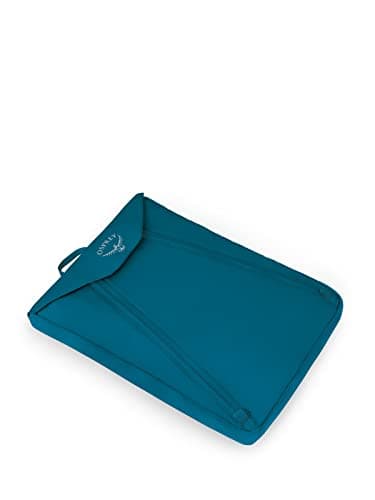
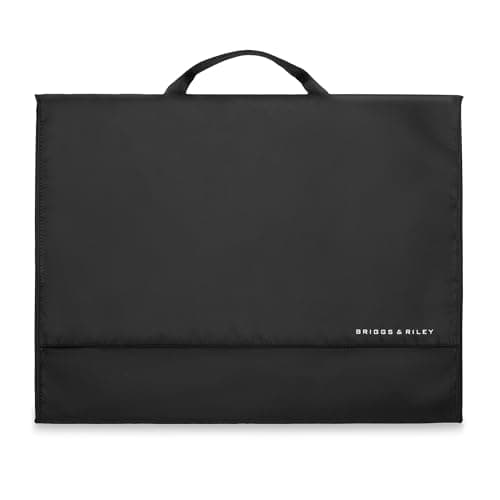
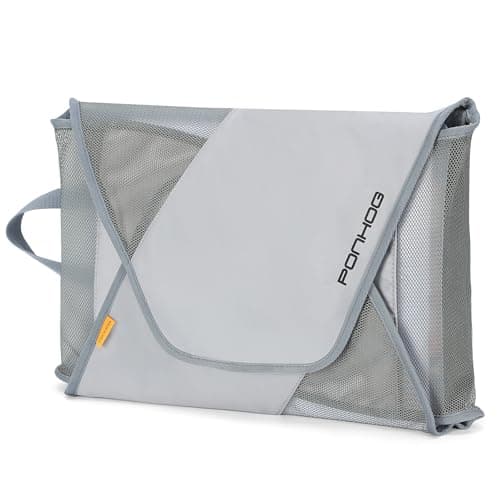
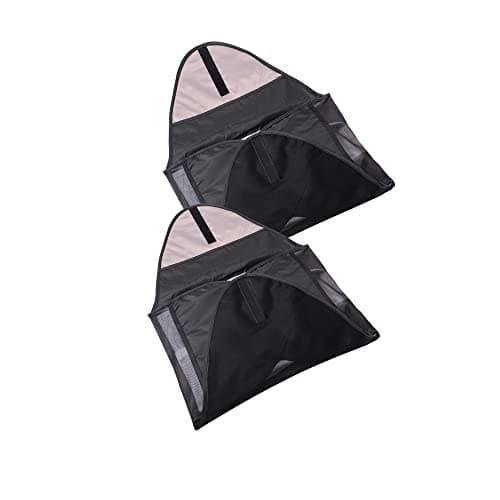
A packing cube keeps clothes in a rectangle. A garment folder keeps them flat. That is the entire difference, and it matters for exactly one wardrobe: dress shirts, blouses, slacks and jackets, the garments that arrive looking either pressed or apologetic. A folder is a wide fabric envelope with a stiff board in it. You lay a shirt face-down over the board, fold it once around the board's width, stack the next one on top, wrap the wings over the pile and zip it shut. The stack goes into the case as one flat slab and comes out as the same flat slab. Here are the folders worth the space, ranked on the numbers their manufacturers publish — and an honest account of the crease a folder cannot fix.
What a garment folder is, and the three things it is not
The words get used interchangeably in listings, so it is worth separating four objects before you spend anything:
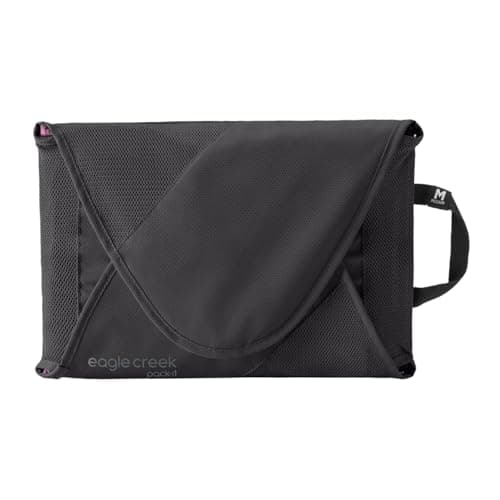
- A garment folder — the product on this page. Flat envelope, folding board, compression wings. It lives inside your suitcase and holds a stack of folded shirts at one consistent fold width.
- A garment bag — a full-length hanging carrier for a suit, folded once over a handle or carried on a hanger. Different job, different luggage; we cover the choice in packing cubes vs garment bags.
- A packing cube — a box for volume, not for flatness. Superb for underwear, socks, t-shirts and knitwear; indifferent to whether a collar arrives crisp.
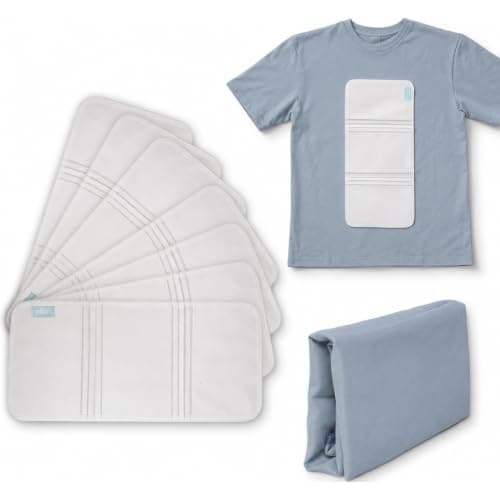
- A shirt-folding board or filer — a bare board with no bag around it. Sets the fold width beautifully, contains nothing, and offers no compression. The PLIIO filers below are this shape, and we have ranked them as what they are rather than pretending they are luggage.
Why the board is the whole product
Creases set where fabric is folded sharply and then held there under pressure for hours. Nothing in a suitcase presses a shirt; the case just holds whatever shape you gave it at home. So a folder is not doing anything clever to the fabric — it is limiting the number of folds and making each one wide and consistent, then stopping the stack from shifting into new folds while the case is being thrown around.
That is why a folder with a board and a folder without one are genuinely different products, not different price points. The board fixes the fold width, so shirt number seven is folded exactly like shirt number one and every crease lands in the same place — down the back, where a jacket covers it. Fold by eye into a boardless sleeve and you get seven slightly different folds that fight each other in the stack. Three of our six picks include a board; the Osprey and the Shonpy pair do not, and the PLIIO set is board and nothing else. Each of those is a legitimate buy for a different reason, but it is the first thing to check.
The honest limit: a folder prevents new creases, it does not remove the ones already in the shirt when you fold it. If a garment came out of a dryer bunched, it goes into the folder bunched and arrives that way flattened. That is also the reason we will not print a wrinkle-reduction percentage on this page — we do not run a testing lab, we have not ironed anything under laboratory conditions, and our methodology says exactly that in those words. The mechanism above is reasoning from how creases form. The numbers below are the manufacturers' own published figures.
How we ranked them
Five criteria, in this order of weight. Wrinkle control — does it include a board, how wide is the fold it sets, and do the wings hold the stack still. Capacity — the garment count and footprint the listing publishes, against the case you would realistically put it in. Weight — what it costs you empty, because a folder is dead weight in a way a cube full of socks is not. Build — shell fabric, lining and closure as described in the listing. Value — the price against the board and the footprint you actually get, not against the brand on the label.
Every score is a judgment from documented specs and listing detail rather than a measurement we took, and every dimension, weight and capacity figure on this page traces to the product's own Amazon listing — each is named in Sources at the bottom. Prices are pulled live from Amazon and date-stamped, so nothing here anchors you to a number that expired last season.
Who should skip a garment folder
- Anyone packing a casual wardrobe. T-shirts, hoodies and knitwear do not hold a crease worth engineering around. Put them in cubes — the main packing cube ranking is a better use of the same money.
- One-nighters. A shirt in a case for twelve hours is not in there long enough to set anything. Hang it at the other end and move on.
- Anyone whose case shuts with effort already. A folder needs a flat uninterrupted slab of space, usually the full footprint of the case. If your interior is already a jigsaw of cubes, the folder is the piece that does not fit.
- Anyone chasing space rather than presentation. Folders do not shrink a load meaningfully; the wings tidy a stack rather than crushing it. If volume is the problem, compression cubes are the tool, and we would rather point you there than sell you the wrong shape.
A folder is the equipment; the fold is the technique, and the technique works without one. How to pack a suit without wrinkling it sets out the six steps, bag by bag, and where in the case the result belongs.
The buyer's guide: what to check before you click
Match the board to your shirts, then to your case
The board width sets the folded width of every garment inside, so it is the specification that decides whether this works for you. The Eagle Creek Medium is listed at 14 by 10 inches, which suits a standard dress shirt; Eagle Creek also lists a Large at 17 by 12 inches for jackets and longer garments. The Briggs & Riley is the widest fold here at 16.5 by 13 inches, and the Shonpy pair are the biggest footprint at 17.1 by 12.2 inches each. Then measure the inside of your case — the usable interior, not the 22-inch exterior that includes wheels and handle housing. A folder that is an inch too wide does not lie flat, and a folder that does not lie flat has no advantage over the cube you already own.
A folder with no board is a flat cube
That is not automatically a criticism. The Osprey is boardless and it is the pick we would take on a one-bag trip, because 0.41 pounds of organizer is genuinely hard to argue with. But be clear about what you are buying: without a board you supply the fold, and the consistency of your stack depends on your own technique. If you want the fold made for you, buy a folder that ships with a board — and if you already fold well, our folding guide covers the technique that makes a boardless sleeve work.
Wings compress; they do not press
Every folder here except the PLIIO filers has wings or flaps that wrap over the stack before the zip closes. Their job is to stop the stack sliding, not to squeeze it thin. Pulling them tighter does not iron anything, and cranking a compression wing down on a stack of shirts is how you set a crease across all of them at once. Snug enough that the pile cannot shift is the target; the extra half inch is not a prize.
Read the garment count as a maximum, not a plan
Eagle Creek lists up to 12 items, Ponhog lists up to 8. Those counts assume shirts, and thin ones. A pair of chinos eats two shirts' worth of thickness, a jacket eats several, and the zip is the honest referee — a folder crammed past its listed capacity bulges in the middle and the wings stop reaching. If you pack a full week of mixed business clothes, plan on a folder for shirts plus a cube for everything else, which is the same division of labor the business travel roundup recommends.
Where it sits in the case matters more than what it cost
A folder belongs at the top of a packed case, flat, with nothing heavy on top of it and nothing lumpy underneath. Shoes and toiletry bags go at the wheel end, cubes fill the middle, folder last — because anything hard underneath prints its shape into the stack over eight hours of transit. This is one of the few packing habits that changes the outcome more than the product does, and it costs nothing.
Check what can be washed, and what cannot
Eagle Creek states the sleeve is washable and the folding board is not, which is worth knowing before you put the whole thing in a machine and take a warped board out. The Ponhog uses a velvet lining, which is softer against shirt fronts and slower to dry. The PLIIO boards wipe clean with a damp sponge, per the listing. None of that decides a purchase on its own, but a folder shares a case with shoes and toiletries, and the day a bottle leaks you will care. That is also an argument for a proper toiletry bag rather than a zip bag from the kitchen drawer.
The short version
For most people packing collared shirts, the Eagle Creek Pack-It Reveal Garment Folder in Medium is the buy — the board, the wings and the washable sleeve, in a footprint a cabin bag takes. Counting grams on a one-bag trip? The Osprey. Packing a suit jacket? The Briggs & Riley's 16.5 by 13 inch board. Want the board without the premium? The Ponhog. Testing the whole idea for the least money, or splitting shirts from trousers? The Shonpy two-pack. Filing shirts one at a time, at home as much as away? The PLIIO set. And if reading this has convinced you that your wardrobe does not crease enough to justify any of it, that is a perfectly good conclusion — the rest of the travel organization hub covers the containers that solve problems you do have.
The other answer: skip the case entirely
Everything on this page assumes the folder goes inside a suitcase you already own. There is a second approach, which is to let the garment stay on its hanger and make the bag around it the luggage. That is a garment bag rather than a folder, and it suits a different traveler: someone whose suit or gown should go from one closet to the next without being folded flat at all. The trade is honest in both directions — a folder adds no extra item to carry, while a garment bag is a second thing in your hands and, on the published folded dimensions, usually is not carry-on sized whatever the title claims. We work through those numbers in the best travel garment bags.
Folder or cube - the direct comparison
Most people arrive here trying to decide between a folder and the cubes they already own, which is a fair question with a specific answer. Garment folder vs packing cube sets the two formats against each other on crease control, capacity, depth in the case and access, and lands on the split that suits almost everybody.
When a folder is not enough
A folder controls the fold; it does not remove it. For three or more suits, for a floor-length dress, or for a trip where you step off the plane straight into the event with nobody to hang anything up, the suit has to stay on its hanger — and that means a garment bag rather than anything on this page. The published weights and folded footprints that decide it are in garment bag vs suitcase, and if you go that way, how to pack a garment bag has the loading order.