The best packing cubes for shirts - and why a folder usually wins
A shirt creases where you fold it, so the container that creases it least is the one that forces the fewest folds. Five picks ranked on published footprint against a folded dress shirt - including the honest finding that the best cube for shirts is often not a cube.
We earn a commission when you buy through our Amazon links, at no extra cost to you. It never affects our rankings, and we say so when the cheaper product is the better buy. How this works.
For most people packing shirts, the Eagle Creek Pack-It Reveal garment folder is the right buy - and it is not a packing cube. That is the finding of this page and we would rather lead with it than bury it. A shirt creases where it is folded, so the container that creases it least is the one that forces the fewest folds, and a 14-by-10-inch folder with a board forces exactly the folds the board describes. If you want a genuine cube - because you want one container for shirts and socks and a sweater - buy the slim-profile set and know that you are trading one extra crease for a lot of money saved.
The reason “best packing cubes for shirts” is a frustrating search is that it contains a hidden assumption. A cube is a volume tool: it divides a bag into boxes so you can find things. A shirt problem is a geometry problem: a dress shirt is about 30 inches of fabric that has to end up flat and rectangular, and the only question that matters is how many times you bend it to get there. Those are different problems, and the products that solve them are different shapes.
The arithmetic that decides the crease
Fold a dress shirt the way a shop does - arms back, sides in, one fold at the waist - and you land at roughly 14 by 10 inches. That is not a coincidence; it is the shape a buttoned shirt naturally makes. Now compare the published footprints of the things you might put it in:
Pick
Published footprint
Published empty weight
Board?
What that does to the fold
Eagle Creek Reveal Folder (M)
14 x 10 x 1 in
0.59 lb
Yes
Shop fold, nothing added
Shonpy Folders (2-pack)
17.1 x 12.2 in each
None published
Wings, not a board
Shallower fold on a long shirt
Osprey Ultralight Garment Folder
15.7 x 11 x 2 in
0.41 lb
No
Gentle fold, but you set the line
PLIIO Filers (7-pack)
16.9 x 7.9 in each
None published
Yes, one per shirt
One extra lengthways fold, filed on edge
Amazon Basics Slim Cubes (4)
None published
None published
No
You fold the shirt to fit the box
A blank means the brand publishes no figure and we have not substituted an estimate. The pattern in the first column is the whole page: the closer the container's footprint is to the shirt's natural folded shape, the fewer extra bends you introduce. Anything narrower than about 10 inches forces a lengthways fold down the shirt front, which is the crease people actually notice, because it runs through the placket where the fabric is thickest.
What this page will not tell you
It will not tell you that any of these prevent wrinkles. None of them do, and this site publishes no wrinkle figure for any product because there is no repeatable way for us to measure one - the same position we take in do packing cubes wrinkle clothes. What a folder does is control where the creases land, which is a smaller and much more honest claim: a crease along a deliberate fold line reads as a packed shirt, and a random crease through the chest reads as a crumpled one. Fabric does the rest. A wrinkle-resistant cotton blend will come out of any of these fine; a linen shirt will come out of all of them creased.
How we ranked them
Fold footprint - the published dimensions against a shop-folded dress shirt at roughly 14 by 10 inches. Closer is better, because closer means fewer added folds. Crease control - whether a board or a wing makes the fold repeatable, or whether it is down to you each time. Findability - getting one shirt out without disturbing the rest. Carry-on fit - published length against a typical carry-on interior. Value - the live price against what the item does for shirts specifically, not against its feature list.
Every score is a judgment from documented specs, not a measurement we took; our methodology page says so in those words. Prices are pulled from the live Amazon price layer and carry an “as of” date.
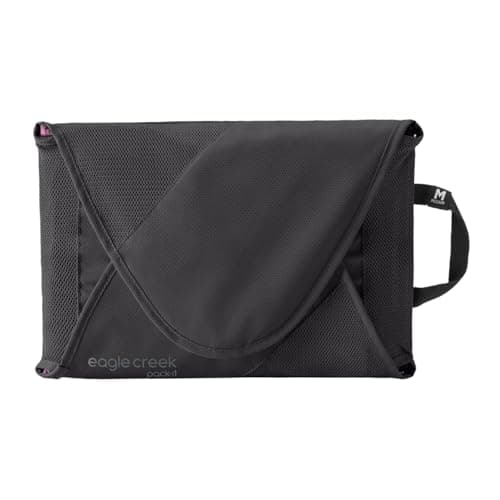
The honest top pick on a page about cubes is not a cube, and it is worth knowing why before you spend. Eagle Creek publishes this Pack-It Reveal folder at 14 by 10 by 1 inches, 0.59 pounds empty, with a folding board and a stated capacity of up to 12 items. The 14-by-10 figure is the number that matters: a dress shirt folded around a board lands at roughly that footprint, which means the shirt is folded along the board's edges and nowhere else. A cube does not do that. A cube is a box you fold the shirt to fit, and every extra fold you add to make it fit is a crease you unpack later. At 0.59 lb empty this also costs less weight than most three-cube sets.
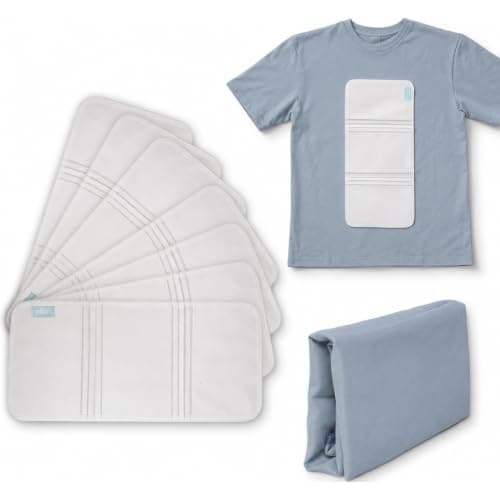
The pick if the thing that annoys you is not creasing but digging - pulling three shirts out to reach the fourth and refolding all of them. PLIIO sells these as seven filers at 16.9 by 7.9 inches each with a wipe-clean board, and the idea is that each shirt is folded onto its own board and then filed on edge, like books on a shelf, so you take one out without disturbing the others. Seven also means a shirt per day of a working week with two spare. The trade-off against a folder is honest: the 7.9-inch width means a narrower fold than a folder's 10 inches, so you are adding a fold to gain the filing.
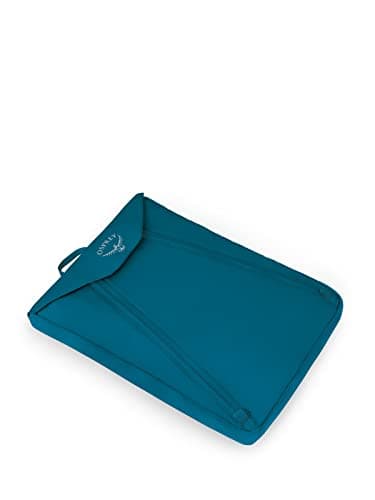
The folder for people who count grams, and the one to pick if your shirts are not dress shirts. Osprey publishes it at 15.7 by 11 by 2 inches and 0.41 pounds empty, with a dual-zip wide opening and a recycled main fabric. Two things follow from those numbers. The 15.7-by-11 footprint is larger than the Eagle Creek, which means a gentler fold on a long-bodied shirt - and the 2-inch depth means it takes a genuine stack rather than a flat slab, so casual shirts, linen and a polo or two all fit without being forced. At 0.41 lb it is the lightest way to carry shirts flat that we rank.
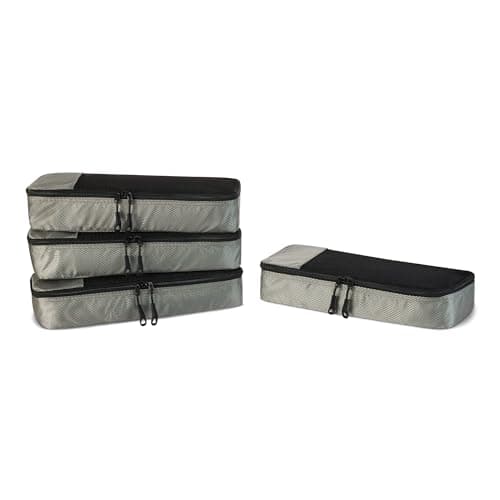
If you want a cube rather than a folder - and there are good reasons to, starting with wanting one container for a mixed load - the slim profile is the shape to buy. Amazon Basics sells this as a four-piece slim set with a mesh top and a double zipper, and 'slim' is doing the work: a low-profile cube forces a wide, shallow fold rather than a deep stack, which is closer to what a folder does than a standard cube ever gets. It is also the cheapest thing on this page by a distance, which matters because the honest comparison here is not folder versus cube, it is whether the extra crease is worth the money you saved.
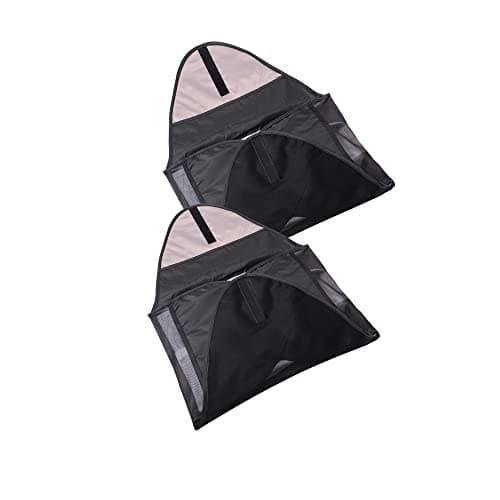
The pick when two of you are sharing one case, which is the scenario where shirt packing usually collapses into a single creased pile. Shonpy sells these as a two-pack at 17.1 by 12.2 inches each with four wrap-over wings in polyester. The 17.1-by-12.2 footprint is the largest here, and a larger footprint means a shallower fold on a long shirt - that is the whole mechanism. Two folders also means one each, or shirts in one and trousers in the other, without either of you unpacking the other's stack. The wrap-over wings do the job of a board without the rigidity, which is a fair trade at this price.
#ad · Live prices from the Amazon Product API, as of October 17, 2026. Where we have no verified live price we show none — a gap beats a rotted number.
In detail
The picks, in full
01
Best overall
Eagle Creek Pack-It Reveal Garment Folder (Medium)
14 x 10 x 1 inFolding board includedHolds up to 12 items0.59 lb empty
8.6/10
Value: —
The honest top pick on a page about cubes is not a cube, and it is worth knowing why before you spend. Eagle Creek publishes this Pack-It Reveal folder at 14 by 10 by 1 inches, 0.59 pounds empty, with a folding board and a stated capacity of up to 12 items. The 14-by-10 figure is the number that matters: a dress shirt folded around a board lands at roughly that footprint, which means the shirt is folded along the board's edges and nowhere else. A cube does not do that. A cube is a box you fold the shirt to fit, and every extra fold you add to make it fit is a crease you unpack later. At 0.59 lb empty this also costs less weight than most three-cube sets.
Fold footprint
10
Crease control
9
Findability
8
Carry-on fit
9
Value
7
Pros
+14 x 10 x 1 in published - sized so a dress shirt folds along the board and nowhere else
+Folding board included, which is what makes the fold repeatable rather than a skill
+0.59 lb empty per Eagle Creek, lighter than most cube sets doing less for shirts
+Stated capacity of up to 12 items, so a work week is one flat slab in the case
Cons
−One inch deep means it holds shirts and almost nothing else - it is a single-purpose item
−Does not compress; twelve shirts take the space twelve shirts take
−You still have to use the board properly, and a rushed fold undoes the advantage
Don't buy this if…
…you are packing a mixed load and want one container for everything. A folder is a shirt tool - if you want one box for shirts, socks and a sweater, buy a slim cube and accept the extra fold.
Price as of October 17, 2026. Prices change — Amazon's at checkout is the one that counts.
#ad · we may earn a commission from this link to Eagle Creek Pack-It Reveal Garment Folder (Medium)
02
Best for a shirt per slot
PLIIO Medium Filers (7-Pack)
7 filers16.9 x 7.9 in eachWipe-clean boardFiles shirts on edge
8.0/10
Value: $4.71 /filer
The pick if the thing that annoys you is not creasing but digging - pulling three shirts out to reach the fourth and refolding all of them. PLIIO sells these as seven filers at 16.9 by 7.9 inches each with a wipe-clean board, and the idea is that each shirt is folded onto its own board and then filed on edge, like books on a shelf, so you take one out without disturbing the others. Seven also means a shirt per day of a working week with two spare. The trade-off against a folder is honest: the 7.9-inch width means a narrower fold than a folder's 10 inches, so you are adding a fold to gain the filing.
Fold footprint
7
Crease control
7
Findability
10
Carry-on fit
8
Value
8
Pros
+Seven filers at 16.9 x 7.9 in - one shirt per board, filed on edge like books
+Pull one shirt out without disturbing the other six, which no stacked system allows
+Wipe-clean boards, so a filer that meets a leaking bottle is not ruined
+Scales to the trip: take three for a weekend, all seven for a fortnight
Cons
−7.9 in wide forces a narrower fold than a 10 in folder, which is one more crease line
−Seven boards is seven boards of bulk even when you only pack three shirts
−Filing on edge only works if the case is packed tight enough to hold them upright
Don't buy this if…
…you unpack into a closet on arrival and never open the case again. Filing solves a repeated-access problem, and if you do not have one you are paying for bulk you will not use.
15.7 x 11 x 2 in0.41 lb emptyDual-zip wide openingRecycled main fabric
7.6/10
Value: —
The folder for people who count grams, and the one to pick if your shirts are not dress shirts. Osprey publishes it at 15.7 by 11 by 2 inches and 0.41 pounds empty, with a dual-zip wide opening and a recycled main fabric. Two things follow from those numbers. The 15.7-by-11 footprint is larger than the Eagle Creek, which means a gentler fold on a long-bodied shirt - and the 2-inch depth means it takes a genuine stack rather than a flat slab, so casual shirts, linen and a polo or two all fit without being forced. At 0.41 lb it is the lightest way to carry shirts flat that we rank.
Fold footprint
9
Crease control
7
Findability
7
Carry-on fit
8
Value
7
Pros
+0.41 lb empty per Osprey - the lightest folder here by a clear margin
+15.7 x 11 in footprint allows a gentler fold on a longer shirt body
+2 in deep takes a real stack, not just a flat slab of pressed shirts
+Dual-zip wide opening means you load it flat rather than posting shirts into a slot
Cons
−No folding board included, so the fold is yours to get right every time
−15.7 in long is a tight fit across a small carry-on - measure before you buy
−Ultralight fabric gives the stack less protection from whatever is packed above it
Don't buy this if…
…you are packing dress shirts for meetings. Without a board the fold wanders, and on a stiff poplin collar that shows - the Eagle Creek folder is the one with the board.
If you want a cube rather than a folder - and there are good reasons to, starting with wanting one container for a mixed load - the slim profile is the shape to buy. Amazon Basics sells this as a four-piece slim set with a mesh top and a double zipper, and 'slim' is doing the work: a low-profile cube forces a wide, shallow fold rather than a deep stack, which is closer to what a folder does than a standard cube ever gets. It is also the cheapest thing on this page by a distance, which matters because the honest comparison here is not folder versus cube, it is whether the extra crease is worth the money you saved.
Fold footprint
6
Crease control
5
Findability
7
Carry-on fit
9
Value
9
Pros
+Low-profile shape forces a wide shallow fold instead of a deep crushed stack
+Four pieces, so shirts get their own cube and the rest of the load gets the others
+Mesh top means you see which cube holds the shirts without opening anything
+By far the cheapest route on this page to a flat, divided shirt stack
Cons
−No board and no fixed footprint, so the fold is improvised and varies every trip
−Mesh top offers no protection from whatever is packed on top of the cube
−A cube is still a box you fold the shirt to fit, which is the extra crease you are paying to avoid elsewhere
Don't buy this if…
…the shirts are the point of the trip. For an interview, a wedding or client meetings, a board-backed folder is a materially better tool and the price gap is one dinner.
2-pack17.1 x 12.2 in each4 wrap-over wingsPolyester
7.4/10
Value: $12.49 /folder
The pick when two of you are sharing one case, which is the scenario where shirt packing usually collapses into a single creased pile. Shonpy sells these as a two-pack at 17.1 by 12.2 inches each with four wrap-over wings in polyester. The 17.1-by-12.2 footprint is the largest here, and a larger footprint means a shallower fold on a long shirt - that is the whole mechanism. Two folders also means one each, or shirts in one and trousers in the other, without either of you unpacking the other's stack. The wrap-over wings do the job of a board without the rigidity, which is a fair trade at this price.
Fold footprint
9
Crease control
7
Findability
7
Carry-on fit
6
Value
8
Pros
+17.1 x 12.2 in each - the largest footprint here, so the fold is the shallowest
+Two folders in the pack, which is the answer to one case shared by two people
+Four wrap-over wings hold the stack without a rigid board to pack around
+Polyester shell wipes down and takes being squashed better than ultralight nylon
Cons
−17.1 in is too long for some small carry-ons - measure the case interior first
−Wings are not a board: the fold is softer and holds its line less well than a folded panel
−Two of them is bulk you carry even on a trip where you only need one
Don't buy this if…
…you travel alone in a small carry-on. One folder sized to your case beats two folders that only fit a checked bag, and the Eagle Creek at 14 x 10 in is the small-case answer.
The buyer's guide: match the container to the shirt, not the bag
Start by measuring your case, not your shirts
The folders here run from 14 to 17.1 inches long, and a carry-on interior is typically around 20 by 13 inches of usable floor - which means the 17.1-inch Shonpy fits one way and not the other, while the 14-inch Eagle Creek drops in either way with room beside it for a cube. Measure the inside of the case you actually own before you choose. This is the most common avoidable return in this category. Packing cube sizes has the common footprints to compare against.
Dress shirts and casual shirts are not the same problem
A poplin dress shirt has a fused collar and a stiff placket, and it shows every crease it is given - that shirt wants a board and a 14-by-10 fold. A soft oxford, a linen shirt or a travel polo has no structure to lose and comes out of a slim cube perfectly acceptable. If your trip is jeans and casual shirts, buy the cheap slim cube set, pack it well and spend the difference elsewhere. If your trip is meetings, the folder is the better tool and the gap in price is not large.
The last layer in decides whether any of it worked
A perfectly folded stack of shirts will crease anyway if a pair of shoes lands on top of it in transit. The rule is simple and it is the same rule in every packing guide we publish: heavy and hard at the bottom and the hinge end of the case, soft and flat on top, nothing with an edge resting on a folded stack. A folder is flat specifically so it can be the top layer. How to organize a suitcase sets out the load order, and how to fold clothes for packing cubes covers the folds themselves.
Do not roll a shirt you intend to wear to a meeting
Rolling is excellent for t-shirts, underwear and anything knitted, because knit fabric has no fold memory worth the name. It is poor for a woven dress shirt: a roll puts a continuous soft crease across the entire garment and concentrates it at the collar and cuffs, which are the parts people look at. If you are a committed roller for everything else, that is fine - roll the rest, fold the shirts, and keep them in separate containers. We make the full case in packing cubes vs rolling.
If the shirt is attached to a suit, you are on the wrong page
A suit jacket has a structured shoulder and a chest canvas, and the fold that ruins it is not the fold that creases a shirt. If you are packing a jacket as well as shirts, the decision is a different one - start at how to pack a suit for the fold inside a case, or garment bag vs suitcase to decide whether the jacket should be in a case at all. Shirts can travel in a folder in either scenario.
The short version
One recommendation, no reading: the Eagle Creek Reveal garment folder, 14 by 10 by 1 inches with a board, 0.59 lb empty. Counting grams or packing softer shirts: the Osprey folder at 0.41 lb. Pulling one shirt out every night of a trip: the PLIIO filers, one shirt per board, filed on edge. Two people sharing one case: the Shonpy two-pack. And if you genuinely want a cube rather than a folder, the slim Amazon Basics set is the right shape and by far the cheapest - just expect one more fold than the folders give you. For the rest of the load, start at the main packing cube ranking.
How we picked
We haven't tested these on a plane — and we say so
Every site in this category says it tested twenty cubes. We haven't tested any. We compiled the published manufacturer specs, computed the numbers that decide the buy — capacity, compression, cost per cube — and scored each set against a published rubric. The scores are judgments from documented research, not measurements we took. Where a figure came from a manufacturer's spec sheet we name it in Sources. Prices are pulled live from Amazon.
Questions
Frequently asked
What are the best packing cubes for shirts?+
The honest answer is that a garment folder beats a cube for shirts, and the Eagle Creek Pack-It Reveal folder is the pick: 14 by 10 by 1 inches with a folding board, 0.59 lb empty, and a stated capacity of up to 12 items. That footprint matches the shape a dress shirt naturally folds to, so you add no folds to make it fit. If you want an actual cube, buy a slim-profile set - a low cube forces a wide shallow fold, which is the next best thing.
Do packing cubes wrinkle shirts?+
They do not prevent wrinkles, and we publish no wrinkle figure for any product because there is no repeatable way for us to measure one. What a container controls is where the creases fall. A folder with a board puts them along deliberate fold lines, which reads as a packed shirt; a box you have squashed a shirt into puts them wherever the fabric happened to bend. Fabric matters at least as much - a blend recovers, linen does not. See do packing cubes wrinkle clothes.
Is a garment folder better than a packing cube for dress shirts?+
For dress shirts, yes, for one measurable reason: a folder's footprint is sized to the shirt, so the shirt is folded along the board edges and nowhere else, while a cube is a box you fold the shirt to fit. The Eagle Creek folder is 14 by 10 inches, which is about what a shop fold produces. The trade-off is that a folder is single-purpose and one inch deep - it holds shirts and little else. Garment folder vs packing cube has the full comparison.
How many shirts fit in a packing cube?+
It depends entirely on the depth, which is why depth is the figure to check. Eagle Creek states up to 12 items for its 1-inch folder; the PLIIO system is explicitly one shirt per filer, with seven to the pack. For an undimensioned cube, the usable rule is that a folded dress shirt is roughly 14 by 10 inches by about half an inch, so divide the cube's depth by that. Packing a cube past comfortable means pressing creases in.
Should I roll or fold shirts for travel?+
Fold woven shirts, roll knits. A roll puts a continuous soft crease along the whole garment and bunches it at the collar and cuffs, which is exactly where a dress shirt is judged. T-shirts, underwear and anything knitted have no fold memory to lose and roll beautifully. There is no contradiction in doing both in the same case - just not in the same cube.
What size packing cube do I need for shirts?+
Wide and shallow rather than deep. You want an internal footprint of at least about 14 by 10 inches so the shirt folds to its natural shape, and as little depth as the stack requires, because depth is what lets a stack slump and re-crease. That is why slim cubes beat standard cubes here and folders beat both. Measure your case first - our packing cube sizes guide lists the common footprints.
We do not run a testing lab, and we do not pretend to. Every dimension, capacity and compression figure traces to the manufacturer's own spec or listing; prices come live from Amazon. Where we couldn't verify something, we say so on the page rather than quietly leaving it out. Read our full method.