Two weeks fits in a carry-on, and it is not because of a folding technique. It is because ten garments recombine into fourteen days, and because you wash something in the middle. Fix the wardrobe at roughly two bottoms and five tops, pick a laundry cadence before you pack, cap shoes at two pairs, and the bag stops being the constraint.
The arithmetic
Here is the whole thing, and it is why “can you pack for two weeks in a carry-on” has a yes answer. Fourteen days does not need fourteen outfits. Two bottoms and five tops that all work together is ten combinations before you repeat anything, and nobody on a two-week trip is being audited on repeats. The failure is not the number of days; it is packing complete outfits, where each new day needs new clothes.
The second half is laundry. A fortnight is long enough that one wash — a sink on day three, six and nine, or a laundromat on day seven — effectively doubles the wardrobe you packed. Decide which before you pack, because it changes what you bring: a sink cadence needs quick-dry fabric and detergent, a laundromat cadence needs enough underwear to reach the wash.
The count, category by category
| Category | How to count it | Typical for 14 days |
|---|
| Bottoms | By versatility, not by day | 2, plus what you travel in |
| Tops | By combinations with the bottoms | About 5, all mutually compatible |
| Underwear and socks | By laundry cadence plus two | 4-5 for a sink cadence, 7 for a mid-trip wash |
| Layers | By climate, worn not packed where possible | 1, plus a shell if rain is likely |
| Shoes | Hard cap, heavier pair worn | 2 pairs total |
| Occasion wear | Only against a specific event in the itinerary | 0-1 |
The two categories that actually blow the bag
Underwear and socks. This is the one category people count in days, and on a fourteen-day trip that instinct packs twenty-eight items of the smallest, most washable things you own. Count them against the laundry cadence instead and the number halves or better.
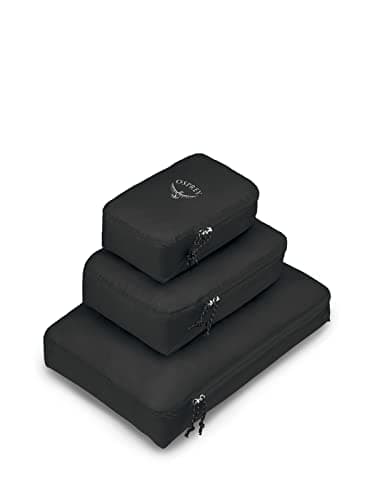
Shoes. Dense, bulky, and completely immune to compression. Two pairs is the cap, the heavier one goes on your feet, and the spare goes in a shoe bag along the hinge of the case where the shape is already awkward. A third pair is the single most expensive decision in cabin-only packing.
Where compression helps, and where it does not
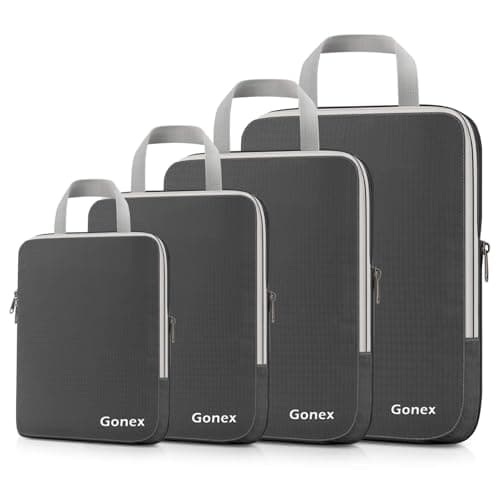
A two-week wardrobe packed to the above is mostly soft lofted clothing, which is exactly what compression acts on — so a compression cube set genuinely buys back volume here, more than it would on a three-day trip of jeans and a jacket. What it does not do is reduce weight by a single gram, and cabin bags are weighed as well as measured on many carriers. That is the trap: compression frees space, the free space invites more packing, and the bag arrives at the gate compact and overweight. Our do compression bags reduce weight guide is the long version. Weigh the finished bag.
Laundry is a packing decision, not a chore you do later
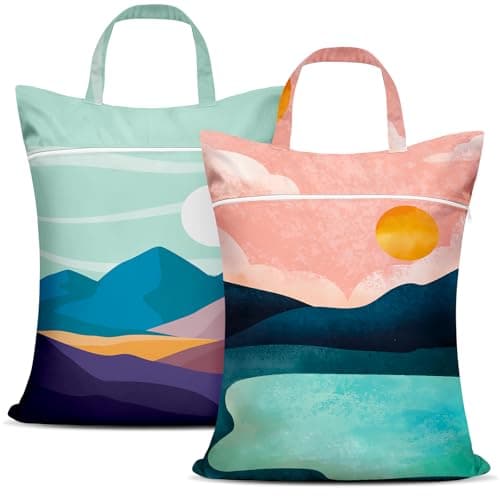
On day one your bag holds fourteen days of clean clothes. On day twelve it holds two days of clean clothes and ten days of dirty ones, in the same volume, less neatly folded. If dirty laundry has no container, it ends up distributed among the clean clothes and the bag gets steadily harder to close. Give it a home on day one — a waterproof-lined bag, or a divided clean-and-dirty cube from our packing cubes with a laundry bag roundup, or the full ranking in travel laundry bags. And pack one empty compression bag for the last morning, when everything is worn and volume matters most.
Everything that is not clothes
A fortnight's toiletries is where the weight is, because full-size bottles are mostly water. Decant into travel bottles — the capacity rule people get wrong is covered in our travel bottles roundup — and give the rest of it proper containers rather than loose space: a toiletry bag, a tech organizer and, for a two-week international trip, a document organizer. For the cubes themselves, our long trips roundup ranks the high-capacity sets and the one-bag roundup ranks them on weight.