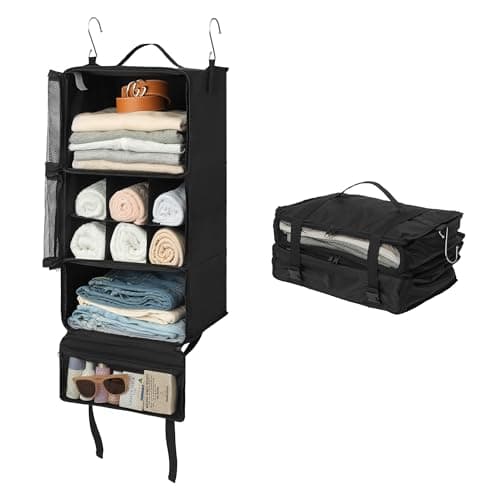
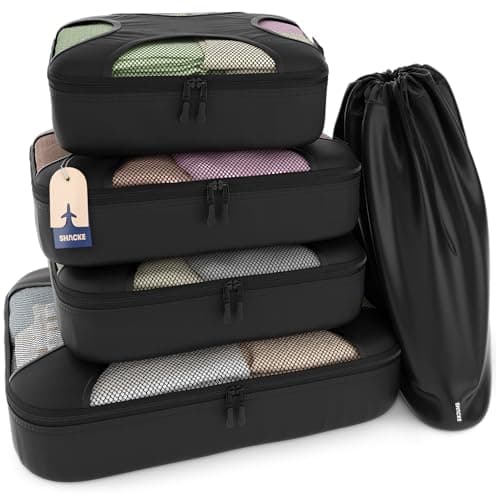
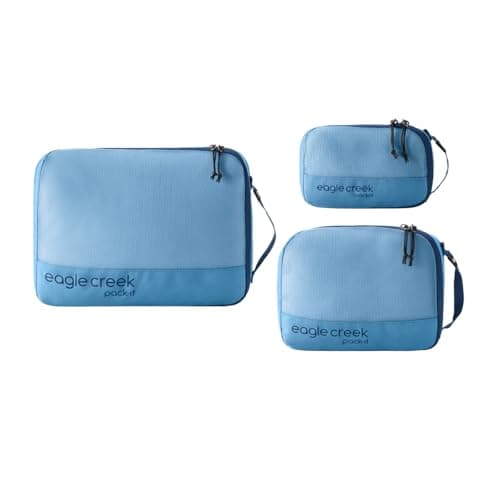
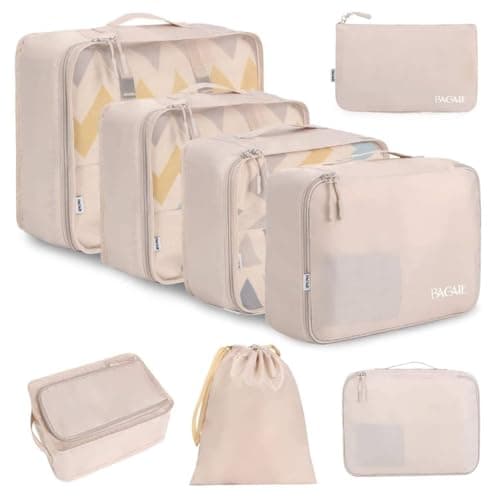
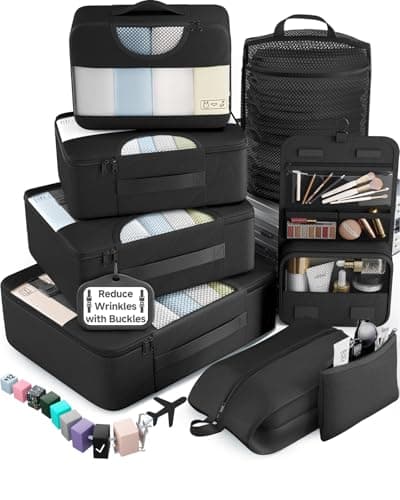
Buy the Veken 10-set. Camp is the one packing job where piece count beats everything else, because the list is written by somebody else and itemized, and a ten-piece set lets you put one container against each line on it. Then add one hanging cube - the GRANNY SAYS XL - if the cabin has no shelves, which it usually does not. That pairing is what turns a trunk into something a child can actually live out of for three weeks.
Camp is not the same packing problem as a family trip
It is worth being precise, because this site has a packing cubes for kids page and a packing cubes for college page and neither of them is this. On a family trip a parent packs, a parent unpacks, and a parent knows where everything is. A college move-in happens once, into a room with furniture, with a car outside and a shop nearby.
Camp has none of that. The list comes from the camp and is specific - six t-shirts, two pairs of long trousers, one warm layer, a towel for the lake and a towel for the shower. The container is a trunk or a duffel with no internal structure at all. The cabin usually has a bunk and a bare floor. And the person who has to find the long-sleeved shirt on a cold evening in week two is a child, working alone, in the dark, with a flashlight. Every choice below follows from those four facts.
What to look for, for camp specifically
- One container per line on the list.This is the single highest-value move. If the camp sheet says “6 t-shirts, 4 shorts, 2 long trousers, 1 fleece, 7 underwear, 7 socks, 2 swimsuits, 2 towels, sleepwear,” then nine containers makes the trunk self-documenting. Three containers makes it a pile with zippers.
- Identifiable without opening. Mesh tops, mesh windows and different colors all work. An eleven-year-old will not open four cubes to check - they will tip the trunk out, and then the system is gone for the rest of the session.
- Somewhere to put things that is not the floor. A hanging cube is the closest thing to furniture you can post to a cabin. This is the difference between a system that survives day four and one that does not.
- Laundry separation from day one. Most sleepaway camps do little or no washing. Without a dedicated bag, worn clothes go back into the clean cubes, and by week two nobody can tell which is which. A separate bag is a rule a child can follow.
- Labels, written on. Camps lose things at a rate that has to be experienced. Name tape or a laundry marker on every cube, every bag and every towel.
- Cheap enough to lose. Something will not come home. Buy accordingly; this is not the trip for a premium three-cube set.
Mapping a camp list onto containers
| Camp list line | Container | Note |
|---|
| T-shirts and tops | Medium cube | The most-opened cube; keep it at the top of the trunk |
| Shorts and trousers | Medium cube | Denser than tops, so it holds fewer items than you expect |
| Underwear and socks | Small cube each | Two small cubes beats one medium - these are the daily grabs |
| Sleepwear | Small cube | Findable in the dark is the only requirement |
| Warm layer and rain shell | Large cube or a hanging compartment | Bulky, rarely needed, needed urgently when it is |
| Swimwear and lake towel | Waterproof or wet/dry bag | The only genuinely wet items; keep them out of the cubes |
| Shower towel and toiletries | Pouch plus a hanging toiletry bag | Shower blocks have no shelf either |
| Worn clothes | Dedicated laundry bag | Named, and it comes home unopened |
The part most camp packing lists get wrong
They optimise for getting everything in, once, at home, with a parent doing the folding. That is the easy half. The hard half is day nine, when the trunk has been opened thirty times and nothing is where it started. Packing cubes work at camp for exactly one reason: they are the only method that survives being used by somebody who did not pack it. The test to apply before you post the trunk is not “does it all fit” - it is “can they find the fleece without taking anything else out.”
How we scored these five
Fits a camp list - piece count and size range against a typical itemized sleepaway sheet. Child can use it alone - closure type, weight when full, and how forgiving it is of being opened in a hurry. Findability - whether contents are identifiable without unpacking. Durability - fabric and zipper against three weeks of trunk-lid abuse. Value - live price per piece, weighted for the fact that camp loses things. Our methodology states plainly that these are judgments from documented specs and listings rather than measurements we took. We have not sent any of these to camp.
Trunk or duffel - does it change the answer?
A little. A hard trunk has a flat base and vertical sides, so cubes stack in columns and stay put; a duffel sags, so cubes shift and the hanging organizer earns its keep sooner, because it holds its own shape inside a soft bag. Either way, four-inch-deep cubes like the Shacke set suit a trunk better than the slimmer carry-on-profile cubes designed for suitcases - there is depth available and nothing to be gained by not using it. Our packing cube sizes guide maps the common footprints if you want to compare against a specific trunk.
Colors instead of labels, for a younger child
For under-tens, color does more work than any label. A set where each size is a different color turns “get a clean t-shirt” into “the blue one,” which is an instruction that survives a counsellor repeating it across a cabin. Our color-coded cubes page covers the sets that come in genuinely distinct colors, and the color-coding system guide has the one-page scheme to write on the inside of the trunk lid.