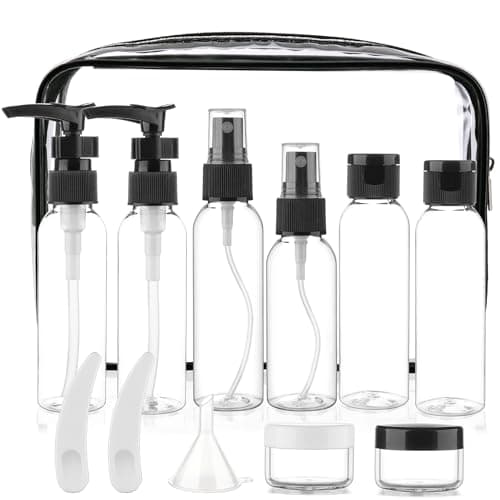
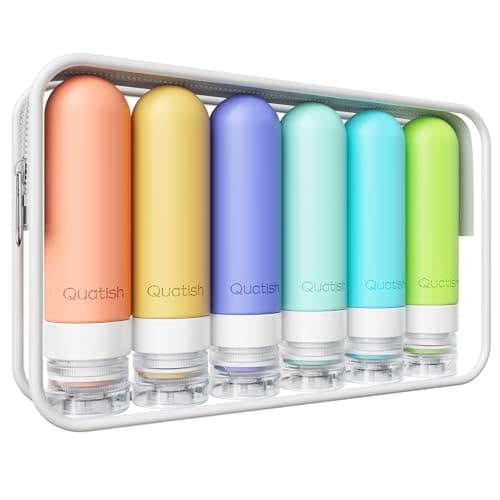
The verdict first. Under a hard live-price ceiling of $25, the Quatish 6-Pack of 3 oz Travel Bottles is the best set to buy — six bottles sized right up against the carry-on per-container limit, with a published 3-layer lid seal and a cross-slit orifice that actually meters thick conditioner. It is for anyone decanting a full wash kit. The budget pick is the Cosywell 13-Piece Travel Bottle Kit, the cheapest thing on the page and the only option here that includes pumps, sprays, jars, a funnel and labels — the pick if what you decant is not all squeeze products. Prices and the date they were checked are in the table above.
And here is the calculation this page runs that nobody in the category publishes: cost per fluid ounce of capacity. Divide each set's live price by the total published volume of its bottles and the result reorders the entire page.
Cost per ounce, and the tenfold spread inside the cap
Using the published capacities and the live prices in the table above, our arithmetic puts the range inside the $25 ceiling at roughly tenfold:
- Six 3-ounce bottles is 18 published ounces of capacity. Two sets on this page do that, and they sit at the cheap end — well under a dollar per ounce.
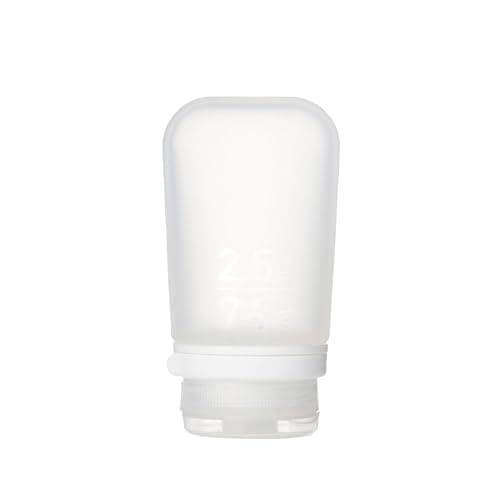
- Four bottles at 3 oz and 2 oz is 10 published ounces, and lands at roughly three times the cheapest figure per ounce.
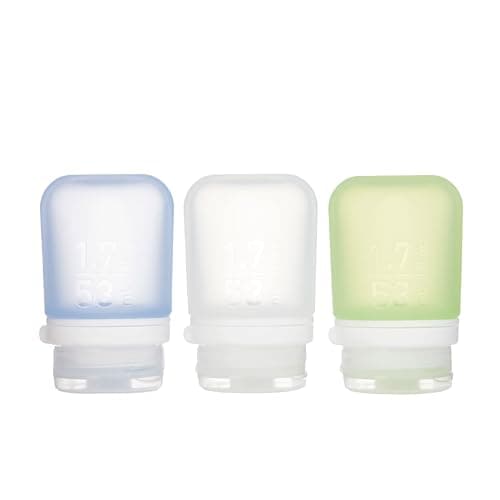
- Three bottles at 1.7 oz is 5.1 published ounces — the smallest total here — and works out at roughly ten times the cheapest set per ounce.
None of that makes the expensive bottles bad. The 1.7-ounce set has the only mechanical locking cap on the page, and a cap that locks is a real answer to the real failure mode. The point is that the category sells bottles and you are buying capacity, and the two are priced very differently. If you need a full wash kit, buy by the ounce; if you need one bottle that will never leak into a bag with a laptop in it, pay the premium knowingly.
What the $25 cap actually removes
One product in our catalog is excluded by this ceiling, and it is excluded for a reason that makes the cap look like a feature. The Cadence Capsules Basic Set — magnetic, stackable hexagonal capsules with interchangeable icon tiles — publishes 0.56 ounces per capsule, three capsules, which is about 1.68 published ounces in total. Run our same arithmetic on its live price and it works out at roughly fifty times the cost per ounce of the cheapest qualifying set.
Which tells you precisely what the cap filters: under $25 you cannot buy a modular system. You can buy as much capacity as you like. Cadence is not expensive because its plastic is better — it is expensive because you are buying magnets, a stacking geometry and an icon-tile labelling system, and those things are charged per capsule while capacity stays tiny. That is a legitimate purchase for a minimalist who wants a beautiful object, and it is a terrible purchase for anybody who needs eighteen ounces of shampoo on a two-week trip. If the system is what you want, we compare it directly in Cadence Capsules alternatives.
Why 3 ounces is the number that matters
The carry-on liquids rule, as the TSA publishes it, allows "a quart-sized bag of liquids, aerosols, gels, creams and pastes" in a carry-on, "limited to travel-sized containers that are 3.4 ounces (100 milliliters) or less per item." Read that carefully, because the second half is where the money is: the limit is per container, and the bag limits how many containers fit.
So a 3-ounce bottle uses about 88 percent of the allowance each container is permitted, while a 1.7-ounce bottle uses half. For the same amount of shampoo, small bottles need twice as many containers — and containers, not fluid ounces, are what runs out of room in a quart bag. That is the whole case for buying at 3 ounces, and it compounds with the cost-per-ounce finding above: the sets with the best value per ounce also happen to be the ones that waste the least of the per-container allowance. For the bag those bottles live in, see best TSA approved toiletry bags — and the honest news there is that nothing is actually TSA-approved.
Seals, labels, and the two things that go wrong
Two failures, and the published features map onto them:
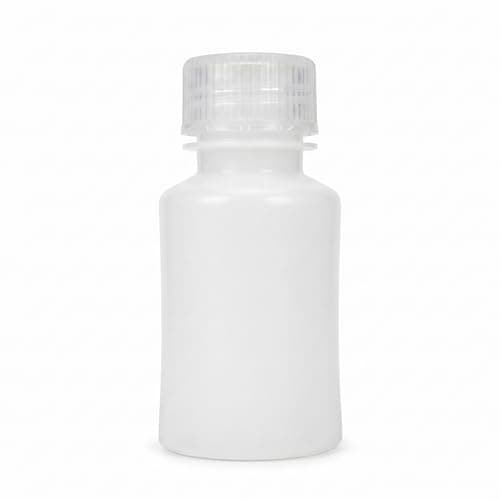
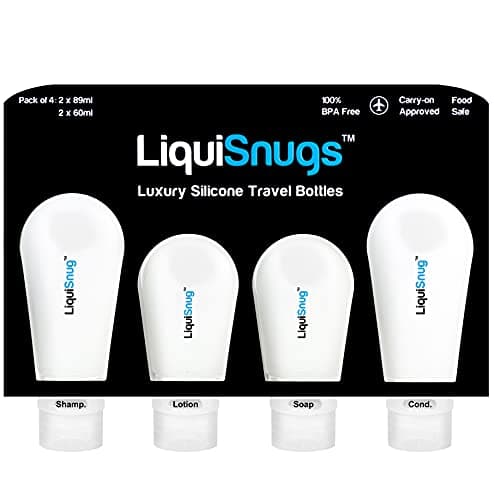
Leaking. A cabin pressure change pushes product out of any cap that relies only on a thread. The published mechanisms on this page, strongest first: a mechanical locking cap (both GoToob+ picks), a multi-layer lid seal (Quatish), a lined screw cap on a rigid bottle (United Scientific), and a lifetime leak guarantee as the listing's claim (LiquiSnugs). The cheapest kit publishes no seal specification at all, which is worth knowing rather than discovering.
Not knowing which bottle is which. Underrated, and it is the thing you will actually curse about. Three published answers here: a writable collar moulded into the bottle, adjustable labels, and a sheet of stick-on labels. A collar beats a sticker, because stickers curl off in a wet bag. Six identical unlabelled bottles is the standard mistake in this category.
How we picked these, and what we could not check
The rule for this page is mechanical: a set qualifies only if our live price feed showed it under $25 with a buyable offer on the day the page was written, and the as-of date of that check is printed under the comparison table.
What we could not check, stated plainly. We have not handled these bottles, filled one, weighed one or taken one on a plane. Every volume, dimension, material, cap type and piece count above is the manufacturer's own published figure, read off the listing on the date in Sources. Every cost-per-ounce figure on this page is our arithmetic — live price divided by published total capacity — and not a published specification. Cosywell publishes no volume for its two jars, so only its six bottles enter that arithmetic. No brand here publishes an empty weight, so no weight figure appears anywhere above. LiquiSnugs' lifetime leak guarantee is its listing's claim and we have not read the terms. The TSA wording is quoted from the TSA page in Sources, read 2026-11-22, and it is the only regulatory claim on this page. Our scores are judgments from published listings and documented research, which is what our methodology says in exactly those words.
Three questions, in the order that decides this under a cap.
1. How much do you actually need to carry?
Count the products, not the bottles. Shampoo, conditioner, body wash, face wash, moisturiser and sunscreen is six products, which is eighteen ounces at 3 ounces each — and there is a set under this cap for well under a dollar per ounce. A weekend with hotel shampoo available is two products, and then a small premium set with a locking cap is a perfectly sensible buy. The mistake is buying a three-bottle premium set for a six-product trip.
2. Squeeze, pump, spray or jar?
This is the question that eliminates most of the page in one move. Thick shampoo and conditioner want a squeezable silicone bottle with a wide orifice. Serum and foundation want a pump. Toner wants a spray. Balm wants a jar and a spatula. Exactly one pick here includes pumps, sprays and jars, and it is also the cheapest — so if your kit is not all squeeze products, start there.
3. Is a leak a disaster or an annoyance?
If these bottles share a bag with a laptop or a passport, buy the mechanical locking cap and accept the cost per ounce. If they live in a dedicated wash bag inside a suitcase, a lined screw cap or a multi-layer lid seal is plenty, and the money is better spent on capacity. Either way, put the one product you would hate to lose inside a sealed bag as well — that costs nothing and works better than any cap.
What not to buy
Do not buy small bottles to save space: the rule limits each container to 3.4 ounces and the quart bag limits how many containers fit, so a 1.7-ounce bottle makes you carry twice as many containers for the same product. Do not buy six identical bottles with no labelling plan — a writable collar or a label sheet is not a luxury. Do not pay for a modular system if what you need is capacity; by our arithmetic the excluded capsule set costs roughly fifty times per ounce what the cheapest qualifier does. And do not decant into anything you cannot clean: a bottle that has held conditioner for three trips and cannot be opened wide is a bottle you throw away.
The same decision from the other direction
This page starts from a price ceiling. If you started from the product instead - you were looking at the locking-cap bottle and flinched at the cost per ounce - humangear GoToob+ alternatives runs the comparison property by property against what that brand actually publishes. The finding that should settle it: a live catalog search for travel bottles with a locking cap returned only that brand's own models, so if the lock is why you were looking, nothing on either page replaces it.