Business travel asks two specific things of a packing cube. First, arrive presentable — shirts and structured pieces should come out of the bag ready to wear, or close to it. Second, live efficiently out of a carry-on between meetings, which means unpacking into a hotel drawer in one motion and keeping worn clothes away from fresh ones. That points to a different shortlist than a beach trip: structured cubes over floppy ones, a real clean/dirty split, and a set sized to a cabin bag you never check.
Crisp arrivals: what actually helps
A cube is not a wrinkle cure — nothing beats folding along the seams and packing firm so clothes can't shift. But a structured, well-filled cube holds folded shirts flatter than a loose pile, and solid-panel cubes resist crushing better than mesh. For anything that truly must arrive crisp (a suit jacket), a garment sleeve still wins; a cube handles the shirts, chinos and everything else. Our packing method covers the fold-vs-roll call.
The clean/dirty problem on a multi-day trip
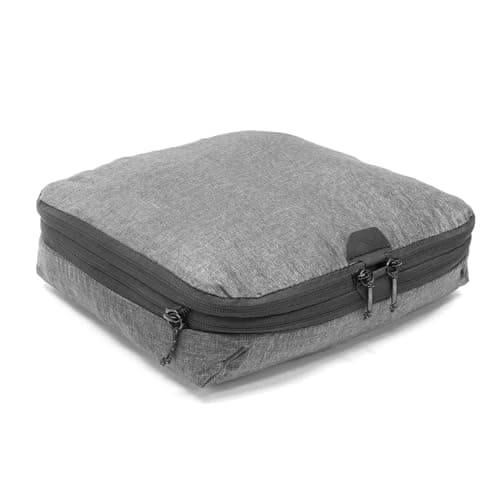
On a three-city week, the fastest way to look rumpled is to let worn shirts mix with fresh ones. The simplest fix is a dedicated worn-clothes cube; the cleverest is Peak Design's dual-compartment cube, which builds the split into a single cube. Either way, decide the clean/dirty system before you leave, not on night two.
Carry-on discipline
Business travel rewards never checking a bag. Size your cubes to a cabin bag, keep the kit small, and do laundry on longer trips rather than doubling cubes. Our carry-on roundup goes deeper on cabin fit, and the sizes guide maps what each size holds.
The short version
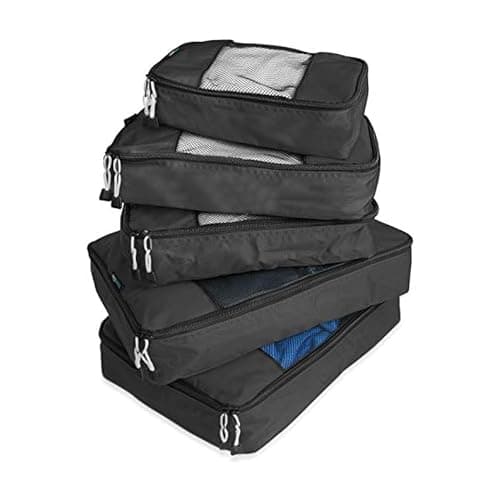
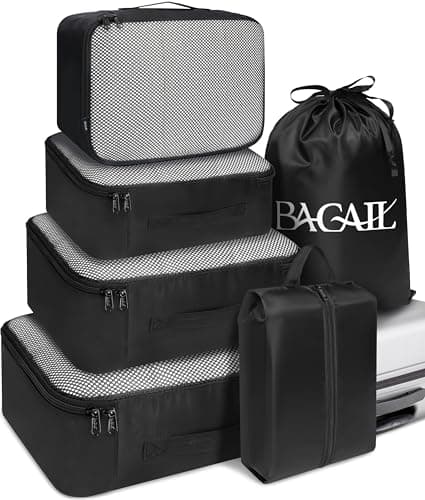
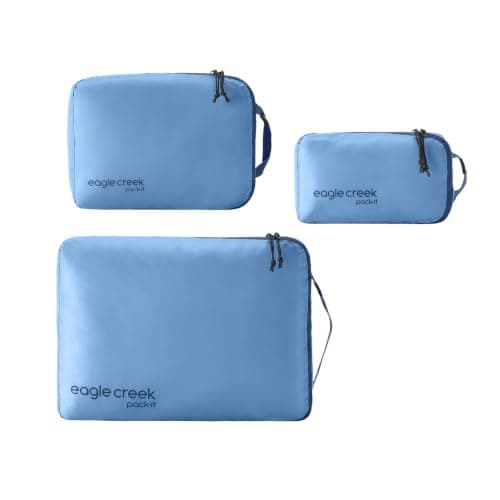
Frequent flyers who want structure and a warranty should get the Eagle Creek Isolate. Want the cleanest clean/dirty split and compression in one cube? Peak Design. Value-minded work travelers should look at TravelWise, and occasional trips are well served by the budget Bagail 6-set. Match the set to how often you fly — the durability premium only pays off if you're on a plane most weeks.
If the suit is the reason you are reading this, the cubes are only half the answer. The fold is the other half, and it is covered step by step in how to pack a suit without wrinkling it.