Ten days in a carry-on is one wash and two halves. You pack five days of clothes, wash once in the middle, and wear the same five days again. That single sentence is the entire method, and everything else on this page is either the arithmetic behind it or the two things a ten-day bag needs that a seven-day bag does not: a wardrobe that survives a change of context, and enough empty space to get home.
It is worth being clear about why ten days is its own problem rather than a slightly longer week. At seven days, laundry is optional - our seven-day method is mostly about resisting the urge to pack for a week and bring a laundry kit as well. At fourteen days, laundry is forced and recurring, so the two-week page is built around a cadence. Ten days is the only length where exactly one wash does the job, which means the whole trip hinges on a question almost nobody asks before they pack: which day.
The arithmetic: ten days is five days, twice
Stop counting outfits and start counting combinations. Three bottoms and five tops that all work together is fifteen different looks, which is more than a ten-day trip can use even before the wash. Add one layer, one set of nightwear and one smart option and you are at about eleven garments covering ten days - against the eighteen or twenty that come out of the wardrobe when you pack by day.
The counts below are the ones that fit a cabin bag commonly sized at about 22 by 14 by 9 inches, a typical US domestic figure that varies by airline and that you should check against your own carrier before you rely on it.
| Category | Ten days, one wash | Why that number |
|---|
| Tops | 5 | Five tops against three bottoms is fifteen combinations - five days of wear each side of the wash |
| Bottoms | 3 | Worn two or three times each; the heaviest pair travels on your legs |
| Underwear | 6 to 7 | Counted in days to the wash plus two, never in trip length |
| Socks | 5 to 6 | Fewer than underwear - socks survive a second day in a way underwear does not |
| Layers | 1 to 2 | One mid-layer always; a second only if the two halves differ in climate |
| Shoes | 2 pairs | The densest, least compressible thing in the bag - wear the heavier pair |
| Smart option | 1 | One outfit that covers a dinner, a meeting or a service, chosen to share shoes with the rest |
The one decision: which day you wash
This is the lever, and it is the only number on this page that actually changes what you carry. Everything you pack in the underwear-and-socks category is counted from day one to wash day, not across the trip - so moving wash day by two days moves two pairs of everything in or out of your bag.
| Wash day | Underwear and socks to pack | What it costs you |
|---|
| Day 4 | 5 to 6 | Lightest bag of all, but two wash sessions in ten days if the second half runs long |
| Day 5 or 6 | 6 to 7 | The sweet spot - one wash genuinely covers both halves |
| Day 7 | 8 to 9 | Three extra pairs of everything, and a bag noticeably fuller on the outbound leg |
| No wash | 10 or more | Usually the reason a ten-day trip stops fitting a cabin bag at all |
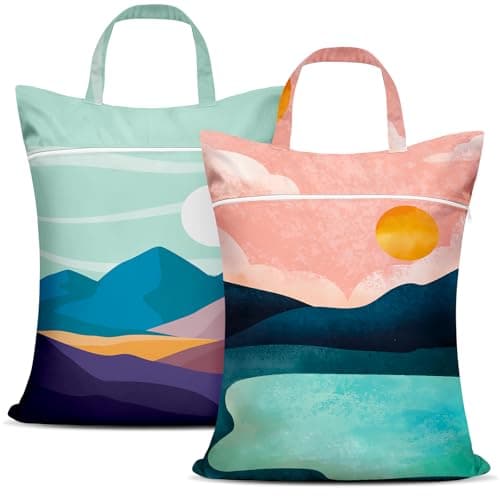
Pick the day before you pack, and pick it around the trip rather than around the laundry. If you change cities on day six, wash on day five in the place you already know. If there is a long travel day in the middle, that evening is the one with time to do it. A sink wash needs quick-dry fabric and a small bottle of detergent; a laundromat needs an hour and a bag you can carry it in. Both are packing decisions, which is why they belong on this page rather than in your plans for day six. If you would rather buy the laundry bag bundled with the cubes than separately, the set with the largest bundled bag we rank is taken apart in the Shacke Pak review - though it carries no compression, which is the trade on this particular trip.
Ten days usually spans two contexts
This is the part the trip-length pages either side of this one do not need. A week is usually one thing - a city, a beach, a conference. Ten days is long enough that it is usually two: a city and a coast, two countries with different weather, a working half and a holiday half. The autocomplete for this query is full of "ten days in Europe" for exactly that reason.
The trap is to pack two wardrobes. The fix is to pick a single base - one color family of bottoms, tops that all work with all of them - and then add the smallest possible module for the second context. One swim item and a pair of flip-flops. One smart shirt and a jacket that doubles as your layer. A warm hat and gloves that live inside a shoe. Modules are cheap; second wardrobes are what make you check a bag.
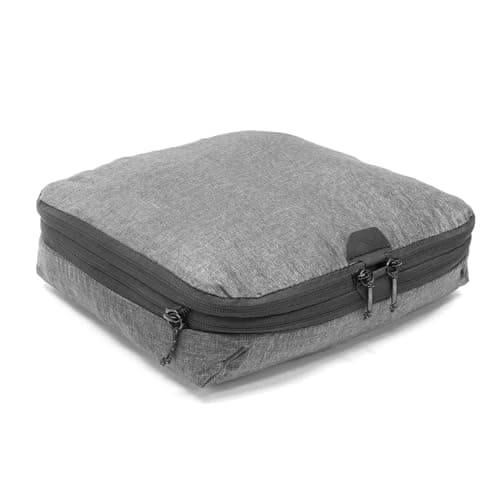
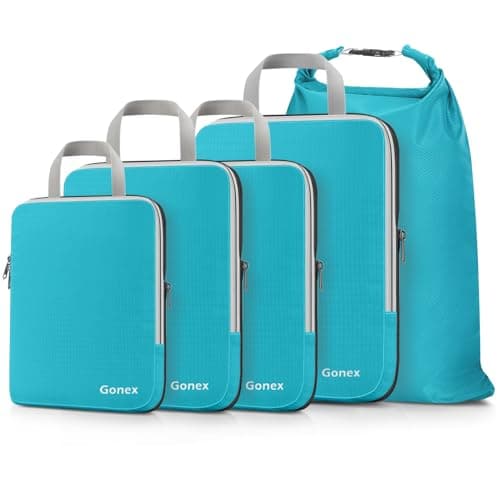
Cube that honestly: the base wardrobe goes in the big cubes by category, and the second-context module gets its own small cube that stays packed until the trip turns. Our what to pack in each cube guide sets out the category split, and the color-coding system is how you find the module on day six without unpacking the base.
Leave one cube empty on the way out
A ten-day bag is never fuller than on the journey home, and this is the rule that saves it: pack the outbound leg in three of your four cubes and leave the fourth genuinely empty. That is a rule of thumb rather than a measurement - we publish no percentage for it, because there is no honest way for us to measure one - but the reason behind it is arithmetic you can check yourself.
Three things grow on a ten-day trip. The worn pile is larger than on a seven-day trip, and worn clothes refuse to fold as small as clean ones. Anything you bought has to travel. And if the wash did not fully dry, damp clothes take more room and need their own bag. An empty cube absorbs all three. A bag that shut perfectly on the outbound leg and has nothing spare is the bag that gets gate-checked on the way home.
Where compression earns its place on this trip
More than on a shorter trip, and for a reason specific to the return leg. Compression works by squeezing trapped air out of soft, lofted items, so its gains come from knitwear, fleece, nightwear and the worn pile - and the worn pile is exactly what a ten-day trip has more of. Run the second zipper on the way home rather than the way out and you get the volume back when you actually need it.
The limits are unchanged and worth repeating, because they are where people get caught. Compression buys volume and never weight: if your airline enforces a cabin weight rather than a size, it will not help you at all. Do compression bags reduce weight is the honest answer, and compression vs regular packing cubes sorts which load each type suits. Keep woven shirts out of the compressed cubes - the mechanism is holding fabric under pressure, which is the recipe for a crease.
Everything that is not clothes
Toiletries are where a ten-day carry-on quietly fails, because the liquids rule does not scale with trip length. The TSA allows containers of 3.4 ounces or 100 milliliters or less, all of them together in one quart-sized bag, one bag per passenger. That ceiling is the same whether you are away for three days or ten - so the only variable is how well you use it, which means decanting into the largest compliant bottles rather than the smallest ones, and leaving behind anything the destination sells.
Note that "TSA approved" is not a status that exists for any bag or bottle: what exists are the published rules and an officer's discretion at the checkpoint. How to pack liquids in a carry-on has the full treatment, and are packing cubes TSA approved takes the label apart.
Everything else is small and lives in the gaps: chargers and cables in one pouch, documents in one place, medication in the cabin bag and never the hold. Ten days is long enough that a second charging cable is worth its weight and a spare pair of glasses is worth more.