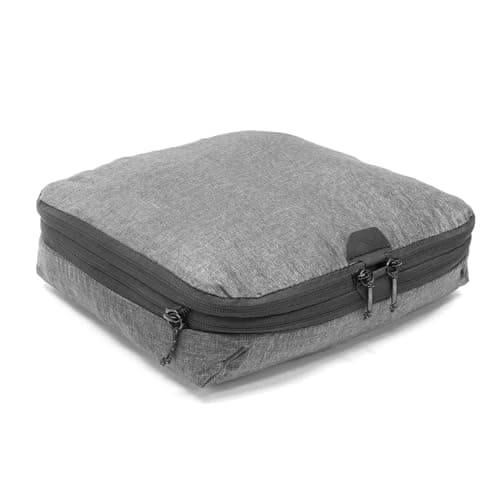
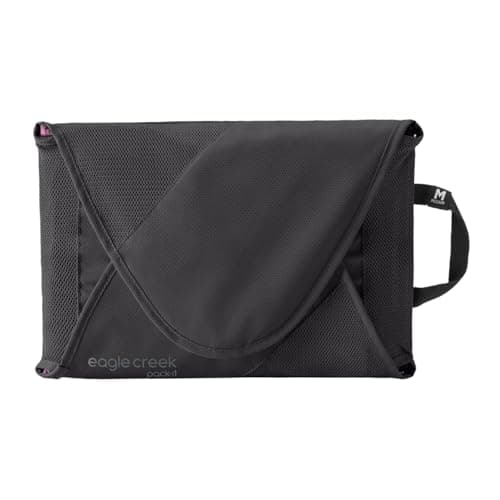
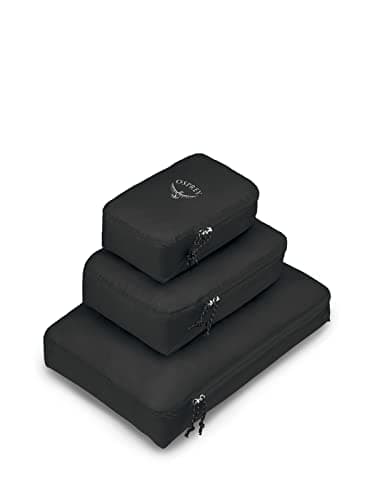
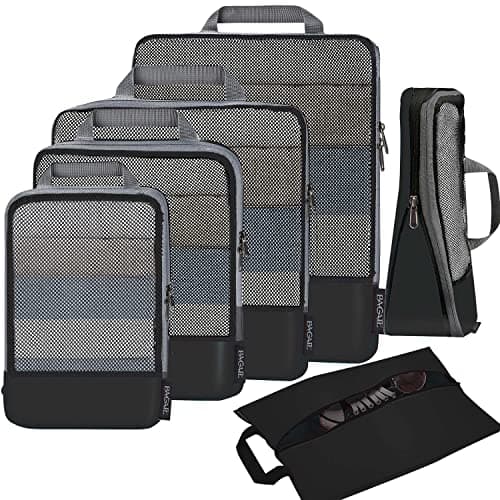
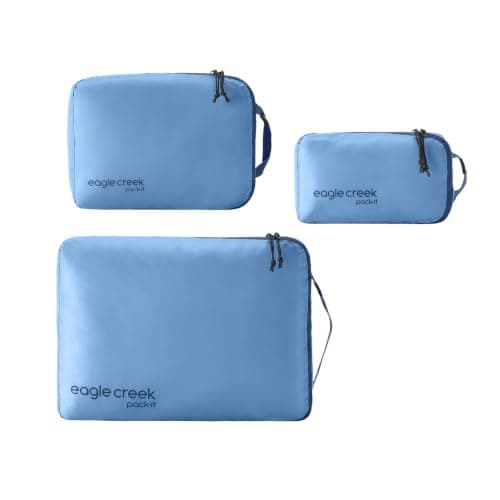
Buy the Eagle Creek Pack-It Isolate 3-cube set, and add the medium Eagle Creek garment folder for the uniform. Crew bags are decided by repack speed and zipper life, not by compression - you are opening and reloading the same bag fifteen to twenty times a month against an allowance that never changes, so a top handle you can grab at 4 a.m. and a zipper that survives two years are worth more than any amount of squeeze.
Why crew is a different problem from business travel
This site has a business trip page and a carry-on page, and crew is neither. A business traveler packs for one trip, to one hotel, and then unpacks at home. The bag is a vessel used occasionally.
Crew pack the same bag, to the same footprint, continuously. The clothes change, the container does not. That inverts the usual priorities in three specific ways. First, durability is the dominant criterion, because a zipper cycled a thousand times a year is on a different schedule from one cycled thirty times. Second, repack speed matters more than packing efficiency - shaving twenty minutes a month off repacking is worth more than two spare inches. Third, clean and worn clothes share the bag from day one, which no leisure packing method has to deal with until the return leg.
What to look for, for a crew bag specifically
- A grab handle on the cube. Underrated everywhere else and decisive here. Picking a full cube up by a webbing handle is faster and kinder to the seams than pinching it by a corner, and you will do it several thousand times.
- A stackable, squared-off profile. A rollaboard is a fixed box. Cubes that hold a rectangular shape stack into columns and stay where you put them; rounded, overstuffed cubes shift and waste the corners.
- Clean/worn separation built in. Either a dual-compartment cube, a divided clean/dirty cube, or a dedicated bag. Decide it before the trip, not on day three.
- A folder for the uniform. The one garment that has to arrive presentable should not be rolled or stuffed. A one-inch folder with a board costs almost no space and changes how the shirt looks.
- Zipper quality over fabric thinness. Ultralight fabric is a good trade for a commuter and a bad one for a daily repacker. The failure point is almost always the zipper.
- Compression last, not first. It helps on long pairings with a coat. It does nothing for a three-day domestic rotation except add a second zipper to pull.
A rollaboard layout for a four-day trip
| Layer | What goes there | Why |
|---|
| Flat against the base | Garment folder with uniform shirts | One inch deep, weighted flat, and nothing presses creases into it |
| Base column, wheel end | Shoes in a bag, heaviest items | Weight over the wheels keeps the bag stable when towed |
| Middle | Cube: off-duty clothes | Opened once per layover, not at every stop |
| Top, nearest the zip | Cube: underwear, socks, sleepwear | The daily grab - it should never be under anything |
| Dedicated compartment or bottom of a dual cube | Worn clothes | Separated from day one, not from day three |
| Outer pocket or lid | Documents, passport, IDs | Reachable without opening the main compartment |
| Lid pocket | Quart bag of liquids | Out of the bag at the checkpoint without unpacking |
The uniform is the whole argument for a folder
Everything else in a crew bag can be creased. The uniform cannot, and no cube - compression or otherwise - is a crease-control device; a firmly packed cube reduces movement, which reduces random creasing, but it does not keep a shirt flat. A folder does, because the garment is wrapped around a board and the fold is deliberate and in the same place every time. At one inch deep against the base of a rollaboard, it is close to free. If your airline has you in a jacket as well, our how to pack a suit guide covers the shoulder fold, and travel garment bags covers the hanging alternative.
How we scored these five
Repack speed - handles, closure type and how quickly a full cube goes in and out of a fixed footprint. Fits a rollaboard - profile and depth against a standard cabin case rather than a suitcase. Uniform presentation - what the method does to a garment that has to look right. Zipper and fabric life - construction judged against very high repack frequency, from published materials and warranty terms. Value - live price per piece against expected service life. Our methodology says plainly that these are judgments from documented specs and listings, not measurements we took. We are not crew and we have not flown a rotation with any of these.
Three cubes or six?
Match the count to your typical pairing, not your longest one. One-to-four day domestic rotations are a three-cube job: clothes, smalls, worn. Long international pairings with a slip and a coat push you to five or six, and that is where a compression set starts earning its second zipper. Buying six cubes for three-day trips is the most common mis-purchase in this category - every extra cube is another thing to open, and repack speed is the metric you live with.
What about the hotel-room half of the problem?
Crew live out of the bag rather than unpacking it, which is why a hanging organizer is a worse fit for crew than it is for a one-week leisure trip - you are in the room for fourteen hours and hanging a four-compartment shelf is time you do not have. The thing that does pay off is a hanging toiletry bag, because hotel bathroom counters are small and a hook is always there. Our toiletry bag roundup ranks the hanging kits, and travel tech organizers handles the charger-and-cable half, which for crew is a daily-use item rather than a packing afterthought.