A backpack changes what matters. A suitcase lies flat and opens like a book; a top-loading pack buries whatever's at the bottom. So for backpacking and one-bag travel, two things move up the priority list: weight (you carry this on your back) and one-cube access (you want to pull the shirt cube without emptying the pack). This list is built around those two, which is why ultralight and compression dominate it.
What matters in a pack
- Weight. Ultralight nano-ripstop cubes weigh a fraction of standard ones. Over a full kit that's real weight off your back.
- Compression. Packs have no wasted corners to slot loose items into, so cinching bulky clothes down directly buys usable volume.
- Findability from the top. Color-code or size-sort so you can pull one cube from a top-loader by feel — the packing system matters more here than in a suitcase.
The weight-vs-durability trade
There is no free lunch: the same thin nano-ripstop that makes an ultralight cube feather-light is less abrasion-resistant than heavy fabric. For careful one-bag travelers that is a fine trade; for people rough on gear, it is not. If durability matters to you more than grams, a standard set is the better buy. For the published empty weights, and what they actually cost you against a cabin allowance, see do packing cubes add weight.
Does ultralight mean no compression?
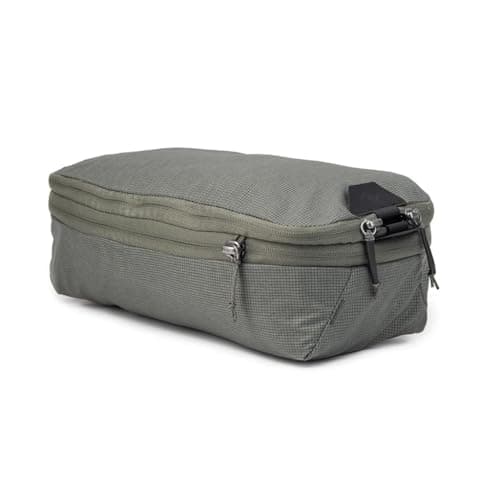
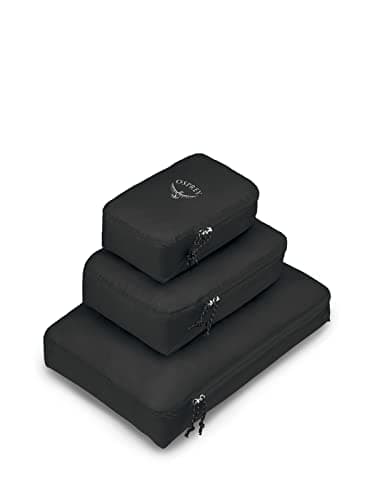
Usually, yes — plain ultralight cubes skip the second zipper precisely to save weight, which is why the Osprey set scores low on compression. If you want light weight and compression, the Peak Design Small builds compression into a single cube at a weight and price premium. You rarely get the lightest possible cube and real compression at once, so decide which of the two your pack actually needs.
The short version
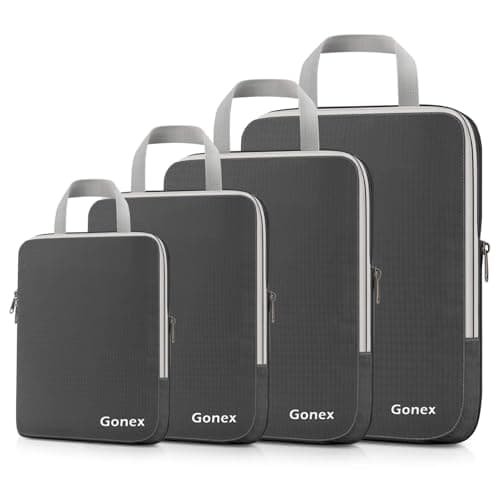
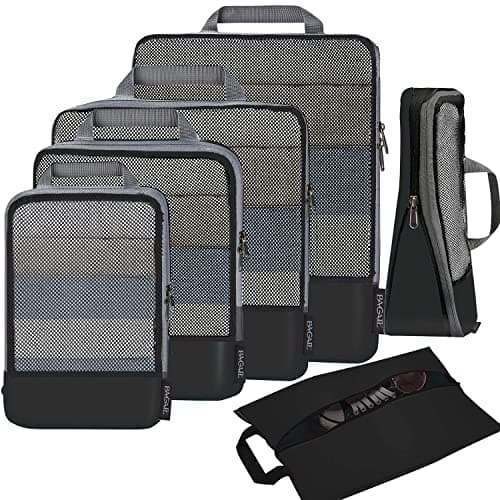
If weight is everything, Osprey's ultralight set is the pick. If you want compression on a budget, Gonex or the Bagail compression set. One-bag minimalists who want a single superb cube should look at the Peak Design Small. Whatever you choose, keep the kit small — a pack punishes over-packing more than a suitcase does, and the fastest way to save weight is to pack fewer clothes, not just lighter cubes. See the compression roundup if squeezing is your priority.
Backpacking, or one-bag travel?
These two readers get confused for each other and want different cubes. Backpacking means a hiking pack, hostels and abuse, which is what this page ranks for. One-bag travel means a 35 to 45 litre bag that is your entire luggage on a flight, where the binding constraint is the carrier's volume or weight allowance rather than durability. If that is you, see the best packing cubes for one bag travel. And if you are weighing cubes against a stuff sack, which is the other container this crowd argues about, our packing cubes versus stuff sacks comparison takes it apart.
Once the cubes are chosen, the week still has to fit
Picking the right cube set is the easy half of a pack. The harder half is deciding how much goes in it, because a pack is limited by weight and shape rather than by a sizer, and both limits are enforced by your shoulders. How to pack a backpack for 7 days has the category counts for a week, the three-cube rule, and the reverse-chronological load order that makes a top-loader usable on day five.