Start with the mechanical fact the whole comparison rests on: a zipper cannot be waterproof, and a roll-top can. A zipper is a row of interlocking teeth with gaps between them - it is an opening that has been narrowed, not closed. You can coat the fabric around it, put a storm flap over it, laminate the tape behind it, and water will still find the line where the teeth meet. A roll-top does not have an opening once it is shut. You fold the top over itself three or four times and clip it, and the material is pressed against itself along the whole fold. There is nothing to seal because there is no hole.
That is why every packing cube on this site is water-resistant and none is waterproof, and why the ones that advertise weatherproof fabric are being accurate rather than evasive - the fabric genuinely is treated, and the zipper genuinely is still a zipper. Our water-resistant cube roundup ranks the best of them and uses that exact word in its title for this reason.
So this is not really a contest. It is a question about what your trip does. Below is the honest version of each side, then the configuration most people should actually buy - which is neither one nor the other.
What each one is genuinely good at
| Packing cube | Dry bag |
|---|
| Closure | Zipper - an opening, narrowed | Roll-top - no opening once closed |
| Water | Resists splashes, damp, condensation | Keeps water out, including sustained rain |
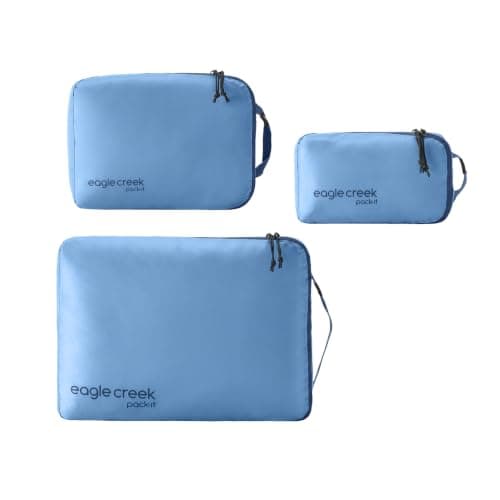
| Access | Opens flat; take one item from the middle | Reach down a tube; unroll to see anything |
| Visibility | Often a mesh window or panel | None |
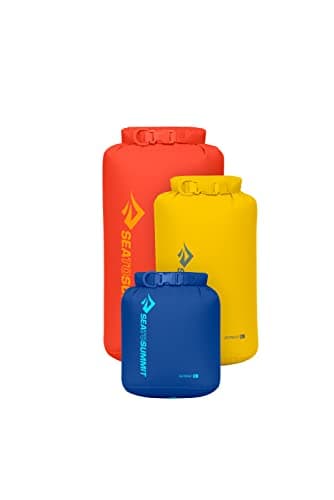
| Shape in a case | Square - fills corners, stacks | Round when full - wastes corners |
| Sizing | Usually inches, sometimes nothing at all | Liters, and generally published |
| Breathability | Some, especially with a mesh panel | None - sealed means sealed, both ways |
The row people underestimate is shape. A packed dry bag is a cylinder, and a suitcase is a box. Three dry bags in a carry-on leave triangular gaps at every corner that nothing else wants to fill, which is a real volume cost that none of the marketing on either side mentions. Square cubes stacking flat is not an aesthetic preference, it is why a cube system packs a case more fully than a dry bag system does.
The row people forget entirely is breathability. A seal works in both directions. A damp towel in a sealed dry bag is still damp two days later and now smells; the same towel in a mesh-paneled cube dries slowly but does dry. That distinction matters because the most common reason a traveler reaches for a dry bag is laundry, and laundry is the one job a dry bag is bad at - the laundry bag roundup covers what to use instead, including lined wet bags for genuinely soaked kit.
Which one your trip needs
Four cases, and only one of them is a dry bag.
- Hotels, cities, airports, conferences. Cubes. The water risk is a spilled bottle and a cube handles that. Everything else about a dry bag is a downgrade, and you will unroll a tube every morning for protection you never needed.
- Backpacking, hostels, long-haul with a pack. Cubes for the clothes, one dry bag for what gets wet. A pack lives on the ground and on buses, and the clothes are still easier to find in cubes - how to pack a backpack with packing cubes has the loading order.
- Beach, islands, anywhere with a pool. Cubes plus one dry bag, and here the dry bag earns it immediately - a wet swimsuit and a sandy towel are a daily problem, and they must not touch the clean clothes.
- Boats, kayaks, rafting, monsoon season, a trek with river crossings. Dry bags, and heavier ones than travel-weight. This is the only case where the cube is simply the wrong object, because the failure is not inconvenience, it is a soaked sleeping layer.
The answer most people should buy
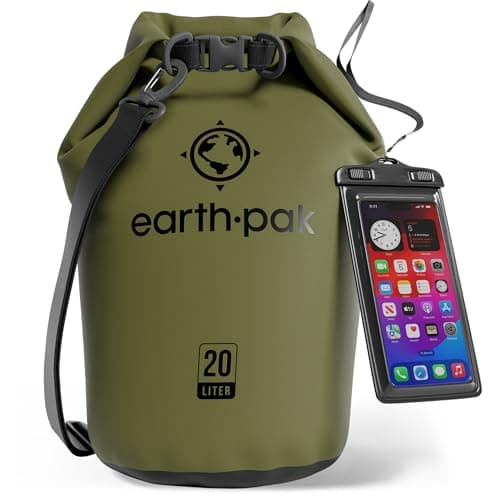
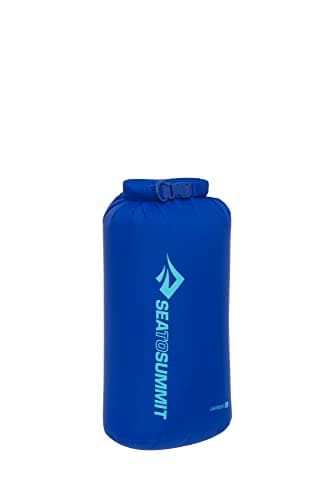
One of each. Keep a cube set for the clothes, because that is the problem you have on every single trip, and add one dry bag in a size that matches your actual wet problem - roughly 5 to 8 liters for a swimsuit and towel, 20 liters if you want it to line a daypack or take boots.
That configuration costs less than buying a dry bag set to replace your cubes, and it puts each object on the job it is good at. It also avoids the specific mistake this comparison produces most often: buying three dry bags as a packing system, discovering by day two that living out of three tubes is genuinely unpleasant, and going back to cubes with a drawer full of dry bags you now use for nothing.
If you are choosing the cube half from scratch, how to choose packing cubes walks the whole decision and the main roundup ranks the sets. If your real problem is volume rather than water, you are on the wrong comparison - packing cubes vs compression bags is the one you want, and neither a cube nor a dry bag reduces weight by a gram.
Two things neither side will tell you
Dry bags are sized in liters, and that is better.A liter is a real measure of what a soft bag holds; "medium" is not, and even inches describe a cube's footprint rather than its capacity. The outdoor industry settled on volume decades ago and the travel industry never did, which is why comparing two cube sets is so much harder than comparing two dry bags. Packing cube sizes explained is our attempt to make the cube side comparable at all.
Nobody publishes a waterproof rating in this category. Not the dry bags either. You will see roll-top, welded or taped seams, a denier number and a closure type, and those are real published facts - but no immersion depth, no IP number and no hydrostatic head figure appears on these listings, so we do not print one. Treat a roll-top as a seal that keeps rain and splash out and keeps gear dry if the bag goes briefly under, and treat any specific submersion claim you read elsewhere with suspicion unless the manufacturer published it.
Three questions, in order. The first one decides it for most people.
1. Will anything on this trip actually be wet?
Not "could it rain" - will something go into your bag wet. A swimsuit, a towel, a rain shell, boots, a kayak day. If the answer is no, buy cubes and stop reading; the sealing is a cost with no benefit. If the answer is yes, you need one dry bag, and that is usually all you need.
2. Is the wet thing wet, or is it dirty?
This is the distinction that saves people money. Water needs a seal. Laundry needs air. A sealed bag of worn clothes is worse after a day than a breathable one, because the smell has nowhere to go. If your problem is three days of worn shirts, you want a laundry bag, not a dry bag. If it is a soaked towel, you want the dry bag.
3. How big, and how tough?
Size by the job, in liters, not by the set:
- 3 to 5 L - a swimsuit, electronics in a downpour, a phone and wallet on a boat.
- 8 L - a full change of clothes, or a swimsuit plus towel. The single most useful size for a traveler who owns one.
- 20 L - lines a daypack, takes boots, or swallows the whole wet half of a beach trip.
On toughness: a travel-weight dry bag in light nylon seals and packs down small, and is the right choice if the bag spends its life inside a suitcase. A heavy PVC marine bag seals and also survives being dragged over wet surfaces, and is the right choice if it is going in a boat. Paying for marine weight to carry a swimsuit in a hotel is the same error as buying cubes to keep gear dry.
What not to buy
Do not buy a dry bag set instead of cubes. Living out of three tubes for a week is the thing nobody warns you about and the reason most of these purchases end up unused. And do not buy a cube because the listing says weatherproof and assume it solves a water problem - it does not, and our water-resistant cube roundup is careful about that word for exactly this reason. If a cube is what you want, the two nearest comparisons are packing cubes vs stuff sacks for shape and mesh vs solid cubes for the panel.
Which dry bag, if you decide on one
Best travel dry bags ranks the category on published figures, and it splits on something this comparison only touches: "waterproof" is sold as one product and is really two. Coated-nylon sacks publish 0.07 to 0.15 pounds empty and a rain rating; heavy 500D PVC roll-tops publish 0.85 pounds and are built for a boat deck. The page also states the thing most roundups skip - nothing in this category is published as submersible unless a listing gives a specific number, and the one IPX8 figure in our picks belongs to a phone case rather than to a bag.
What a dry bag costs, if you have decided you want one
Almost the whole category is inexpensive, which is worth knowing before you shop: best travel dry bags under $25 ranks the four sacks that clear a live cap on cost per published litre, and the lightest of them publishes 0.07 lb empty — a little over an ounce, and the lightest container of any kind in our catalog. It is also explicit that nothing under that cap is published as submersible.