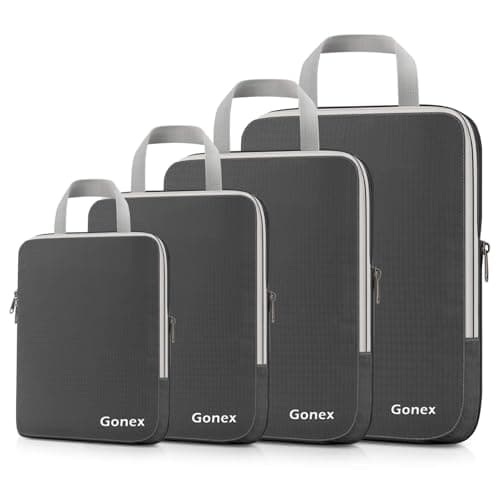
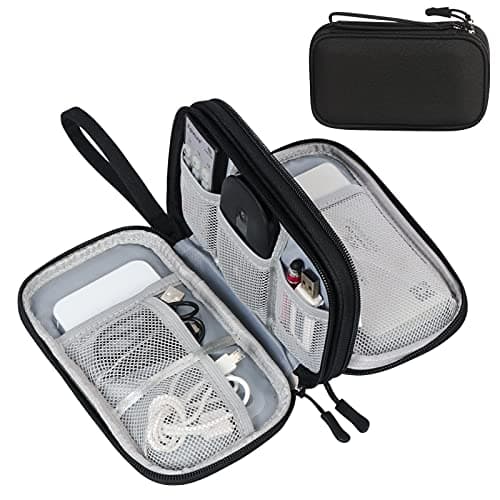
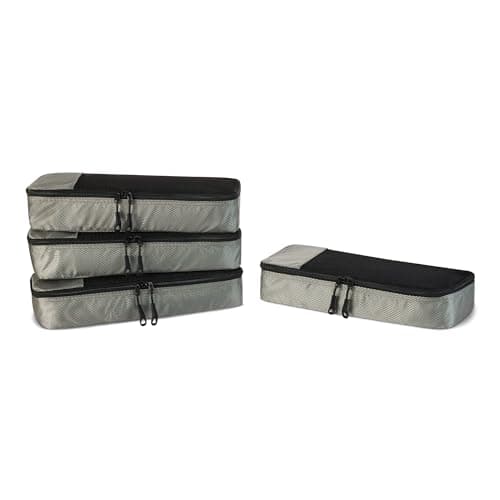
Pack a personal item in flat layers, hardest things against the back panel, three or four slim cubes for clothes, and liquids plus documents in fixed pockets you can reach without unpacking. The method is genuinely different from packing a carry-on, because the constraint is different: a carry-on is limited by footprint and a personal item is limited by depth. Every step below protects the depth.
The constraint, stated once
Your personal item has to slide into the space under the seat in front of you. That space is wider and longer than it is tall, so the dimension you run out of is height — and the packing mistake that follows is loading the bag the way you would load a suitcase, in vertical stacks. The whole method is about keeping everything flat, so the lid closes without a bulge.
Allowances differ by airline and by fare class, and we have deliberately not printed a figure here because we could not source an authoritative current one at the time of writing. Check your carrier's published dimensions. What does not change is the shape of the space, which is what the steps respond to.
The five zones
Before you put anything in the bag, decide where each of these lives. Items without an assigned home are the ones that end up loose at the bottom.
| Zone | What is in it | Where it goes |
|---|
| Documents and valuables | Passport, boarding pass, cards, keys | A fixed zipped pocket or a document wallet, never a cube |
| Electronics | Laptop, cables, power bank, adapters | Laptop flat against the back panel; cables in a looped pouch |
| Liquids | Quart bag of travel bottles, medication | An outer or top pocket you can pull from in one movement |
| Clothes | Everything you are bringing to wear | Three or four slim cubes, stacked flat, newest on top |
| In-flight | Headphones, a layer, a book, snacks | The top of the bag or an external pocket |
Why slim cubes and not one big one
In a suitcase, one large cube is efficient. In a bag you open on your lap with the tray table down, it is the worst possible choice: whatever you want is under something you do not want, and the only way in is to take the whole cube out. Three or four shallow cubes let you lift the top one and still reach the second — which is why our personal item cube roundup ranks a low-profile four-piece set above sets costing four times as much. Sort by category rather than by outfit, which is the argument in what to pack in each cube.
Making it work as your only bag for a week
This is the hard version of the question, and it is answerable. Four things do the work:
- Two bottoms, five tops, all matching. Outfits do not scale; a small interchangeable palette does. This is the core of how to pack light.
- Plan a sink wash. A week in a bag this size is a laundry schedule, not a bigger wardrobe. Quick-dry fabrics and one small bottle of detergent replace three days of clothing.
- Compression for the clothes layer. The second zipper converts height into flat, which is the single dimension you are short of. On a shared trip where you also have a carry-on, you do not need it; as your only bag, you do.
- Wear the bulk. The jacket and the heavier shoes go on your body. Nothing you can wear should be taking up depth.
The things that should never go in the clothes cubes
A personal item carries the items you cannot replace abroad, and a cube is the wrong container for all of them — one unlined compartment at the bottom of a bag is how a passport bends and a cable disappears. Documents belong in a document organizer, medication in a pill organizer in a fixed pocket, cables in a tech organizer, and liquids in travel bottles inside the quart bag — our travel bottles roundup explains the rule people get wrong, which is that the limit applies to the container's capacity rather than how much is in it.
If you also have a carry-on, the two bags work as a pair rather than as a big one and a small one: the carry-on holds the wardrobe and the personal item holds everything you need during the journey itself. Our how to pack a carry-on guide covers the other half, and the carry-on packing list is the checklist for what belongs in the bag that stays with you.