The best packing cubes for winter clothes and ski gear
Winter packing is a volume problem, not an organization problem. A regular cube will not help you; a compression cube will, but only on the half of your kit that traps air. Here is which is which, and the sets that do the squeezing.
We earn a commission when you buy through our Amazon links, at no extra cost to you. It never affects our rankings, and we say so when the cheaper product is the better buy. How this works.
Winter packing goes wrong in a specific way. You pack the same number of garments you would in July, and the bag will not close. Nothing has gone wrong with your technique — the clothes are simply bigger. A fleece, a puffer and a set of thermals are mostly trapped air by volume, and trapped air is the entire problem a compression cube exists to solve.
That is why this page is almost entirely compression sets, and why a regular packing cube is close to useless here. A regular cube puts your clothes in a rectangle. It does not make them smaller, and on a winter trip smaller is the only thing you need. If you are not sure which kind you own, the difference is one zipper: a compression cube has a second zipper that pulls the packed cube flat after it is full.
What actually compresses, and what does not
This is the honest half of the page, and it is the half most winter roundups skip. A compression zipper works by expelling air. That means its effect on any given item is proportional to how much air that item is holding — and winter kit divides sharply.
Compresses a lot: fleece, down and synthetic puffers, base layers, thermal socks, knitwear, hats and gloves. These are lofted by design, and loft is air.
Compresses a little: softshells, mid-weight trousers, flannel.
Compresses essentially not at all: hard shells with taped seams, jeans, ski boots, helmets, goggles, boot bags. These are already at their minimum volume, and a compression cube around them is a zipper you are carrying for nothing.
The practical consequence: buy compression for the soft half of your kit and pack the hard half loose in the gaps around it. A ski trip is the clearest case in the whole category — roughly half the bag rewards compression enormously and the other half ignores it completely.
The one warning nobody prints
Compression removes volume. It removes no weight whatsoever. Every airline baggage allowance is written in kilograms, and a bag that now zips shut can still be four kilos over — which on a ski trip, with boots, is a genuinely common way to pay a fee you did not expect. If weight rather than space is your constraint, compression is the wrong tool and the weight math is the page you want instead.
The second warning is about down specifically. Down jackets and sleeping bags should not be stored compressed for months at a time — compression is for the journey, not for the off-season. Compress it to travel, then hang it when you arrive and again when you get home.
How these were ranked
On compression mechanism first, then capacity, build, weight and value — the same five metrics the rest of this site uses, set out on our methodology page. The scores are judgments from documented research: published manufacturer specs and retailer listings, applied to a published rubric. They are not measurements. We do not run a testing lab and have never claimed to. Every piece count, fabric and construction detail quoted here is the figure in that product's own Amazon listing, and every price is pulled live and date-stamped.
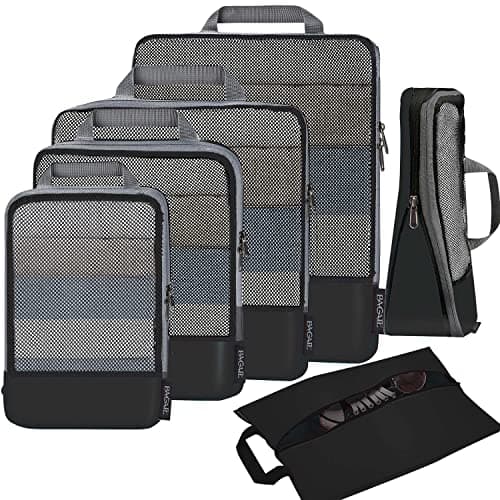
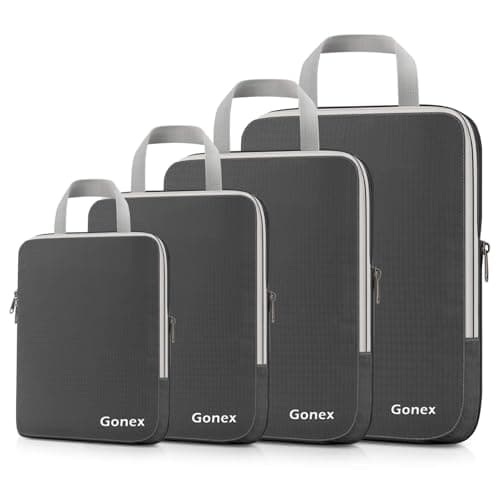
The four-piece compression set that has been this site's compression benchmark since launch, and winter is the trip it was built for. Ripstop nylon, four cubes, and expandable bodies with the second zipper that pulls the packed cube flat — which is exactly the mechanism a fleece and a week of base layers reward. Four cubes is also the right count for a ski trip rather than a two-week itinerary: layers, outerwear, socks and thermals, one cube each.
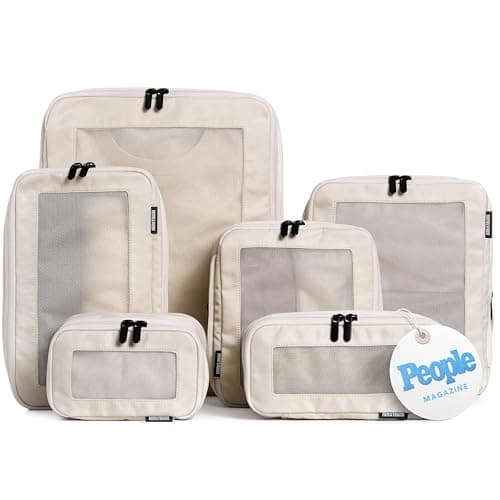
Six compression cubes for a price that usually buys three plain ones. The half-mesh panel is the trade and the feature at once: you can see which cube holds the thermals without opening it, and the mesh vents a load that went in slightly damp, which on a ski trip it usually did. Expandable bodies again, so the cube swallows a lofted sweater before the second zipper does its work.
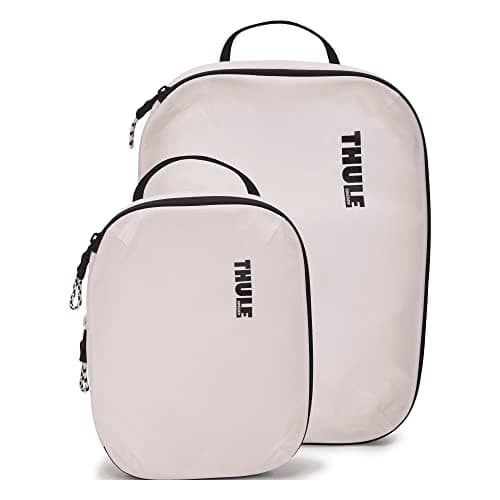
The pick for kit that gets used hard rather than packed twice a year. Thule builds this as a two-cube compression set with a zip-down panel and a materially heavier build than anything else on this page, which is the whole argument for it. A compression zipper is the part of a cube that fails first, because it is the part under load every single time you use it, and this is the set where that zipper is least likely to be the reason you replace it.
Six reinforced compression cubes with a double zipper, and the set to reach for when the bag is genuinely overfull rather than merely full. Reinforcement matters more here than it does in summer: a compression cube packed with a down jacket is under real, constant outward pressure for the whole journey, and the seams are what hold that. Six cubes also means you can dedicate one entirely to the single bulkiest item instead of fighting it into a shared cube.
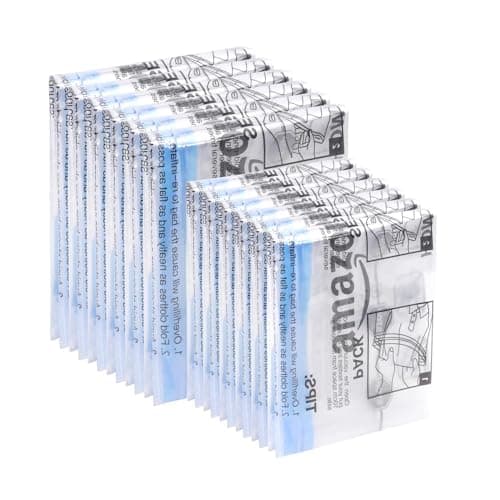
Not a cube at all, and on a winter trip that is the point. Twelve roll-up compression bags — six small, six medium — that need no vacuum and no pump: you fill one, roll it, and the air leaves through a one-way valve. On a down jacket or a fleece this is the most aggressive volume reduction available to you, well past what a compression cube's second zipper achieves, because it removes air rather than squeezing the pack.
A single medium cube, weatherproof, with two compartments and built-in compression — and the second compartment is why it belongs on a winter page rather than a general one. Ski and winter trips generate damp: gloves, a base layer, a buff. The divided body lets you keep that away from the dry half of the same cube without carrying a second container, and the weatherproof shell means damp inside the cube stays inside the cube.
#ad · Live prices from the Amazon Product API, as of Sep 23, 2026. Where we have no verified live price we show none — a gap beats a rotted number.
In detail
The picks, in full
01
Best overall for winter kit
Gonex Compression Packing Cubes (4-Piece)
Compression4-piece setExpandableRipstop nylon
8.2/10
Value: $5.75 /cube
The four-piece compression set that has been this site's compression benchmark since launch, and winter is the trip it was built for. Ripstop nylon, four cubes, and expandable bodies with the second zipper that pulls the packed cube flat — which is exactly the mechanism a fleece and a week of base layers reward. Four cubes is also the right count for a ski trip rather than a two-week itinerary: layers, outerwear, socks and thermals, one cube each.
Compression
9
Capacity
8
Build
8
Weight
7
Value
9
Pros
+Compression zipper on every cube in the set, not just the largest
+Expandable bodies, so a cube takes a bulky load before you compress it
+Ripstop nylon rather than the plain polyester most budget sets use
Cons
−Four cubes is tight if you are packing for two people out of one bag
−Compression makes creases; wool and fleece do not care, a shirt does
Don't buy this if…
…your winter bag is mostly hard goods — boots, helmet, goggles. Compression does nothing for anything already solid, and you would be buying a mechanism you never use.
Six compression cubes for a price that usually buys three plain ones. The half-mesh panel is the trade and the feature at once: you can see which cube holds the thermals without opening it, and the mesh vents a load that went in slightly damp, which on a ski trip it usually did. Expandable bodies again, so the cube swallows a lofted sweater before the second zipper does its work.
Compression
8
Capacity
8
Build
6
Weight
7
Value
10
Pros
+Six compression cubes — enough to split a two-person ski bag properly
+Half-mesh panel vents damp layers and shows you what is inside
+The cheapest way onto this page by a wide margin
Cons
−Mesh is the weak panel; this is not the set for gear with hooks or edges
−Six cubes in one bag is a lot of zipper weight if you only need three
Don't buy this if…
…you are packing anything wet rather than damp. Mesh does not hold water in and it does not keep it out — a soaked base layer belongs in a dedicated waterproof bag, not in a cube with dry kit.
The pick for kit that gets used hard rather than packed twice a year. Thule builds this as a two-cube compression set with a zip-down panel and a materially heavier build than anything else on this page, which is the whole argument for it. A compression zipper is the part of a cube that fails first, because it is the part under load every single time you use it, and this is the set where that zipper is least likely to be the reason you replace it.
Compression
8
Capacity
7
Build
10
Weight
6
Value
6
Pros
+The most durable compression zipper of anything ranked here
+Zip-down panel rather than a drawcord or strap arrangement
+Two large cubes suit outerwear better than four small ones
Cons
−Two cubes only — this organizes a bag coarsely, not finely
−Priced as a luggage-brand product, and it shows in the table above
Don't buy this if…
…you ski once a year. The durability premium here is bought over seasons of use, and a Gonex or Bagail set will survive an annual trip perfectly well for a fraction of it.
Six reinforced compression cubes with a double zipper, and the set to reach for when the bag is genuinely overfull rather than merely full. Reinforcement matters more here than it does in summer: a compression cube packed with a down jacket is under real, constant outward pressure for the whole journey, and the seams are what hold that. Six cubes also means you can dedicate one entirely to the single bulkiest item instead of fighting it into a shared cube.
Compression
9
Capacity
9
Build
8
Weight
5
Value
7
Pros
+Reinforced construction aimed squarely at heavily loaded cubes
+Double zipper on each cube, so the compression pull is even
+Six cubes covers a family ski bag without a second set
Cons
−The most expensive six-piece set here
−Reinforcement costs grams you notice across six cubes
Don't buy this if…
…you pack light by instinct. Six reinforced cubes in a half-empty bag is zipper and weight for nothing, and the ultralight end of the category suits you better.
12-pack6 small + 6 mediumNo vacuum neededRoll to compress
8.4/10
Value: $0.83 /bag
Not a cube at all, and on a winter trip that is the point. Twelve roll-up compression bags — six small, six medium — that need no vacuum and no pump: you fill one, roll it, and the air leaves through a one-way valve. On a down jacket or a fleece this is the most aggressive volume reduction available to you, well past what a compression cube's second zipper achieves, because it removes air rather than squeezing the pack.
Compression
10
Capacity
8
Build
5
Weight
9
Value
10
Pros
+The largest volume reduction on this page, on lofted items specifically
+No pump, no power, nothing to leave behind in a hotel room
+Twelve bags for less than the price of one premium cube
Cons
−Plastic, so it organizes nothing — this is volume, not order
−Roll-up bags crease everything and are noisy to repack in a shared room
Don't buy this if…
…you are close to a weight limit. Removing air removes no weight at all, and a bag that now closes can still be over.
Price as of Sep 23, 2026. Prices change — Amazon's at checkout is the one that counts.
#ad · we may earn a commission from this link to Amazon Basics Roll-Up Compression Bags (12-Pack)
06
Best for damp kit
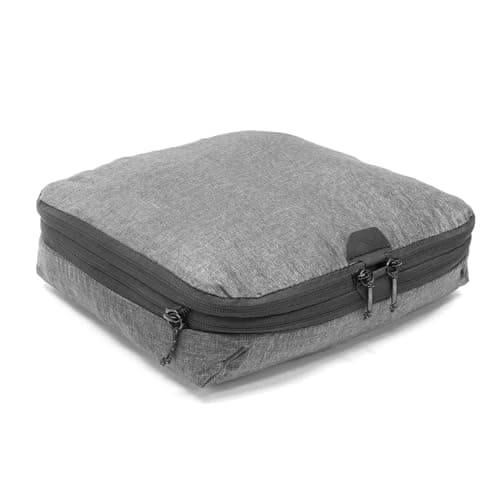
Peak Design Packing Cube (Medium)
Single cube (M)WeatherproofDual-compartmentBuilt-in compression
7.0/10
Value: $39.95 /cube
A single medium cube, weatherproof, with two compartments and built-in compression — and the second compartment is why it belongs on a winter page rather than a general one. Ski and winter trips generate damp: gloves, a base layer, a buff. The divided body lets you keep that away from the dry half of the same cube without carrying a second container, and the weatherproof shell means damp inside the cube stays inside the cube.
Compression
7
Capacity
6
Build
10
Weight
7
Value
5
Pros
+Weatherproof shell — the only pick here that resists moisture both ways
+Two compartments in one cube: damp on one side, dry on the other
+Built-in compression, so it does the winter job as well as the sorting job
Cons
−One cube at a premium price; a set it is not
−Weatherproof is not waterproof, and soaked kit will still find its way out
Don't buy this if…
…you want your whole bag organized for this money. This is a specialist container to add to a cheaper set, not a replacement for one.
What to check before you buy for a cold-weather trip
Count the lofted items, not the garments
The number that should decide your set size is how many genuinely bulky items you are carrying, because those are the only ones compression helps. Two lofted items — a fleece and a puffer — need one large compression cube, not a six-piece set. A family ski trip with four people's mid-layers needs six. Buying a big set for a small lofted load is the most common mistake on this page, and it costs you both money and grams.
Expandable bodies matter more in winter than anywhere else
Two of the picks above are specified as expandable, which means the cube opens out to swallow an overfull load before the compression zipper pulls it flat. On a summer trip this is a nicety. In winter it is close to essential: a fixed-volume cube that will not close around a puffer cannot compress the puffer, because compression only starts once the main zipper is shut. If a listing does not say expandable, assume it is not.
Mesh vents damp, solid panels do not
Winter kit comes off damp far more often than summer kit does, and a sealed cube is a good way to arrive home with everything smelling the same. A half-mesh panel lets a merely damp load breathe. A solid panel contains moisture — which is what you want for something genuinely wet, and what you do not want for a load that just needs to dry out. The trade-offs run deeper than winter alone, and mesh versus solid packing cubes takes the whole argument apart.
Decide whether you need a cube or a bag
A compression cube is a fabric container with a squeeze mechanism, so it organizes and compresses. A roll-up compression bag is plastic and does nothing but compress — harder than any cube can, because it expels air rather than squeezing a pack. Most winter packers want both: cubes for the layers they will live out of, one roll-up bag for the single jacket that is eating a third of the case. The full comparison sits in packing cubes vs compression bags.
Zipper quality is the whole durability question
On a regular cube the zipper closes a light load. On a compression cube it holds a compressed one under constant outward pressure, every hour of every trip. It is the part that fails, and it is why the Thule set earns its price tag for anyone skiing a full season rather than a single week. If you want that argument in detail against the brand most people compare it with, Thule vs Eagle Creek is the head-to-head.
The short version
For most winter trips the Gonex four-piece is the buy: real compression on every cube, at a price that does not ask you to think about it. Packing for two, or for a family? The Bagail six-piece does the same job across more cubes for less. Skiing every weekend from December to March? Thule, for the zipper. Genuinely overfull bag? The reinforced Aerotrunk six-piece. One enormous jacket ruining everything? The Amazon Basics roll-up bags, which will flatten it further than any cube on this page. And if the problem is damp gloves rather than bulk, the Peak Design medium is the one cube here that keeps wet away from dry inside a single container. Whichever you pick, the rest of the compression hub has the mechanism explained in full, and the ultralight roundup covers the opposite problem.
How we picked
We haven't tested these on a plane — and we say so
Every site in this category says it tested twenty cubes. We haven't tested any. We compiled the published manufacturer specs, computed the numbers that decide the buy — capacity, compression, cost per cube — and scored each set against a published rubric. The scores are judgments from documented research, not measurements we took. Where a figure came from a manufacturer's spec sheet we name it in Sources. Prices are pulled live from Amazon.
Questions
Frequently asked
Do packing cubes work for bulky winter clothes?+
Regular cubes do not — they organize your clothes without making them any smaller, and on a winter trip size is the entire problem. Compression cubes do, and substantially, on anything lofted: fleece, down and synthetic puffers, base layers and knitwear are mostly trapped air, and a compression zipper expels it. They do almost nothing for hard shells, jeans, boots or a helmet, which are already at their minimum volume.
Are compression cubes or compression bags better for a ski trip?+
Both, for different items. Compression cubes keep your kit sorted and squeeze it moderately, which suits the layers you will be opening every day. A roll-up compression bag squeezes far harder because it expels air through a valve rather than cinching a pack — which is what you want for the one jacket eating a third of the case, and wrong for anything you need to access. Most ski packers are best served by cubes plus one large roll-up bag.
Will compressing a down jacket damage it?+
Not for a journey. Compressing down for travel is normal and is what stuff sacks have always done. What is worth avoiding is storing it compressed long-term — months in a squeezed bag can flatten the loft that keeps you warm. Compress it to travel, then hang it or store it loose when you arrive and again when you get home.
How many packing cubes do I need for a ski trip?+
Usually four, and they should be sized by job rather than evenly: one large for mid-layers, one large for outerwear, one medium for base layers and thermals, one small for socks, hats and gloves. Boots, helmet and goggles do not go in cubes at all — they pack loose in the gaps the cubes leave. The general sizing math is in how many packing cubes do I need.
Do compression cubes make my bag lighter?+
No. They make it smaller. Compression removes air, and air weighs nothing — so a bag that finally zips shut weighs exactly what it did before, plus the weight of the cubes themselves. Every airline allowance is in kilograms, so if weight is your limit this is the wrong tool entirely. We do the arithmetic in do packing cubes add weight.
What should I do with wet ski gear on the way home?+
Keep it out of the cubes holding dry clothes. Genuinely wet kit wants a waterproof container, not a fabric cube — a mesh-panelled cube will not hold water in and a solid one will trap it against everything else in the same compartment. The Peak Design cube above handles damp-not-wet in its second compartment; for properly soaked gear, the wet and dry bags on our travel laundry bags page are the right container.
We do not run a testing lab, and we do not pretend to. Every dimension, capacity and compression figure traces to the manufacturer's own spec or listing; prices come live from Amazon. Where we couldn't verify something, we say so on the page rather than quietly leaving it out. Read our full method.