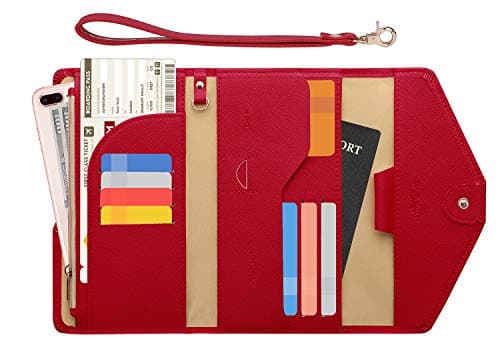
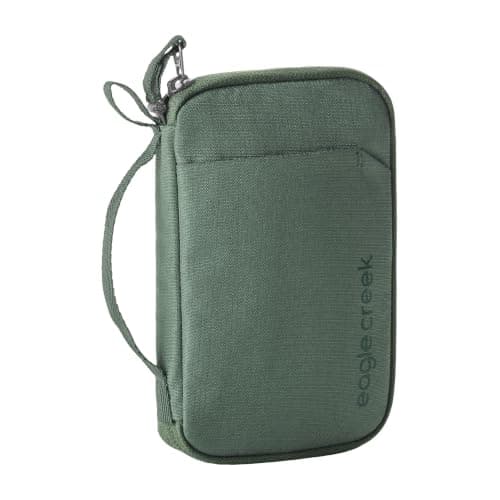
The verdict first. The Eagle Creek Stash RFID Passport Wallet is the best Bellroy Travel Wallet alternative, and it is the rare substitution that beats the original on published figures: 0.13 lb against Bellroy's 0.17 lb, with a published water-resistant treatment the Bellroy listing does not claim, at roughly a third of the live price. It is for someone who wanted a slim passport wallet rather than a leather one. The budget pick is the ZOPPEN Passport Holder Travel Wallet (Ver.5), which gets closest to the original's card capacity for about an eighth of the price — at roughly two and a half times the weight.
And here is the part most alternatives pages will not tell you, so we will lead with it: three of the four things Bellroy publishes about this wallet have no substitute anywhere in our catalog.
The method: four published properties
Bellroy's listing publishes exactly four things about the Travel Wallet: a footprint of 3.8 x 6 inches, an empty weight of 0.17 lb, a capacity of a passport plus up to 10 cards, and its construction — eco-tanned leather with RFID and a 3-year warranty. Every comparison below is against those and nothing else.
- Footprint — no substitute. By our arithmetic on published outside dimensions, Bellroy's 3.8 x 6 in works out at about 23 square inches. The nearest alternative here is roughly a fifth larger, and the family holder is more than twice the area. Nothing in our catalog publishes a smaller footprint than the original.
- Card capacity — no substitute. Ten cards plus a passport. The closest published figure here is seven card slots. Nothing matches it.
- Warranty — no substitute. Bellroy's listing publishes a 3-year warranty. Not one alternative on this page publishes a warranty of any length.
- Weight — beaten. This is the one that flips. Eagle Creek publishes 0.13 lb, lighter than the original, at about a third of the price. The two ZOPPEN folios publish 0.44 lb and 0.33 lb — by our arithmetic roughly two and a half times and nearly twice the original.
So the honest summary: you can substitute the weight and you cannot substitute the size, the capacity or the warranty. That is a narrower answer than "here are five cheaper wallets", and it is the true one.
The property Bellroy does not publish, and why it matters most
There is a gap in the original's published list that the best alternative fills: water. Bellroy publishes eco-tanned leather and no water claim. Eagle Creek publishes a water-resistant treatment.
That is not a technicality. Ask what actually ruins a passport, and the answer is a spilled drink on a tray table, a wet jacket pocket, a leaking bottle in a shared bag — not a contactless skimmer. Leather in rain is the wrong material for the most probable bad outcome. If you are choosing between the original and the Eagle Creek on risk rather than on looks, the cheaper wallet is the better engineered one for the hazard that actually occurs, and it says so on its own listing rather than relying on us to say it.
About the RFID claim, since it is a common reason to search
One of the live autocomplete variants for this product is "are Bellroy wallets RFID protected", so it deserves a straight answer. Bellroy's listing publishes RFID protection. So does every single alternative on this page, including the one costing about an eighth as much.
And here is the thing nobody tells you: not one listing in this category publishes an RFID standard, a frequency range or a test result. Not an ISO number, not a figure for attenuation, not a laboratory. We are not going to claim it does not work, because we have not tested it and nobody has published figures we could check — but we will say the part that matters for buying: RFID cannot be used to choose between these wallets, because they all claim it and none of them substantiates it. Which means paying a premium specifically for RFID blocking buys a claim you already had. We rank the whole RFID-claiming subset on the properties that are published in best RFID travel wallets.
When to just buy the original
Three clear cases, and we would rather name them than sell you a substitute that disappoints:
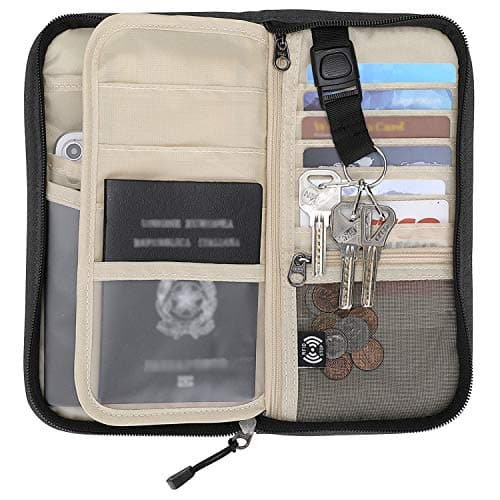
- You carry close to ten cards. Nothing here publishes that capacity. A seven-slot folio is the nearest, and it is an inch thick.
- Pocket size is the whole requirement. The original publishes the smallest footprint in our catalog. If it has to live in a jacket's inside pocket alongside a phone, that matters more than the price.
- You want the warranty and the leather. It is the only wallet in this group publishing a warranty at all, and none of the alternatives attempts eco-tanned leather. Wanting the better object is a legitimate reason to spend money, and this page is not going to pretend a polyester folio is the same thing.
For the broader organization problem — boarding passes, vaccination records, currency, copies — best travel document organizers ranks the whole category, and how to organize travel documents is the method, including what to leave in the room safe.
How we picked these, and what we could not check
Every pick above carried a live price and a buyable offer in our feed on the day this page was written, and the as-of date of that check is printed under the comparison table. The original is in our own registry with a live price, so every statement about it comes from the same listing data as every statement about its alternatives.
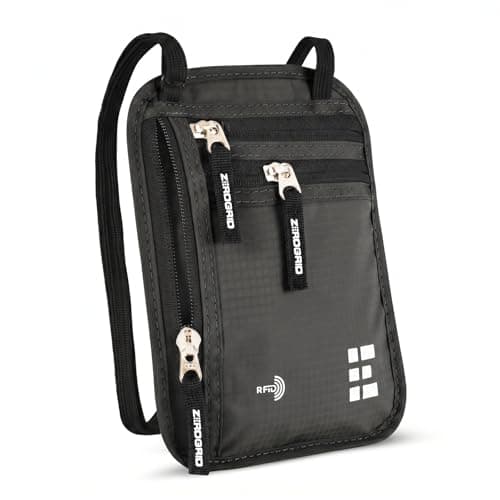
What we could not check, stated plainly. We have not handled these wallets, weighed one, or attempted to read a card through one — so, to repeat the important part, no RFID shielding performance is claimed anywhere on this page, because not one listing in this category publishes a standard, a frequency or a test. Every dimension, weight, slot count and material above is the manufacturer's own published figure, read off the listing on the date in Sources; the square-inch figures and every multiple are our arithmetic on those published outside dimensions. Two gaps we have not filled: Bellroy publishes a footprint but no thickness, so no volume comparison is made, and the Zero Grid listing publishes no empty weight, so it is absent from the weight arithmetic rather than estimated into it. Bellroy's three-year warranty is its listing's claim and we have not read the terms. Our scores are judgments from published listings and documented research, which is what our methodology says in exactly those words.
Three questions, in the order that decides whether to substitute at all.
1. How many cards, really?
Count them. If the answer is close to ten, the original publishes that capacity and nothing here matches it — buy it. If the answer is three or four, you are paying for eight slots you will not fill, and the lightest alternative on this page is a better-shaped product for you as well as a cheaper one.
2. Pocket or bag?
The most predictive published figure in this category, and almost nobody shops on it. A published one-inch-thick folio at seven ounces is a bag item whatever the listing says. A published three-quarter-inch body at two ounces goes in a jacket pocket. Decide where the wallet lives before you decide what it costs.
3. Is the worry water, theft, or skimming?
Each has a different answer and only two of them can be bought. Water: buy the pick that publishes a water-resistant treatment — leather does not. Theft: buy the one worn under clothing, because that mechanism is visible and needs no test data. Skimming: you cannot choose on this basis, because all five wallets claim RFID blocking and none publishes a standard.
What not to buy
Do not pay a premium for RFID blocking — it is on every listing here, including the cheapest, and substantiated on none. Do not buy on card slot count if the wallet goes in a pocket: slots are exactly what make a folio an inch thick. Do not buy leather for a wet destination when a treated shell publishes water resistance for a third of the money. And if two adults are travelling, do not put every document in one holder however good it is — splitting them across two people costs nothing and is the only real protection against losing the lot.