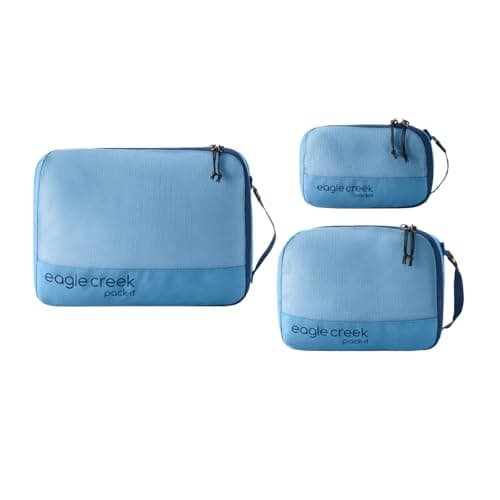
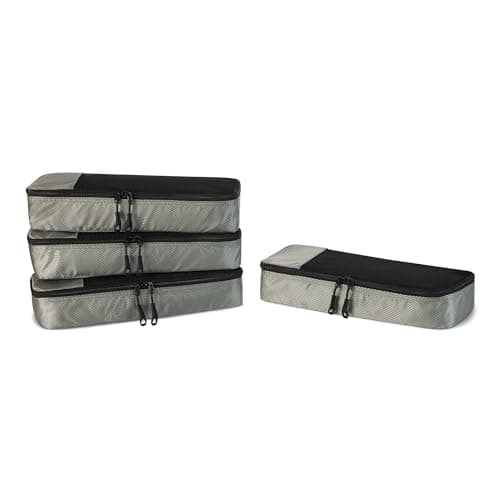
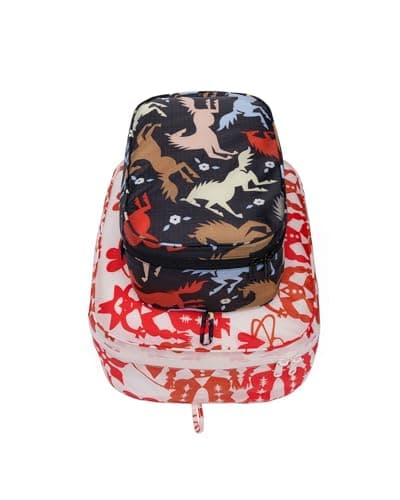
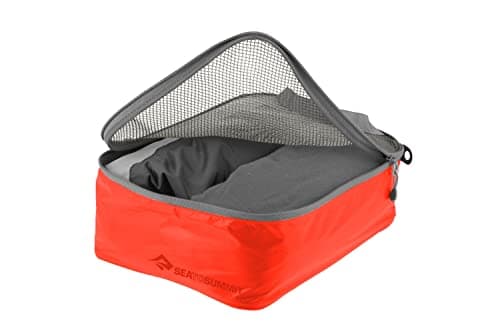
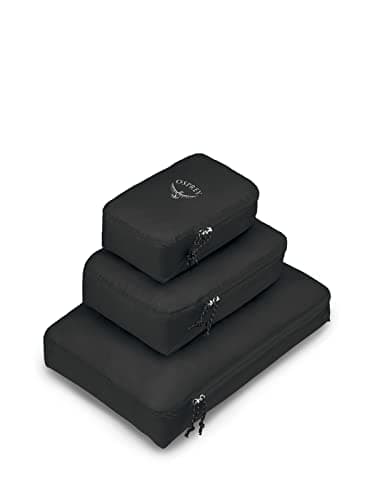
The short version. The best lightweight packing cubes for most people are the Osprey Ultralight set - three cubes in nano ripstop, the lightest fabric any brand in our catalog actually names on a cube listing, for the traveler whose cabin bag gets weighed. If you want light fabric you can still be rough with, the Eagle Creek Pack-It Reveal set is the tougher trade. The budget pick is the Amazon Basics 4-piece slim set - ordinary polyester, but a shallow cube holds less and therefore weighs less when full, and it costs a fraction of the ultralight money.
Now the thing every other page about lightweight packing cubes quietly skips: nobody publishes a cube weight. We checked every cube set in our catalog, premium and budget, and not one carries a readable weight figure on its listing - no grams, no ounces, no fabric denier. Brands publish weights for garment folders, for clean/dirty cubes and for hanging organizers, and then stop at cubes. So a page that prints a weight table here would be printing numbers somebody made up, and we are not going to. What we can do instead is rank on the four facts that are published and that genuinely determine what a set weighs.
The four published facts that decide the weight
| Fact | Why it changes the weight | How much it matters |
|---|
| Piece count | Every extra cube is another full set of panels, seams and a zipper. Eight cubes is eight of everything. | Most of it. This is the dominant term and it is rarely discussed. |
| Fabric | Nano ripstop is a thinner yarn than standard ripstop, which is lighter per unit area than plain polyester. | Second. Real, and the only one brands market. |
| Panel area (mesh vs woven) | A mesh top replaces woven fabric with far less material over the largest face of the cube. | Third. Small per cube, multiplied by the piece count. |
| Zipper count | A compression cube carries a second full-length zipper and its tape on every cube. Zippers are the densest component in a cube. | Fourth, and the reason no compression set is on this page. |
Read those four together and the headline finding falls out: a three-piece polyester set is lighter than an eight-piece ultralight nano-ripstop set. Piece count beats fabric. Which means the most effective thing you can do about cube weight costs nothing at all - buy fewer cubes, and take fewer of the ones you own. How many packing cubes do I need works out the realistic count, and the minimalist roundup is the sibling page for people who have accepted that argument.
What a lightweight set actually saves you
Less than the marketing implies, and it is worth knowing before you pay for it. Cubes are empty fabric boxes: the clothes inside them are the weight, and the cube is a small percentage on top. Do packing cubes add weight does that arithmetic in full. The upgrade from a cheap set to an ultralight one is a fraction of an already-small number.
So the honest case for buying ultralight is narrow and it is real in exactly two situations. The first is a hard cabin-bag weight limit - the budget-airline kind where a few hundred grams is the difference between boarding and paying at the gate, and where every item in the bag gets audited. The second is carrying the bag on your back for hours, where the argument is not the weight so much as the compressibility: thin fabric packs down to nothing when the cube is empty, and a stiff polyester cube does not. The backpacking roundup is built around that second case. If neither is you, buy on durability and cost per cube instead - that is the under-$25 page.
How we ranked these, and what we could not check
Five criteria, all derived from published listing facts: fabric (the family named on the listing), panel area (how much woven fabric mesh replaces), piece count (the dominant term above), packability (whether the brand publishes that the cubes fold down) and value, which the live price and the piece count work out below.
What we could not check, stated plainly.No weight for any cube on this page, from anyone. No fabric denier for any of them either - "nano ripstop" and "ripstop nylon" are the brands' own words and we have quoted them rather than converting them into a number. We have not weighed any of these ourselves; we do not run a lab and our methodology says so in those words. If a published weight matters more to you than anything else in this category, the containers that do publish one are the garment folders - that roundup quotes the manufacturers' figures directly, and they are the lightest thing on this site with a real number attached.
Three questions, and the first one decides whether to spend anything at all.
1. Does anyone actually weigh your bag?
If no, stop here and buy on cost per cube. The weight difference between a cheap set and an ultralight one is real and invisible unless something is measuring it. If yes - budget carrier, small-plane transfer, a trek with a porter limit - the fabric upgrade is worth paying for, and so is dropping a cube.
2. How many cubes will you genuinely fill?
This is the question that saves the most weight and the most money at the same time. Piece count dominates, so a three-cube set you fill beats a six-cube set you half-fill on weight, on volume and on price. How many packing cubes do I need has the counts by trip length.
3. Light, or compressible?
These are different goals and they point at different cubes. Light wants thin fabric and few pieces. Compressible wants fabric that folds to nothing when empty - which is also thin fabric, so they agree - but it emphatically does not want a compression cube, because a second zipper is extra hardware on every cube. If you want volume reduction rather than weight reduction, that is a different page: best compression packing cubes, and do compression bags reduce weight is blunt about the fact that squeezing something does not make it lighter.
What not to buy
Do not buy a large-piece-count setdescribed as ultralight. The two claims work against each other and the piece count wins. Be skeptical of "lightweight" on any compressionset - it appears on several listings in this category and a second zipper on every cube is the opposite of a weight saving. And do not pay a premium for a set that publishes no fabric name at all: "lightweight" with nothing behind it is the one claim in this category with no checkable content.