Bagail is the packing cube most people actually own, and there's no mystery why: it does the core job — turning a suitcase into labeled compartments — for a fraction of what Eagle Creek or Peak Design charge. It is not as durable and it won't last a decade, but for the great majority of travelers who fly a few times a year, that trade is exactly right. Here's what the low price buys, and where it visibly cuts corners.
What you actually get
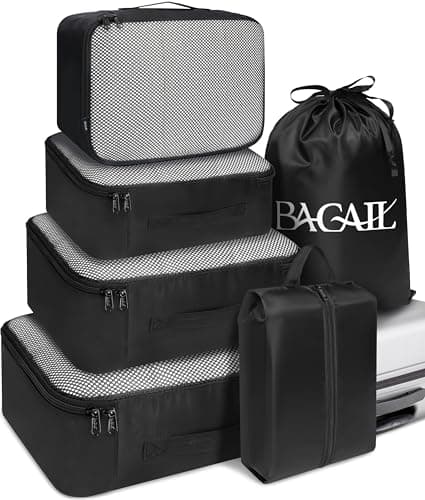
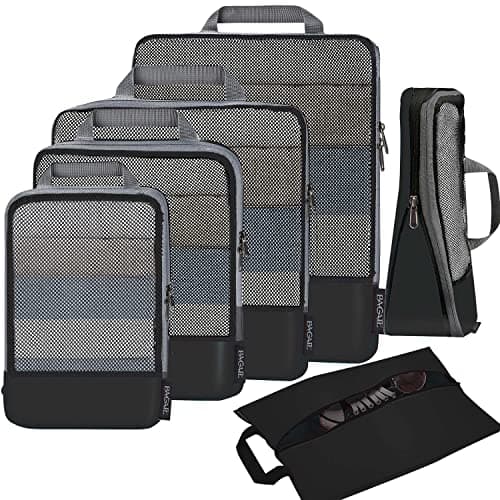
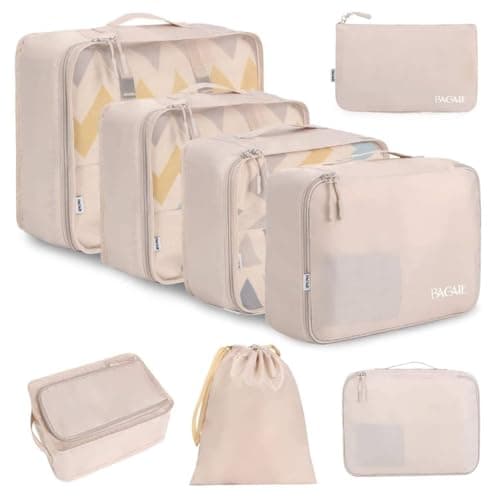
A Bagail set gives you mesh-top cubes in a spread of sizes, usually with a couple of extra pouches thrown in. The mesh tops mean you can see contents at a glance — the same convenience the Eagle Creek Reveal charges a premium for. Packed, they organize a suitcase just as well as a premium set does; the difference is in the hand, not the function.
Where the price shows
The fabric is thinner and the zippers feel lighter than premium cubes, and there's no real warranty behind them. On heavy, frequent use — especially on compression zippers, which take the most strain — budget cubes are the first to fail. That's reflected in the build scores (6) versus Eagle Creek's 9. If a zipper going in year three would annoy you more than the money you saved pleased you, buy up. If not, Bagail is the rational choice.
Are Bagail cubes washable?
Bagail cubes are polyester and can be spot-cleaned or hand-washed and air-dried; skip the dryer, which can warp the shape and stress the seams. That's standard for budget cubes and fine for normal use.
6-set, 8-set, or compression?
Get the 8-set if you want the most pieces and a couple of pouches; the 6-set if you'd rather not have pieces you won't use; the compression set if you want to try compression cheaply. All three are the same value proposition. See how Bagail stacks up against the premium field in the roundup.
Veken is the other budget name people weigh Bagail against, and the difference is more than piece count: one sells cubes, the other sells a kit. Veken vs Bagail packing cubes compares them cube for cube.
Two comparisons worth making before you buy
Bagail is usually bought against one of two alternatives. The first is the brand it shares an aisle with: Bagail vs BAGSMART takes the two apart at the same price point, where the difference turns out to be philosophy rather than quality. The second is spending nothing at all, which is a fair question at this tier - packing cubes vs Ziploc bags is the honest version of it, including the three jobs a zip bag genuinely does better.